
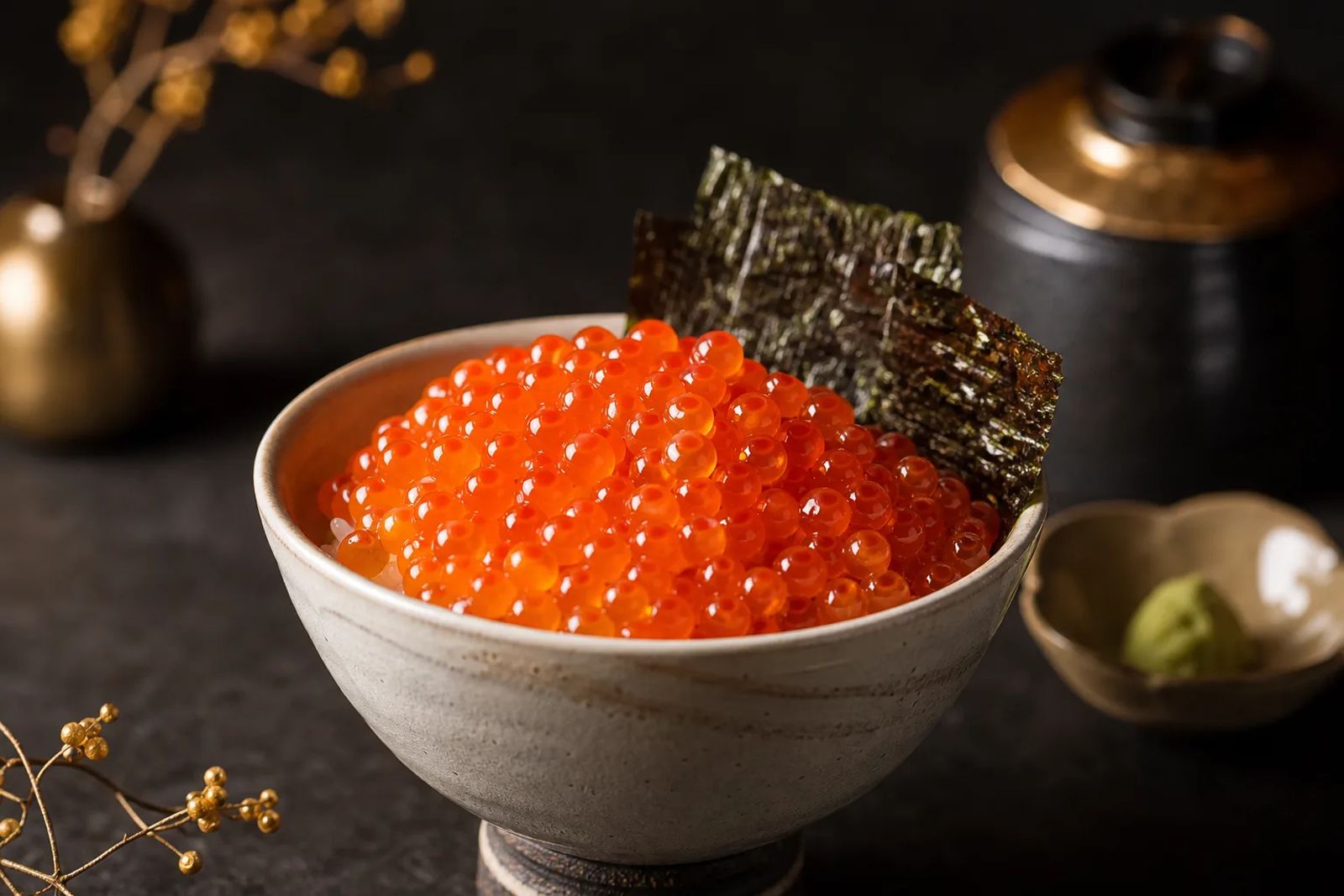
Glossy beads, a vivid orange or red, then a burst as you eat: salmon roe makes texture the centre of a dish. These salmon eggs usually come salted or seasoned, ready to eat. In Japan, the separated beads are called ikura. Choose by the named fish, cure and handling instructions, keep it cold, and serve small portions that put their bursting texture at the centre of each mouthful.
- Commercial freezing is a normal part of the roe trade, not a quality defect in itself.
- Soy-seasoned roe can contain soya and wheat as well as fish.
- An unopened shelf life does not tell you how long roe lasts after opening or thawing. Check those instructions separately.
What is ikura?
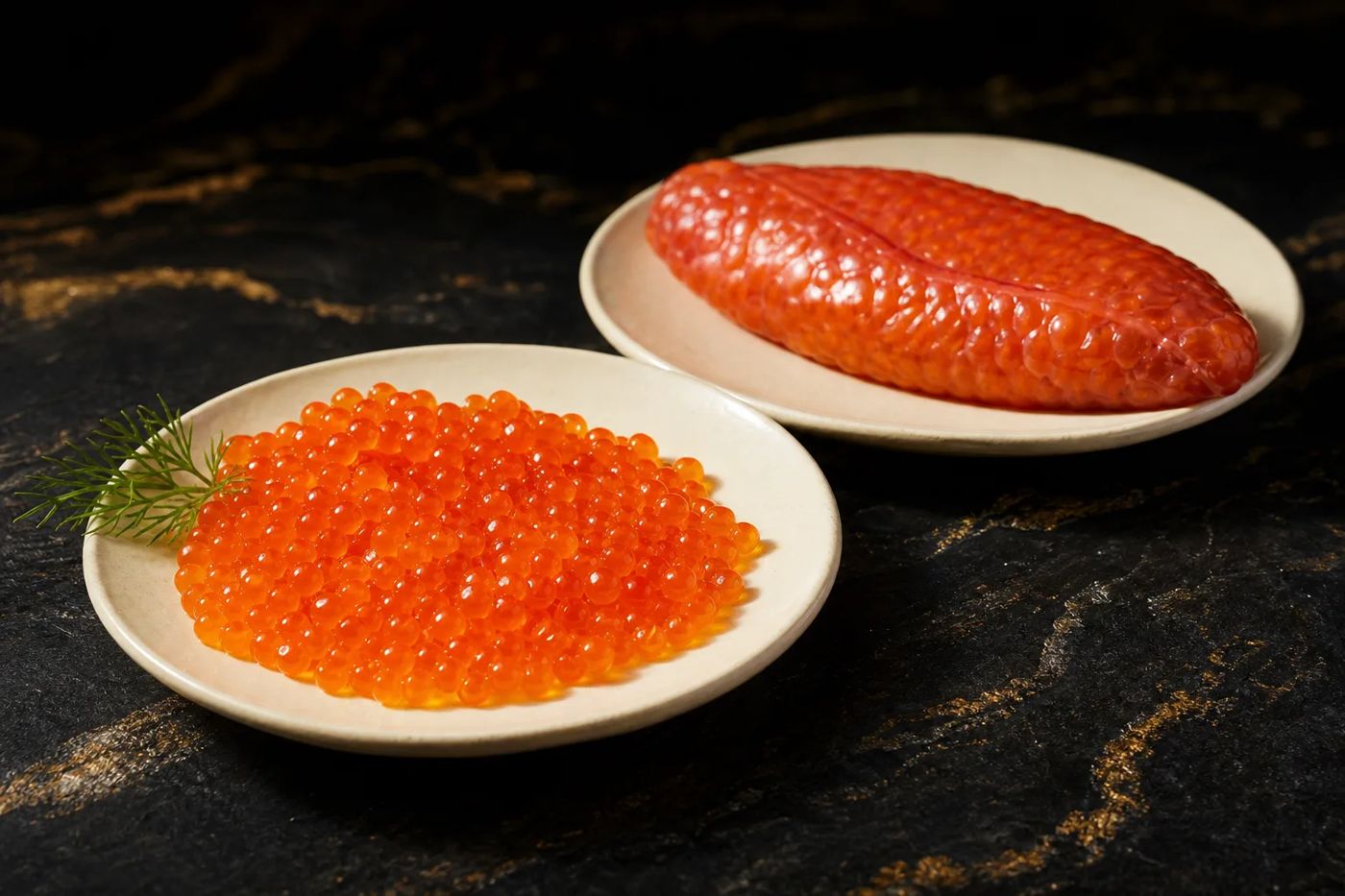
In Japanese food, ikura usually means loose salmon roe; sujiko is roe still held together in its ovarian membrane, or skein. That physical distinction matters as much as the seasoning. Salt and soy sauce alone do not tell you which you have.
Roe simply means fish eggs. Ikura comes from the Russian ikra, meaning fish roe generally, rather than salmon eggs alone, an origin recorded by Japan's Ministry of Agriculture, Forestry and Fisheries. For the wider family of orange roes, start with salmon and trout roe.
The fish and regions behind salmon roe
Five Pacific salmon used for roe are chum, also called keta; pink; sockeye; coho; and Chinook, or king. Alaska's seafood industry harvests roe from all five named here, with chum and pink accounting for most production. Each has different eggs. A species name tells you more than the broad description “red caviar”.
EUMOFA's October 2022 study reported that most salmon roe came from wild Pacific fisheries. The main producers were the United States, principally Alaska, Russia and Japan, with Canada contributing smaller quantities. Kamchatka and Sakhalin are documented Russian production areas. Japan has its own salmon roe tradition, notably in Hokkaido.
Farmed Atlantic salmon also supplies edible roe, including small quantities from Norway and Iceland, often associated with broodstock rather than routine harvest fish. Trout roe is a separate product, although Japanese usage of ikura can extend to it. The Pacific salmon roe comparison explores the individual options; colour alone cannot identify the fish.
Salt, soy and the traditions of the table
Salt-cured ikura is separated roe preserved and seasoned with salt. Shoyu-zuke means marinated in soy sauce; Japanese preparations may also include sake, mirin or dashi. Those seasonings shape both flavour and saltiness. Taste a few beads before reaching for more soy sauce.
For the whole-sac distinction, see ikura versus sujiko; for the processing detail, read how salmon roe is harvested and cured. Neither salting nor marinating in soy sauce cooks the roe.
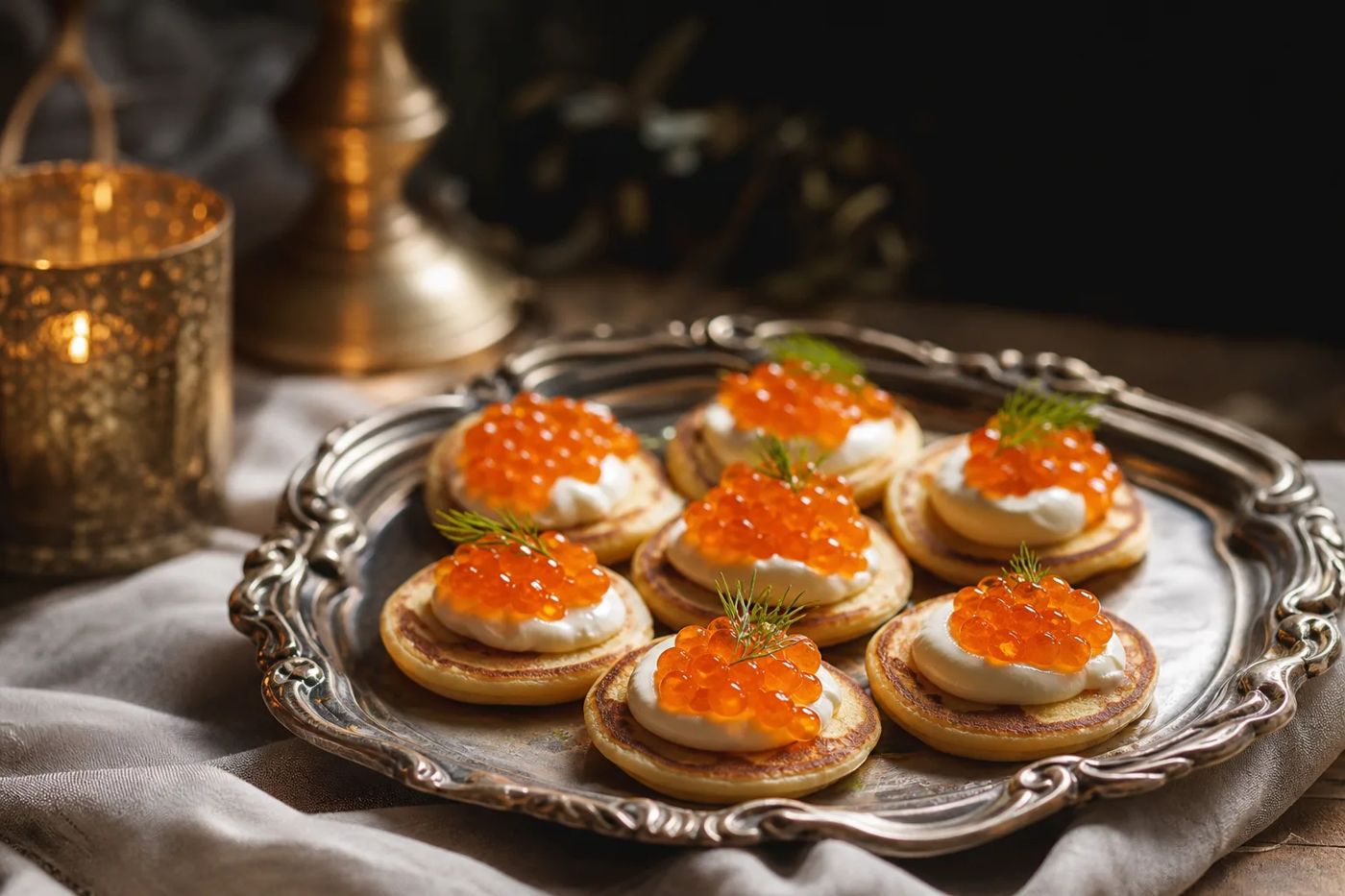
In Japan, ikura tops rice bowls and sushi, including nori-wrapped gunkan sushi. In Russia, krasnaya ikra means red caviar, served on bread, blini and tartlets, particularly at celebrations. Both traditions give salmon roe a place at the table, without prescribing a single correct way to eat it.
How to choose salmon roe
Choose a product clearly identified as food and intended to be eaten without further cooking. Read the species, ingredients, origin information, storage instructions and opening or thawing directions. Japanese-style seasoning tells you about the cure, not the country of origin; a packing address does not tell you where the fish was caught.
Look for mostly whole, distinct, glossy beads rather than a collapsed mass. With plain salted roe, substantial loose liquid and many broken eggs warrant a question about handling. With shoyu ikura, some liquid belongs to the soy marinade and is no reason to reject it.
Colour depends on the fish and its maturity. A stronger orange or red does not automatically mean better roe. Check for added colour and compare like with like. For safety, rely on dates, refrigeration and the producer's validated instructions, not attractive beads or a pleasant smell.
Read the allergen information: salmon roe contains fish, while soy-seasoned versions may also contain soya and wheat. Compare declared salt per 100 g between products. Cures differ, and no single salt figure describes all ikura.
What “caviar” means on a label
Salmon caviar is genuine fish roe, not imitation eggs. It is also distinct from sturgeon roe, a difference reflected in labelling guidance and trade classifications.
In the United States, FDA's nonbinding CPG 540.150 says unqualified “caviar” should mean salted sturgeon roe. Other roe may use the name with the fish specified, such as “salmon caviar”, with both words substantially equal in size and prominence. Added artificial colour must be prominently declared.
EU and UK customs tariffs distinguish caviar under 1604 31 00 from prepared caviar substitutes under 1604 32 00. These are trade classifications, not complete rules for retail names. Consumer information must not mislead: EU Regulation 1169/2011 applies in the EU and Northern Ireland, while its assimilated version applies in Great Britain.
For the differences between the foods themselves, see salmon roe versus sturgeon caviar.
Frozen roe and shelf life
Freezing carries a seasonal harvest to later meals. Alaska processors freeze both uncured roe destined for further processing and finished cured ikura, so “previously frozen” is a normal description in this trade, not a defect in itself.
Look for mostly whole, distinct, glossy beads rather than a collapsed mass.
Shelf life belongs to the particular product. Follow the unopened date, then the separate instructions for opening and thawing. Refreezing does not create a new use-by date. As general UK guidance, the NHS says to use opened ready-to-eat foods within two days unless the packaging says otherwise.
A simple storing and serving method
-
Refrigerate promptly. Put chilled roe in the refrigerator as soon as you get home. UK NHS guidance is 5°C (41°F) or below; US FDA advice is 4°C (40°F) or below. Use a colder limit if the pack specifies one.
-
Thaw in the fridge. Follow the producer's directions, never thaw on the worktop, and keep frozen packs at their specified temperature. FDA's general home-freezer setting is -18°C (0°F) or below. If the label gives a thawed-use period, note when thawing finishes.
-
Serve small portions. Use a clean spoon to transfer what you need to a small serving bowl, leaving the main pack refrigerated. Start with 15 g (about half an ounce) per person as a topping. That is a serving suggestion, not a safety standard.
-
Keep it chilled. Roe does not need to reach room temperature. FDA's US advice limits unrefrigerated seafood to two hours, or one hour above 32°C (90°F). For a longer meal, set the serving bowl on ice and replenish it with small portions from the fridge.
Food safety and parasite controls
Ready-to-eat roe reaches the table without a final cooking step, so hygienic handling matters. Freezing for parasites does not remove every microbial hazard. Listeria can contaminate chilled ready-to-eat fish products, and refrigeration does not make them sterile.
UK NHS guidance advises pregnant people and those with weakened immunity to cook ready to eat cold smoked or cured fish until steaming hot. That advice is not a product-specific assessment of every roe. In the US, FDA guidance advises people at higher risk to avoid raw or undercooked seafood. Check national advice and ask a doctor or midwife about a particular product.
For parasite controls, the form of the roe matters. FDA's seafood guidance and 2026 model Food Code distinguish eggs removed from the skein and rinsed from unrinsed eggs or intact sacs. The removed, rinsed eggs are not treated as the same parasite hazard. The Food Code becomes enforceable through adoption by the relevant US jurisdiction.
In the EU and UK, parasite freezing requirements depend on the product, its processing and the applicable law. There is no blanket instruction to freeze every jar of ikura at home.
How to eat it
Begin with a small spoonful. Then try the roe on rice, bread or a blini, keeping the base lightly seasoned until you know the cure's saltiness. A little sour cream, cucumber or finely cut herbs gives contrast without burying the beads.
For a rice bowl, add the roe last. Stirring it through very hot rice or cooking it in a pan changes the eggs' texture and appearance. For distinct beads, use roe as a finishing ingredient, as in the ikura don and homemade shoyu ikura guide.
Sources
-
Japan, Ministry of Agriculture, Forestry and Fisheries, Hokkaido District Agriculture Office. Hokkaido's seafood, history and food culture, section “Ikura and sujiko”. Undated edition retrieved in 2026. Documents the Russian etymology, separated eggs, whole skeins and Japanese preparations. PDF.
-
Japan, Ministry of Agriculture, Forestry and Fisheries. Ikura shoyuzuke, Traditional Foods in Japan database. Undated current entry. Describes Hokkaido's soy-marinated roe tradition and variations in seasonings. Entry.
-
European Commission, EUMOFA. Salmon and Trout Roe: Production, Trade, and Consumption. October 2022. Sections 2, 3 and 5 cover species, sources and consumption. Report.
-
Alaska Seafood Marketing Institute; McKinley Research Group. Alaska Seafood: Overview of the Global Supply Chain. March 2023, “Roe”. Industry-commissioned research covering species, processing and commercial freezing. Report.
-
Rospotrebnadzor, Altai Republic regional office. How to choose products and prepare blini. 20 February 2023. Used for documented Russian production areas, bead integrity and natural colour variation, not its suggested authenticity tests. Guidance.
-
US Food and Drug Administration. CPG Sec. 540.150: Caviar, Use of Term, Labeling. October 1989, current published guidance. Guidance.
-
HM Revenue & Customs. Update to Document Codes associated with Belarus and Russia Sanctions. 1 July 2025. Official UK tariff notice identifying commodity codes 1604310000 and 1604320000. Notice.
-
Statistics Austria. List of Goods 2026: Combined Nomenclature codes and descriptions. 2026 edition, heading 1604. Classification.
-
Food Standards Agency, GOV.UK. Packaging and labelling. Current online guidance, retrieved November 2026. Explains accurate food descriptions and the separate application of assimilated and EU food-information legislation. Guidance.
-
US Food and Drug Administration. Selecting and Serving Fresh and Frozen Seafood Safely. Current online edition, retrieved November 2026. Guidance.
-
US Food and Drug Administration. Four Steps to Handling and Preparing Food Safely. 2017 factsheet. Covers home refrigerator and freezer settings and safe thawing. Factsheet.
-
NHS. Listeriosis. Current online guidance, retrieved November 2026. Covers chilled ready-to-eat food, opening periods and higher-risk consumers. Guidance.
-
US Food and Drug Administration. Fish and Fishery Products Hazards and Controls Guidance. June 2022 edition, Chapter 5, “Parasites”. Guidance.
-
US Food and Drug Administration. Food Code 2026. 2026 edition, section 3-402.11 and introductory explanation of adoption. Code.
-
European Food Safety Authority. Listeria. Current topic page, retrieved November 2026. Covers susceptible populations and evidence concerning ready-to-eat foods, including fish. Overview.
-
Food Standards Scotland. Freezing fish and fishery products. Current online guidance, retrieved November 2026. Covers business obligations, freezing treatments and exemptions. Guidance.
This guide was researched using government food-safety guidance, Japanese agricultural publications, European market research and attributed Alaska industry research; no tasting or recipe testing was undertaken.
Last checked: November 2026