
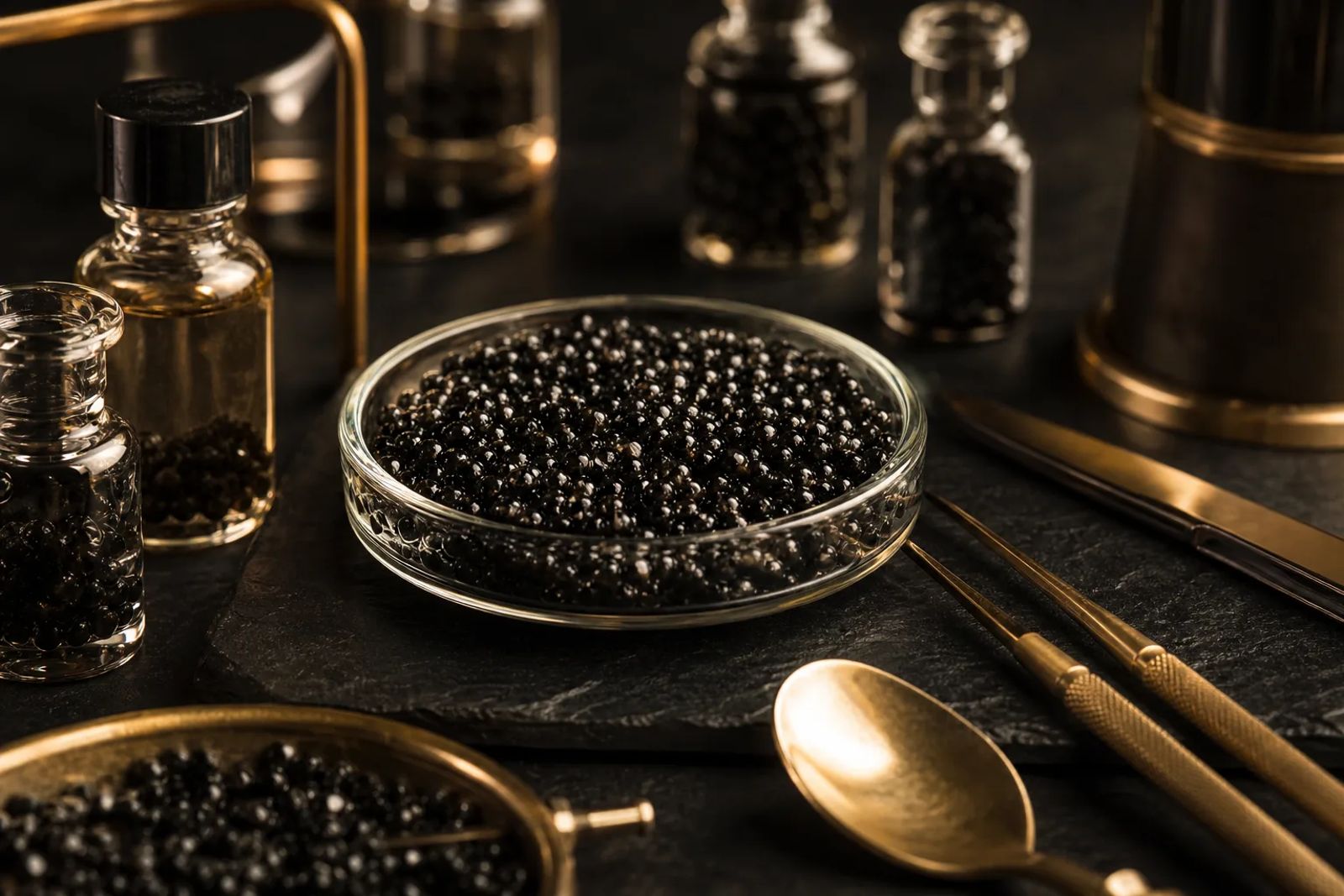
Salt can change a caviar’s chemical fingerprint, complicating the task of distinguishing production sites. In a 2019 study, even washing failed to remove its influence completely. To compare the salted roe, researchers had to model the salt’s contribution.
That is the challenge of caviar forensics: reading biological and chemical records that answer different questions. DNA investigates species and hybrid ancestry; chemical measurements probe production history and possible geographic origin. No single test establishes all three. The strength of a finding rests on its reference material, validation and sampling record.
What caviar forensics can establish
Start with the question, not the test. Species identification concerns biological identity. A wild-versus-farmed assessment examines rearing or feeding history. Geographic analysis compares a sample with defined populations or production sites. Each needs its own reference collection, and each conclusion belongs separately in the report.
| Method | What it can tell | Main limit | Key study |
|---|---|---|---|
| Mitochondrial sequencing | Maternal lineage; possible mismatch with declared species | Close relatives can share lineages; hybrids remain unresolved | Hu et al., 2023 |
| Nuclear SNPs and microsatellites | Species ancestry; supported hybrid assignments | Depends on markers, reference fish and cross generation | Amur and kaluga study, 2017 |
| Stable isotopes | Evidence consistent with particular feeding and rearing histories | Overlapping signatures prevent universal wild-versus-farmed thresholds | Rehbein et al., 2008 |
| Elemental and strontium fingerprints | Compatibility with sampled production sites | Salt alters signatures; unsampled origins remain possible | Tchaikovsky et al., 2019 |
| Fatty acid profiling | Dietary differences linked to production system | Feed changes can undermine local classifications | Rudchenko et al., 2023 |
DNA: reading the maternal line
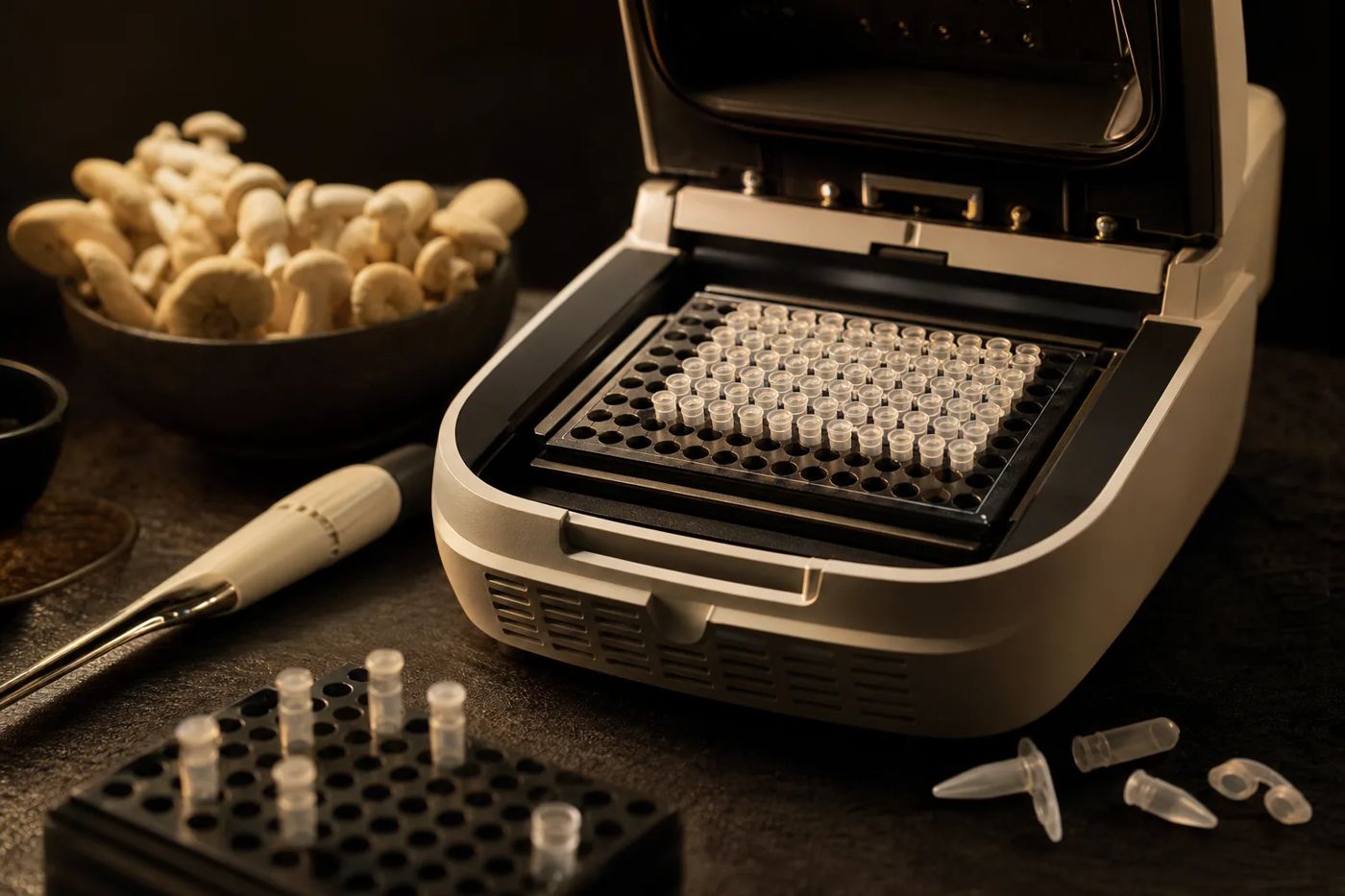
An egg carries a genetic record, but mitochondrial DNA tells only the maternal side of the story. Laboratories extract DNA from eggs, amplify selected regions using the polymerase chain reaction, or PCR, and compare the sequences with references.
Common mitochondrial targets include cytochrome b, cytochrome c oxidase subunit I, usually COI, and the control region, also called the D-loop. GenBank and the Barcode of Life Data System, BOLD, supply comparison sequences.
Hu and colleagues’ 2023 Chinese market study examined 21 batches using COI and D-loop sequencing. Maternal assignments included Siberian, Russian and Amur sturgeons, kaluga and beluga. COI could not separate some close relatives; the D-loop improved discrimination in those samples. Its success applied to that comparison, rather than establishing a universal sturgeon barcode.
Because mitochondrial DNA is maternally inherited, it follows the egg-producing fish’s maternal lineage, not her complete ancestry. A hybrid female can carry the same mitochondrial sequence as a pure member of her mother’s species. Sequencing more mitochondrial regions cannot recover the missing paternal ancestry.
Read database matches with the same care. Was the reference fish independently identified? Were relevant sister species included? Does the sequence distinguish them? A high similarity score does not, by itself, give the probability that a species declaration is correct.
Nuclear DNA: finding hybrid ancestry
Nuclear DNA brings both parents into view. The female producing the eggs inherited it from her mother and father, making it central to investigating her hybrid ancestry.
Traditional caviar consists of ovarian eggs that have generally not completed meiosis. Interpretation therefore depends on developmental stage, sampling and marker design. Laboratories examine microsatellites, short repeated sequences, or single nucleotide polymorphisms, SNPs, which are differences at individual DNA positions. Independent nuclear markers, combined with mitochondrial evidence, can support a hybrid assignment rather than simply identify a maternal line.
The scale of a study does not rescue an unsuitable marker. According to its abstract, the 2017 Amur and kaluga study tested tissue or caviar from 508 fish of the two species and 31 hybrids. Two candidate markers from introns of the nuclear RPL8 gene showed no fixed difference between the species. An association can be useful without providing an infallible species test.
Sturgeon polyploidy, the possession of multiple chromosome sets, adds another challenge: duplicated targets and allele dosage require appropriate interpretation. Panels must also be tested against backcrosses and hybrid-by-hybrid crosses, not just pure parental fish. See sturgeon genetics and polyploidy for the biology and hybrid caviar identification for the labelling implications.
Wild or farmed: following the diet
Chemistry records what a fish has eaten and the environment in which it lived. Those records can help distinguish production histories, provided the candidate sources have sufficiently different signatures.
Stable isotopes are non-radioactive forms of an element with different masses. Laboratories measure their ratios, commonly expressed as δ13C and δ15N for carbon and nitrogen. These reflect dietary and environmental inputs, rather than a universal chemical divide between wild and farmed fish.
Rehbein and colleagues (2008) compared farmed Siberian sturgeon caviar from northern Germany with trader-supplied samples declared as beluga, stellate, Russian and Persian sturgeon from Iran and Kazakhstan. They combined DNA identification with carbon and nitrogen isotope measurements, calorimetry and messenger RNA analysis. They described considerable potential and called for additional methods, without claiming definitive source identification.
Fatty acids preserve another dietary record. Rudchenko and colleagues (2023) compared sterlet caviar and muscle from the Yenisei River with aquaculture material. They found contrasts between food-web biomarkers and fatty acids associated with artificial feeds. Their proposed biomarker ratio needs validation against the relevant fish, feeds and environments before use elsewhere.
A farmed fish eating locally sourced natural food may chemically resemble a wild fish. Different farms may also use similar formulated feeds. Read feeding-history results alongside husbandry records and genetic evidence. The wider trade investigation belongs in wild caviar laundering, beyond any single chemical value.
Geographic origin: finding the right comparison
An origin fingerprint is only useful when there is something meaningful to compare it with. Elemental fingerprinting measures combinations of elements rather than DNA, seeking patterns compatible with particular production sites.
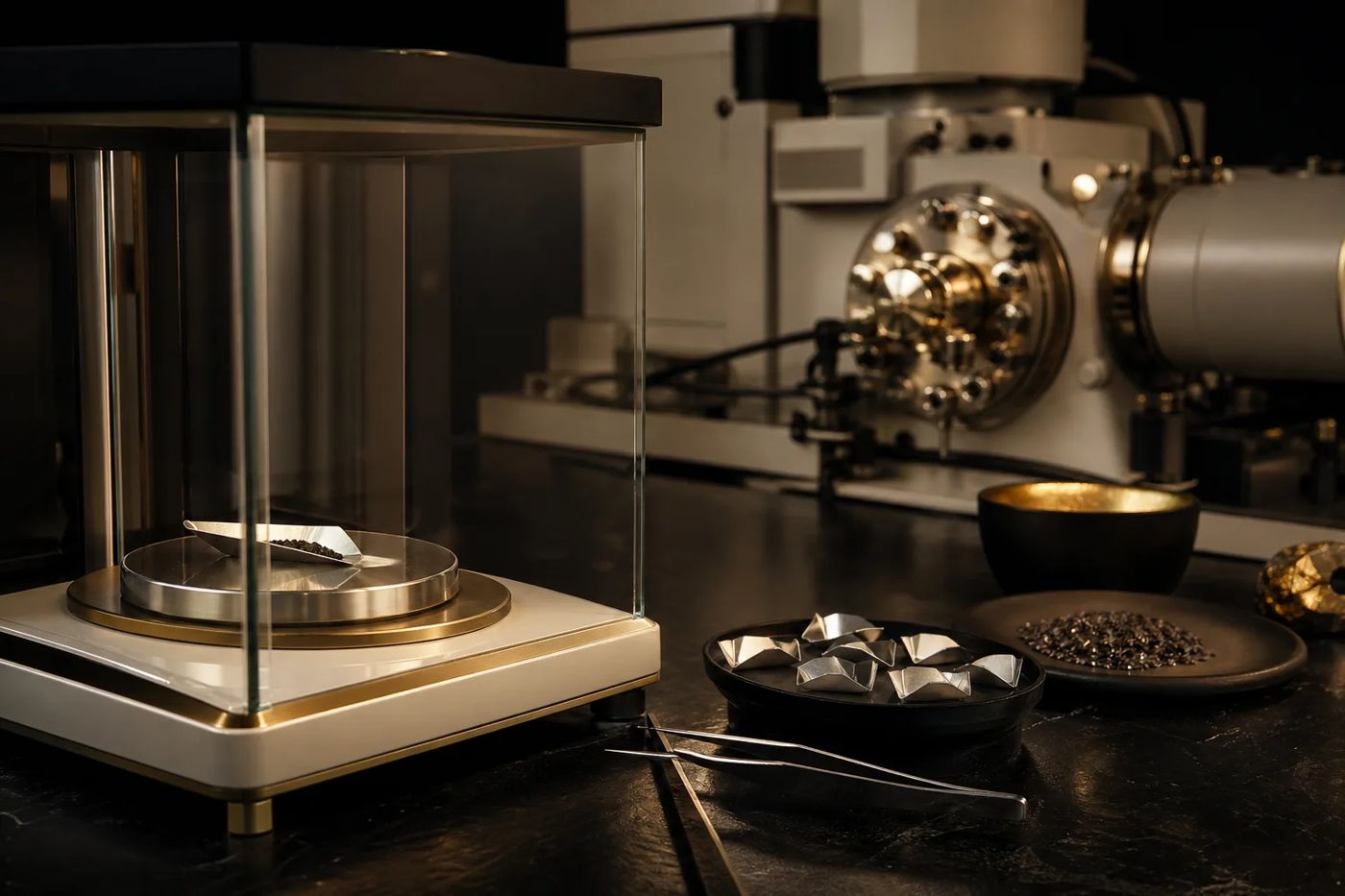
In their 2019 sturgeon caviar study, Tchaikovsky and colleagues used elemental mass spectrometry and strontium isotope ratios on water, feed, salt and roe from six farms: one in Austria, four in Italy and one in Iran. The species sampled are not stated. A corrected strontium signal, combined with copper and molybdenum, separated salted samples into five clusters, rather than six unique farm identities.
A hybrid female can carry the same mitochondrial sequence as a pure member of her mother’s species.
Salting significantly altered several measured markers, and washing did not fully remove its influence. The researchers modelled the salt contribution instead of treating finished caviar as unchanged raw roe. Processing belongs in an origin model alongside environmental conditions.
Build reference collections around plausible alternatives, not merely the claimed source. Document species, sampling date, production site, feed and processing, and sample repeatedly to capture variation. Challenge classification models with independently collected samples. They should be able to return ‘inconclusive’ or ‘outside the reference set’, rather than force every unknown into the nearest known group.
Market surveys and enforcement
In WWF’s 2021 Lower Danube survey, 27 of 145 caviar and meat samples were assigned to wild-caught sturgeon. The samples were bought in Bulgaria, Romania, Serbia and Ukraine and examined using mitochondrial sequencing, microsatellites, SNP genotyping and stable isotope analysis. Label irregularities were documented separately. The findings describe that sampled market, not a global fraud rate or a tally of proven criminal convictions.
The European Commission’s SturSNiP project (2002 to 2006) developed SNP markers for four closely related sturgeon species. European cooperation also includes the European Wildlife Forensic Network, which supports training and exchange rather than operating as a single regulatory laboratory. Accreditation for a particular test must be checked separately from project membership or network participation.
In Scotland, SASA’s Wildlife DNA Forensic Unit supports wildlife investigations through species identification and DNA profiling. In the US, the Fish and Wildlife Service’s forensic laboratory identifies animal products and supports law enforcement; its 2000 annual report records the development of a forensic caviar DNA procedure. These documented roles do not establish a current caviar-specific service menu. CITES maintains forensic resources, including a summary of methods for sturgeon and paddlefish products and a laboratory list. Laboratory findings complement documentary investigation: a CITES label supports traceability but does not prove what the container holds. See what a CITES label can prove for the distinction.
From a test result to legal evidence
Before opening evidence, agree sampling and preservation with the receiving laboratory. Record the container, seal, label, collector, date, transfers and storage conditions. Prevent cross-contamination and retain material for repeat examination. Chain of custody is the documented history connecting the analysed material to the item investigated.
Check the laboratory’s accreditation schedule, not just its logo. ISO/IEC 17025 accreditation has a defined scope. Ask about validation on salted roe, reference provenance, contamination controls, proficiency testing and reporting uncertainty.
UK PAW guidance recommends accredited providers wherever possible and specialist advice when using non-accredited testing. Admissibility ultimately rests with the relevant court and jurisdiction.
A useful final report keeps observations, interpretation and unresolved alternatives distinct. It identifies the parental combinations or origins tested, states what remains untested, and explains whether the evidence supports exclusion, compatibility or a stronger assignment. For commissioning alongside routine product checks, continue to quality control and laboratory testing.
The next validation questions
The decisive challenge is genuinely unknown material, not simply a longer list of markers. Genetic panels need testing against difficult relatives and later-generation crosses. Chemical models need new harvests, altered feeds and processing conditions absent from model development. Separation within a research dataset does not establish a validated error rate for casework.
The wider caviar science guide connects these identification questions with processing and product research. For any geographic conclusion, ask the laboratory exactly what ‘origin’ means: the fish’s genetic population, the place it was reared or the place the roe was processed. These are different propositions, and the report should state which it has addressed.
Sources
-
Hu, Q., and colleagues, China Jiliang University and collaborating institutes. Species Identification of Caviar Based on Multiple DNA Barcoding. Published version, Molecules, 28(13), 5046, 2023. Full text.
-
Food Control. Genetic identification of the caviar-producing Amur and Kaluga sturgeons revealed a high level of concealed hybridization. Published study, 2017; publisher's abstract and indexed methods passages checked. Publisher record.
-
Rehbein, H., Molkentin, J., Schubring, R., Lieckfeldt, D., and Ludwig, A. Development of advanced analytical tools to determine the origin of caviar. Published version, Journal of Applied Ichthyology, 2008; abstract checked via EBSCO. Abstract record.
-
Rudchenko, A. E., Chuprov, S. M., and Sushchik, N. N. Use of Caviar and Fillet Biomarker Fatty Acids to Determine the Origin of Sterlet Acipenser ruthenus (Linnaeus, 1758). Published version, Doklady Biological Sciences, 509, 112 to 115, 2023. PubMed abstract.
-
Tchaikovsky, A., and colleagues. Chemometric tools for determining site-specific elemental and strontium isotopic fingerprints in raw and salted sturgeon caviar. Published version, European Food Research and Technology, 245, 2515 to 2528, 2019; author-uploaded text checked. Article text.
-
WWF. Evidence for Sturgeon Poaching and Illegal Trade in Sturgeon Products in Bulgaria, Romania, Serbia and Ukraine. Market survey report, 2021, including its forensic-methods annex. Report.
-
European Commission, Sustainable Fisheries. SturSNiP. Undated project record, version available November 2026. Project record.
-
European Wildlife Forensic Network. About Us. Undated institutional statement, version available November 2026. Network description.
-
SASA, Science and Advice for Scottish Agriculture. Wildlife Crime. Undated service description, version available November 2026. Service description.
-
US Fish and Wildlife Service. Clark R. Bavin National Fish and Wildlife Forensics Laboratory. Undated institutional description, version available November 2026. Laboratory description.
-
US Fish and Wildlife Service, Office of Law Enforcement. Annual Report, Fiscal Year 2000. 2000 reporting edition, forensic laboratory research section. Annual report.
-
CITES Secretariat. Wildlife forensics. Undated resource index, version available November 2026; indexed text checked. Forensic resources.
-
Partnership for Action against Wildlife Crime, Forensic Working Group. Current forensic tests available in the investigation of wildlife crime. January 2024 edition. Provider and accreditation guidance.
-
Forensic Science Regulator. Forensic science activities: statutory code of practice. Version 2, 2025, particularly reference databases and non-human vertebrate examination. Accessible code.
This article was researched through primary study texts and abstracts, the WWF survey, and official or institutional forensic guidance, keeping research classifications separate from legal findings.
Last checked: November 2026