
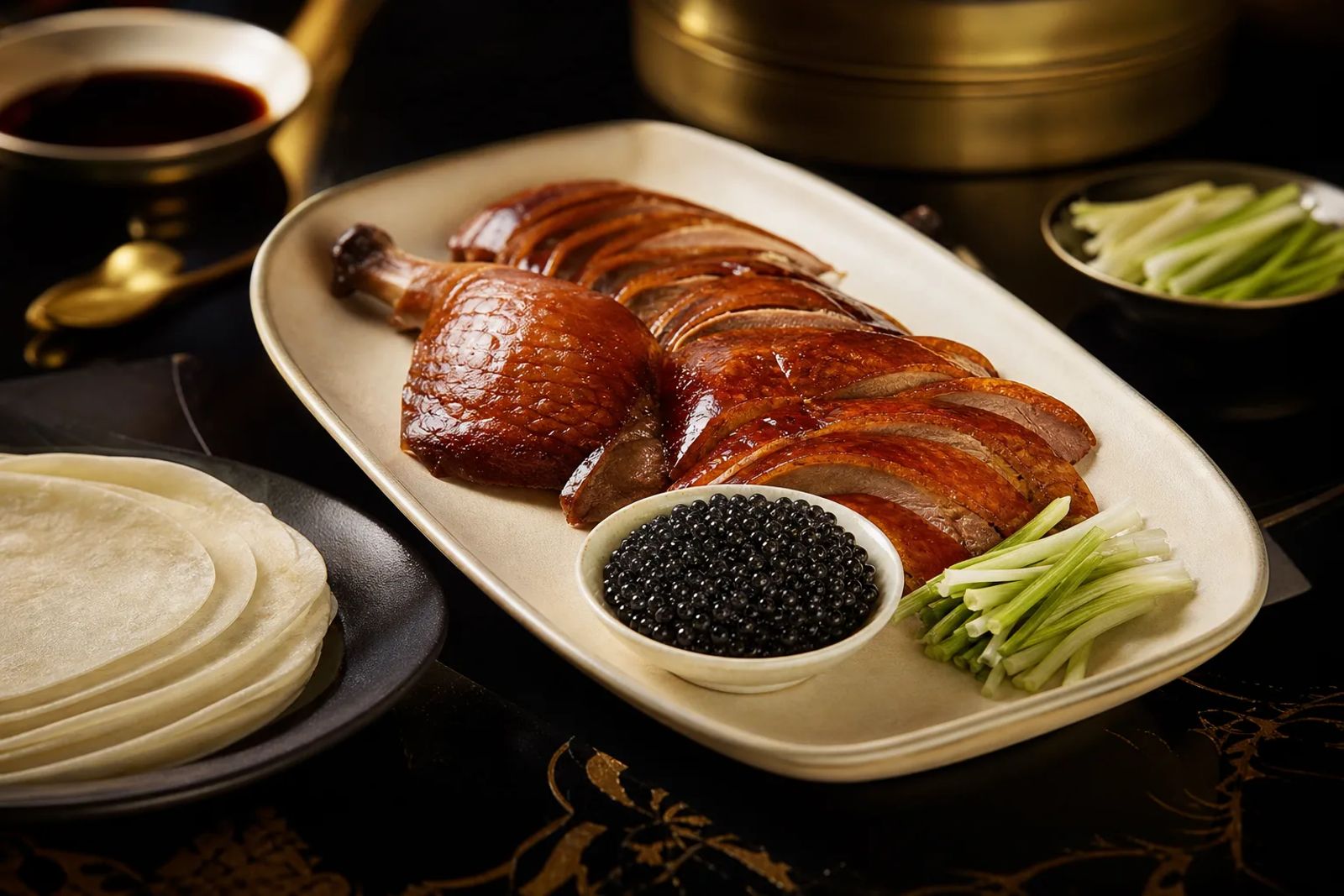
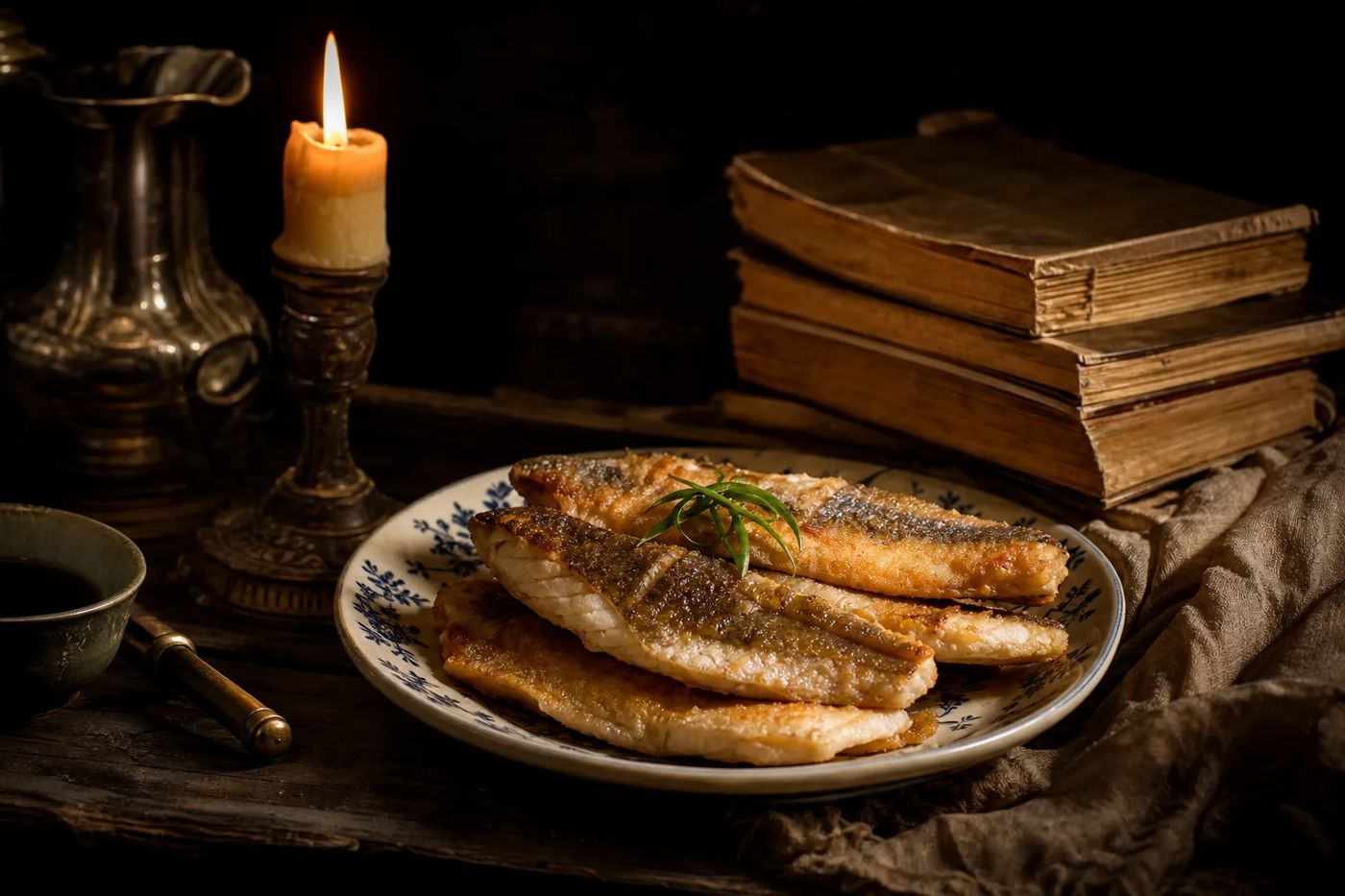
Fried sturgeon was a popular food in China during the Song dynasty, from 960 to 1279, according to FAO’s 2019 account of the industry. Today, Beijing restaurant menus pair caviar with Peking duck and steamed shrimp dumplings. Between those dishes lies a story of an ancient food fish and a much newer caviar culture.
Caviar is now an internationally familiar restaurant ingredient in China, with domestic audiences also finding it through retail and online sales. Its modern story is more interesting than a simple revival of an imperial delicacy.
An old fish, a newer caviar culture
China’s documented appetite for sturgeon reaches back centuries. The history of its salted roe is less clear. FAO’s account describes fried fish during the Song dynasty, not lightly salted eggs served from containers resembling modern caviar tins. The age of an ingredient does not establish the age of every preparation made from it.
There is no documented continuous Chinese tradition of preparing sturgeon roe in the form sold internationally as caviar today. The date and extent of modern caviar imports into China are also poorly documented. Contemporary service belongs to China’s modern engagement with international caviar culture, rather than an established imperial lineage. Older regional practices may yet be documented, but the available record does not support a national origin story.
From export success to a home audience
A country can produce caviar for the world before its own diners develop a taste for it. China’s farming and export story is covered in the country guide. The cultural story begins when local diners choose that food for themselves, in restaurants or at home.
The industry overview in producer Hangzhou Qiandaohu Xunlong’s June 2026 prospectus describes a growing domestic market, expansion into supermarkets and e-commerce, and consumption in restaurants and at banquets. Its findings draw on commissioned research by China Insights Consultancy, rather than an independent survey of Chinese household eating habits.
The distinction is between availability and habit. An online listing tells a diner where to order caviar. It says nothing about how often that diner eats it, serves it to guests or returns for another container. Those patterns would reveal more about caviar’s place in domestic life than the arrival of another sales channel. Wider access alone does not make it an everyday food.
Gifts, banquets and the meaning of an occasion
Caviar is being packaged to give. The same producer’s prospectus lists designs for single-container and multiple-container gift sets, showing a deliberate gift offering. The packaging reveals how a business presents caviar, though not the scale of gifting nationwide or what the recipient makes of it: festive food, personal treat or unfamiliar delicacy.
Banquets need equally precise reading. A restaurant menu for a private celebration and a record of a state banquet answer different questions. The former cannot establish what visiting heads of government were served; a producer’s account cannot substitute for an official event record.
Duck, dumplings and a new place for caviar
Actual menus give the clearest picture of how caviar is eaten. At Cai Yi Xuan in Four Seasons Hotel Beijing, the published à la carte menu offers traditional Peking duck and Peking duck with caviar as separate choices. The distinction is refreshingly clear: an established dish, then an adaptation with caviar added.
MICHELIN’s announcement of its Beijing 2025 selection describes Lu Shang Lu’s roasted duck with caviar, prawn crackers and Shandong pancakes. The combination crosses regional as well as international boundaries. It shows how contemporary Chinese restaurant cooking can keep a dish recognisable while introducing an ingredient associated with another dining tradition. Preservation and invention can share a plate.
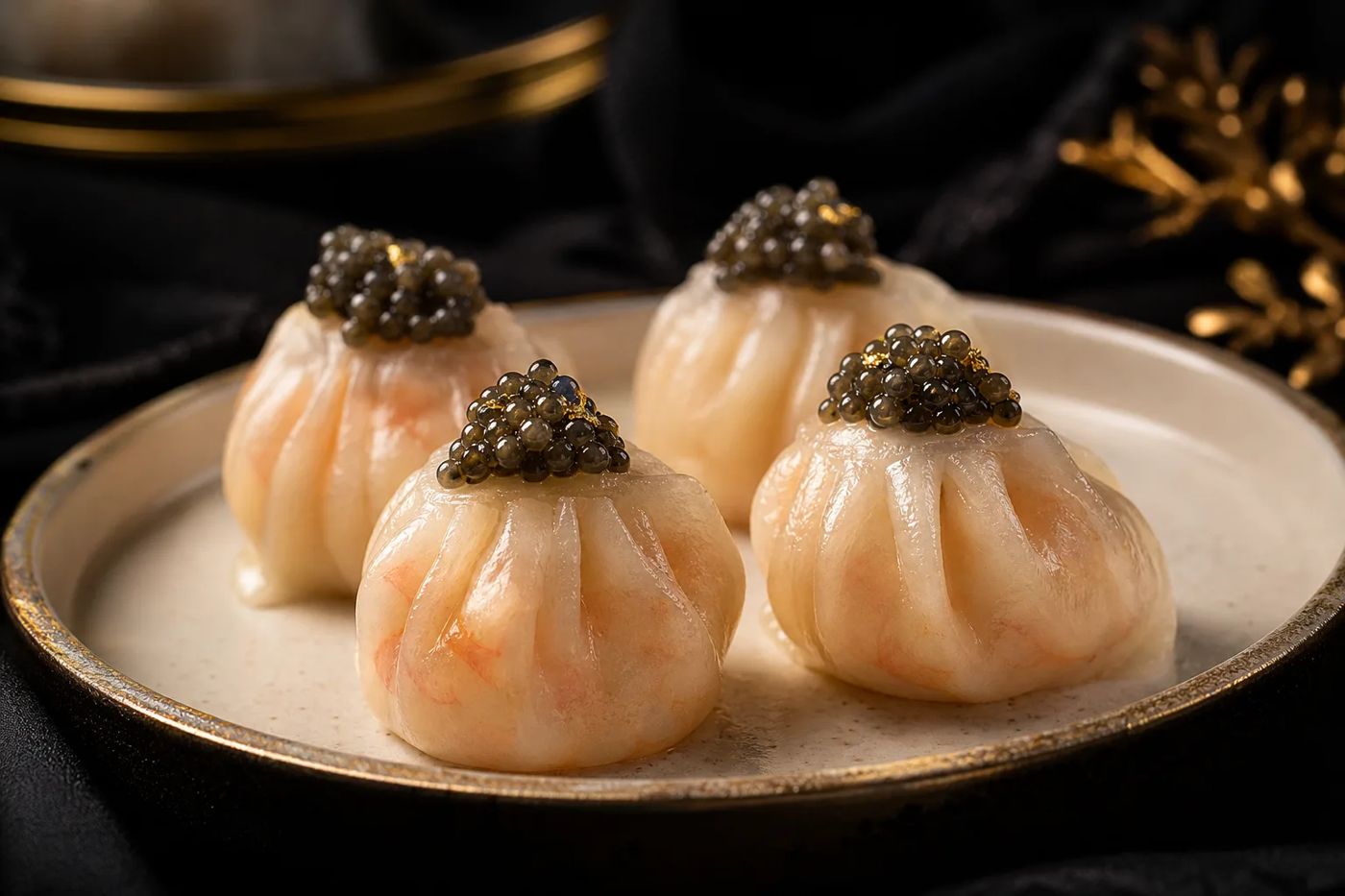
Dim sum offers a smaller mouthful. Shang Palace at Shangri-La Beijing lists steamed shrimp dumplings with caviar on its January 2026 menu. The pairing is documented, but the dish name supplies neither a recipe nor the roe’s precise species, origin or handling method. It describes this restaurant’s preparation, rather than a standard for shrimp dumplings generally.
Together, these dishes show the appeal of changing a familiar mouthful, rather than simply decorating it. Duck, pancakes and dumplings give diners recognisable starting points; the roe adds a contrasting component. For combinations to explore beyond these restaurant examples, continue with Chinese food pairings.
Chinese sturgeon is not Chinese farmed caviar
“Chinese caviar” names a geographical origin, not a species. It does not mean that the eggs came from the protected Chinese sturgeon, Acipenser sinensis. China’s national protected wildlife list places that species in its highest protection category, Class I. FAO’s account of the caviar industry identifies other sturgeons and hybrids used in farming.
Aquaculture’s success must be kept distinct from the fortunes of native wild fish. In its account of the 2022 IUCN reassessment, the World Sturgeon Conservation Society reported the Yangtze sturgeon as Extinct in the Wild. Fish still found in its habitat came from restocking, rather than a self-sustaining wild population.
Read the label: fish, origin and packing
Start with three separate questions: which fish produced the eggs, where did the roe originate, and where was it packed? CITES documentation distinguishes the country of origin from the repackaging operation. A European repacker’s name therefore does not turn Chinese-origin roe into European-origin roe.
A CITES label supports traceability. It does not independently verify the contents or assess their flavour. Read it for the information it provides, rather than as a tasting judgement.
A country can produce caviar for the world before its own diners develop a taste for it.
Numbers on a product name need care, too. The producer’s June 2026 prospectus says that, for domestic sales, it additionally labels products by the sturgeon’s average maturity age at roe extraction. That age refers to the fish, not to how long the caviar has been in its container.
At a restaurant, ask the same questions in plain language: which fish produced the eggs, where did the roe originate, and does the menu mean actual sturgeon caviar? Duck or dumplings may make an unfamiliar ingredient easier to approach. A familiar dish name should still come with a clear answer about what is being served.
Mainland China, Hong Kong and Macau: separate rules
Buying caviar locally and carrying it across a border are different matters. Permission to bring a gift into one of these markets does not establish permission for either of the others. Read country-by-country customs guidance before travelling, and check the rules for the destination.
Mainland China: Customs lists aquatic animal products among prohibited personal carry-in and postal items, with specified exceptions. Do not assume chilled salted caviar qualifies for an exception.
Hong Kong SAR: Personal imports fall under Hong Kong’s own endangered-species controls. Consult AFCD’s personal-effects conditions, rather than applying mainland guidance.
Macau SAR: DSEDT separately lists a personal-effects caviar exemption up to 125 g per person. Check its conditions: the quantity alone is not automatic permission.
A short timeline
| Date | What it documents |
|---|---|
| 960 to 1279 | The Song dynasty, when FAO’s retrospective account describes fried sturgeon as a popular food. |
| 21 July 2022 | Publication of the IUCN reassessment reporting Yangtze sturgeon as Extinct in the Wild. |
| January 2026 | Shang Palace’s dated Beijing menu lists shrimp dumplings with caviar. |
| 22 June 2026 | The producer’s prospectus records domestic channels, age-based product descriptions and gift packaging. |
Sources
-
Food and Agriculture Organization, GLOBEFISH. Chinese sturgeon and caviar industry, 30 September 2019.
-
Hangzhou Qiandaohu Xunlong Sci-tech Co., Ltd. Global Offering Prospectus, 22 June 2026. Industry Overview, Business and intellectual-property schedules. Market research attributed to China Insights Consultancy is commissioned research.
-
Four Seasons Hotel Beijing. Cai Yi Xuan à la carte menu, undated live edition retrieved November 2026.
-
MICHELIN Guide. The MICHELIN Guide Beijing 2025 Officially Released, with 13 Restaurants Making Their Debut on the List, announcement of the 2025 selection, published 2024.
-
Shangri-La Beijing, Shang Palace. Shang Palace menu, January 2026 edition.
-
Shanghai Municipal Administration of Landscaping and City Appearance. National list of key protected wild animals, official online reproduction of the 2021 list, retrieved November 2026.
-
World Sturgeon Conservation Society. Press release on the 2022 IUCN sturgeon reassessment, July 2022.
-
CITES Secretariat. Sturgeons and paddlefish, SC78 Doc. 59, Standing Committee document, 2025. Caviar traceability and label-field discussion.
-
General Administration of Customs of China. Frequently asked questions concerning inward and outward postal articles, undated live edition retrieved November 2026. Reproduces the prohibited-products list under Ministry of Agriculture and Rural Affairs and General Administration of Customs Joint Announcement No. 470 of 2021.
-
Hong Kong Agriculture, Fisheries and Conservation Department. Personal or household effects, page dated 16 March 2026.
-
Macao Economic and Technological Development Bureau, DSEDT. CITES frequently asked questions, undated live edition retrieved November 2026, personal-effects exemptions and quantity table.
This article was researched through official conservation and customs guidance, published restaurant menus, FAO reporting and a producer’s prospectus, with commercial statements kept distinct from independent evidence.
Last checked: November 2026