

Smooth texture, fruit and nut notes, gentle salinity: that is how producer Calvisius describes its white sturgeon caviar. It is a more useful starting point for a gift than a grand name. Choose something the recipient will enjoy eating, in a quantity they can finish, and arrange delivery when someone can refrigerate it immediately.
The best choice begins with their tastes, dietary needs and plans. A small tin for one sitting can be a greater pleasure than a large one that leaves them managing storage and unfinished food.
Choose a caviar gift for the person
Ask three questions: have they enjoyed caviar before, what did they like about it, and when would they eat this gift? For a newcomer, establish whether they enjoy seafood and salty flavours. For an enthusiast, ask for a previous tin’s species or a photograph of its label.
A bottle is optional. Check whether they drink alcohol rather than assuming it belongs beside the caviar; the food can carry the gift by itself. Find out, too, whether they would enjoy a quiet tasting for two or a meal shared with other people.
Match the preparation to the person. A keen cook may relish choosing accompaniments; someone else may want nothing more than a tin and a spoon. A gift should not become a shopping list, or an obligation to invite guests, unless that is part of the pleasure.
| Recipient | What to consider | Piece to read |
|---|---|---|
| First-timer | One clearly identified caviar; a manageable tin | matching species to taste |
| Enthusiast | A favourite species or deliberate contrast | caviar gifts |
| Someone who enjoys sharing | Extras that suit everyone eating | gift sets and hampers |
| Someone who prefers going out | Dates, location and dietary accommodation | tasting experiences as gifts |
Check dietary and health needs first
Ask privately before ordering. A gift note arriving with the food is too late. Check the whole selection, including accompaniments and drinks, and let the recipient decide what suits their needs. If anything remains uncertain, choose a non-food gift rather than leaving them to resolve it at the table.
- Pregnancy: ask first and check the specific product with their midwife; see pregnancy guidance.
- Fish allergy: choose a non-food gift unless the recipient has confirmed with their allergy clinician that this particular roe is suitable.
- Children: ask the parent who will eat it; US FDA guidance identifies young children as more vulnerable to foodborne illness.
- Kosher: major Orthodox bodies such as the OU treat sturgeon roe as not kosher; ask which certification the recipient accepts.
- Halal: ask about requirements for the roe, added ingredients and any drinks, then check product-specific certification where required.

Match species and style to their taste
Choose flavour before prestige. For a first tasting, look for clearly described granular caviar with a gentle marine profile, rather than an unfamiliar selection chosen for its name alone. Calvisius’s white sturgeon caviar, Acipenser transmontanus, offers an example: its tasting literature describes smooth texture, fruit and nut notes, and gentle salinity.
For someone drawn to a more pronounced taste of the sea, ask about Siberian sturgeon caviar, Acipenser baerii. Calvisius describes one preparation as firm, with oyster, nori seaweed and iodine notes. Both sets of tasting notes describe that producer’s particular preparations, not guaranteed flavours for every tin from either species.
An enthusiast may welcome a species or preparation documented as having a stronger marine profile. Otherwise, ask about a favourite species or a deliberate contrast. Ask for the scientific name and processing description. Royal and Reserve are trade names, not species or legal grades.
Choose a tin they can finish
Plan on 15 g per person for a small tasting. This is the site’s planning portion, rather than a regulatory serving size. For two people, 30 g (about 1 oz) is a straightforward starting point. Four such portions call for 60 g; match the available tin sizes to that total.
Decide whether the roe will be the focus or a small finishing touch on food. Tell the supplier how many people will share it and how it will be served. Check the net weight of roe, rather than the combined weight of a presentation containing other foods.
An opened tin is for enjoying promptly, not stretching across successive weekends. Producer Aquatir, for example, allows opened jars no more than 48 hours at 0 to 6°C. Follow the actual tin’s storage instructions, including any shorter limit after opening.
For separate tasting evenings, several sealed small tins can make more sense than one large container. Confirm the remaining unopened shelf life on delivery and make sure it covers the intended date. The date on the tin takes precedence over a general website estimate.
Consider roe, accessories or an experience
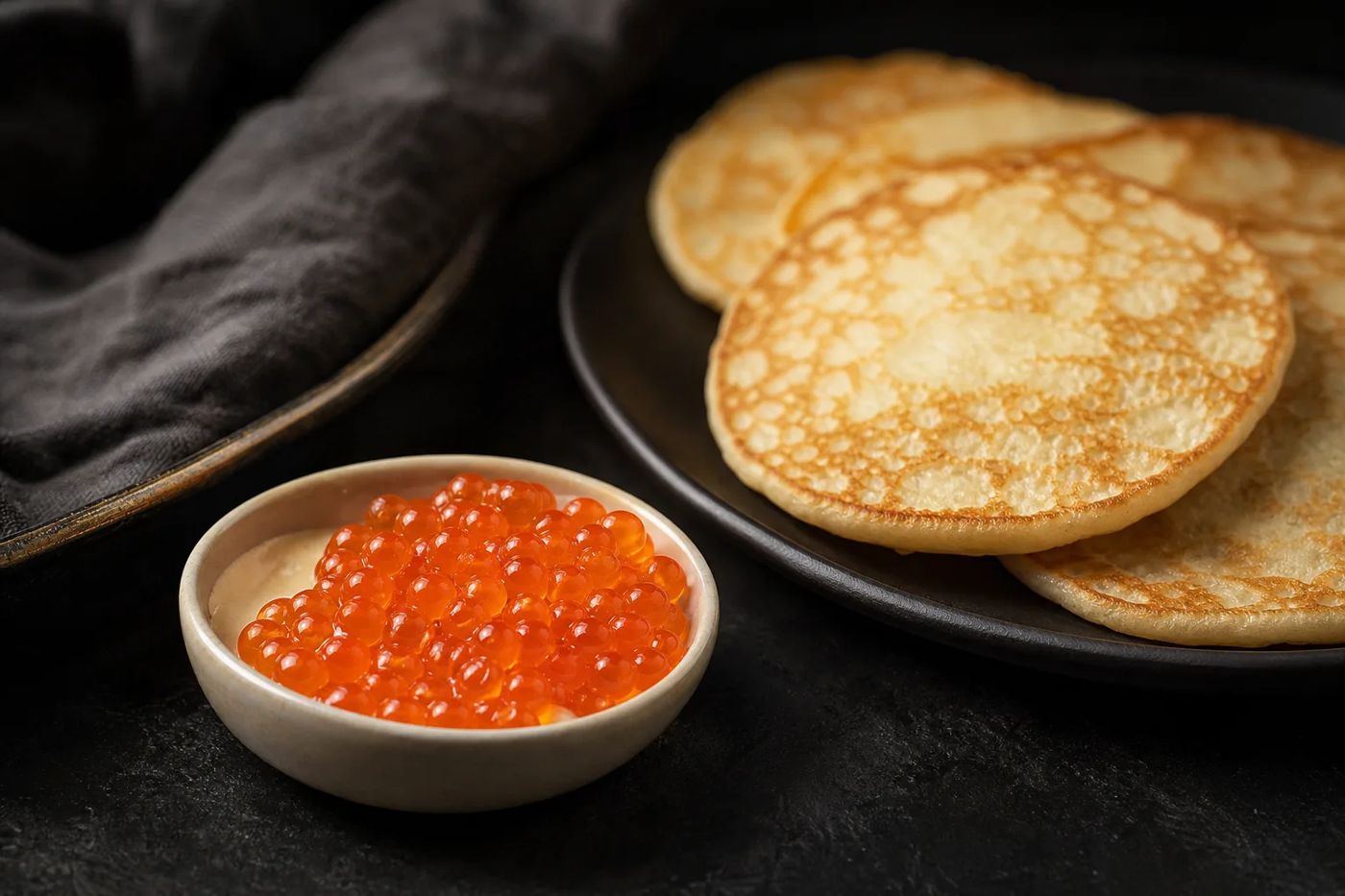
Non-sturgeon fish roe, such as salmon or trout roe, may be just the thing for someone who already enjoys those foods. Be clear about the contents: US FDA guidance, which is not binding, says unqualified caviar should refer to salted sturgeon roe, while other fish roe called caviar should identify the fish. Check ingredients for added flavourings, colours and other components.
A gift should not become a shopping list, or an obligation to invite guests, unless that is part of the pleasure.
If fish roe is unsuitable, consider a serving accessory or, after checking its ingredients, a clearly labelled plant-based alternative. Choose a spoon or server that fits the recipient’s habits, storage space and existing tableware. The spoon guide compares mother-of-pearl, horn, bone, glass and gold to help find something they will use.
For someone who enjoys learning with others, a guided tasting may beat managing a chilled delivery. Check location, booking dates, accessibility and dietary accommodation, and whether alcohol is optional. Let the recipient choose the appointment: the gift should be an evening to anticipate, not a commitment they cannot comfortably attend.
Check traceability before ordering
Ask to see the label, not just the presentation. Request the species, country of origin, ingredients, storage instructions and an image of the container’s traceability label. For sturgeon caviar, this should include the non-reusable CITES traceability label. EU rules and US rules for international trade require such labels, recording information including species, source, origin and processing or repackaging details. CITES is the international convention regulating trade in listed wildlife.
Distinguish origin from repacking: the country where caviar is repacked is not necessarily where the roe originated. The CITES label supports traceability, but does not independently verify the contents or the maintenance of the cold chain. The online buying and delivery guide sets out questions to ask the supplier beforehand.
Arrange delivery around a real person
Someone needs to take the parcel straight indoors. Agree a delivery day with the recipient, then ask the supplier how its chilled packaging is validated for the route, what happens after a delay and how to report problems. Avoid an unattended doorstep or an office reception without confirmed refrigerator access.
Make room in the fridge before dispatch, including space for chilled accompaniments. FSA guidance for England recommends 0 to 5 °C (32 to 41 °F); US FDA seafood guidance specifies 4 °C (40 °F) or below. These are general refrigerator limits. The product’s instructions may require colder storage.
Check the delivery promptly on arrival against its stated chilled conditions. US USDA FSIS mail-order guidance says not to eat perishable food arriving above 4.4 °C (40 °F), and to contact the company. Normal appearance or smell cannot establish safety. Never taste suspect food to test it.
Sending a gift abroad
Settle the border requirements before sending the gift. For the EU, UK, US, Switzerland, UAE, China, Japan, Russia or Australia, check the destination’s wildlife-trade, food-import and customs requirements, as well as the dispatch country’s export rules. Ask an experienced importer to confirm that the particular species, product and route can be handled legally and kept cold.
The often-mentioned 125 g personal-effects allowance is not permission to post a gift. GOV.UK’s caviar exemption concerns personal luggage for personal use, with individually marked containers. If paperwork or border delays cannot be resolved in advance, arrange a gift already lawfully available within the recipient’s destination country instead.
Include a useful gift note
If the parcel is a surprise, send storage information before delivery, copying the actual product’s temperature and after-opening instructions rather than inventing a shelf life.
A chilled gift is arriving for you: please unpack it promptly and refrigerate it according to the label. Keep it sealed until you are ready to eat, then follow the after-opening instructions. Serve it chilled, open it just before tasting and use a clean spoon. Enjoy every spoonful.
Sources
- Calvisius. The Egg. Live producer page, undated, retrieved November 2026. The tasting descriptions distinguish its white sturgeon and Siberian sturgeon preparations; the storage section advises prompt refrigeration and opening shortly before tasting.
- Aquatir. Caviar Cards. Live producer specifications, undated, retrieved November 2026. Product instructions specify opened jars at 0 to 6°C for no more than 48 hours.
- Food Standards Agency. How to chill, freeze and defrost food safely. Published 18 December 2017; live guidance retrieved November 2026. Applies to England, Northern Ireland and Wales and recommends a refrigerator temperature between 0 and 5 °C. Source.
- US Department of Agriculture, Food Safety and Inspection Service. Mail Order Food Safety. Current live FSIS guidance, checked November 2026. Supports recipient notification, refrigerator access, temperature checks and rejection of warm perishable deliveries. Source.
- US Food and Drug Administration. Selecting and Serving Fresh and Frozen Seafood Safely. Live consumer guidance retrieved November 2026. Supports refrigerator limits, clean handling and the greater vulnerability of young children to foodborne illness. Source.
- NHS. Foods to avoid in pregnancy. Live England-facing guidance retrieved November 2026. Advises avoiding raw fish and explains the Listeria concern with raw, cold-smoked and cured fish. Source.
- Institute of Child Nutrition. Adult Day Care Food Allergy Fact Sheet: Fish Allergies. Undated edition retrieved November 2026. Identifies fish eggs, including caviar and roe, among foods relevant to fish-allergy avoidance. Source.
- US Food and Drug Administration. CPG Sec. 540.150: Caviar, Use of Term, Labeling. October 1989 edition, live guidance retrieved November 2026. Nonbinding guidance distinguishing unqualified caviar from named other-fish caviar. Source.
- European Commission. EU Wildlife Trade Reference Guide, Annex XIV. Live reference retrieved November 2026. Explains EU caviar labelling and traceability under Regulation (EC) No 865/2006, including separate origin and repackaging information. Source.
- US Fish and Wildlife Service. 50 CFR 23.71: How can I trade internationally in sturgeon caviar? Electronic Code of Federal Regulations, live text retrieved November 2026. Paragraphs (b) and (c) cover international-trade labels and associated documentation. Source.
- Department for Environment, Food and Rural Affairs and Animal and Plant Health Agency. Check if you need a CITES permit to import or export endangered species. Live guidance retrieved November 2026. Its personal-effects section describes the individually marked 125 g caviar allowance for personal luggage and personal use. Source.
This piece was researched using official food-safety and wildlife-trade guidance, with producer descriptions used only for attributed sensory characteristics and product-specific handling examples.
Last checked: November 2026