
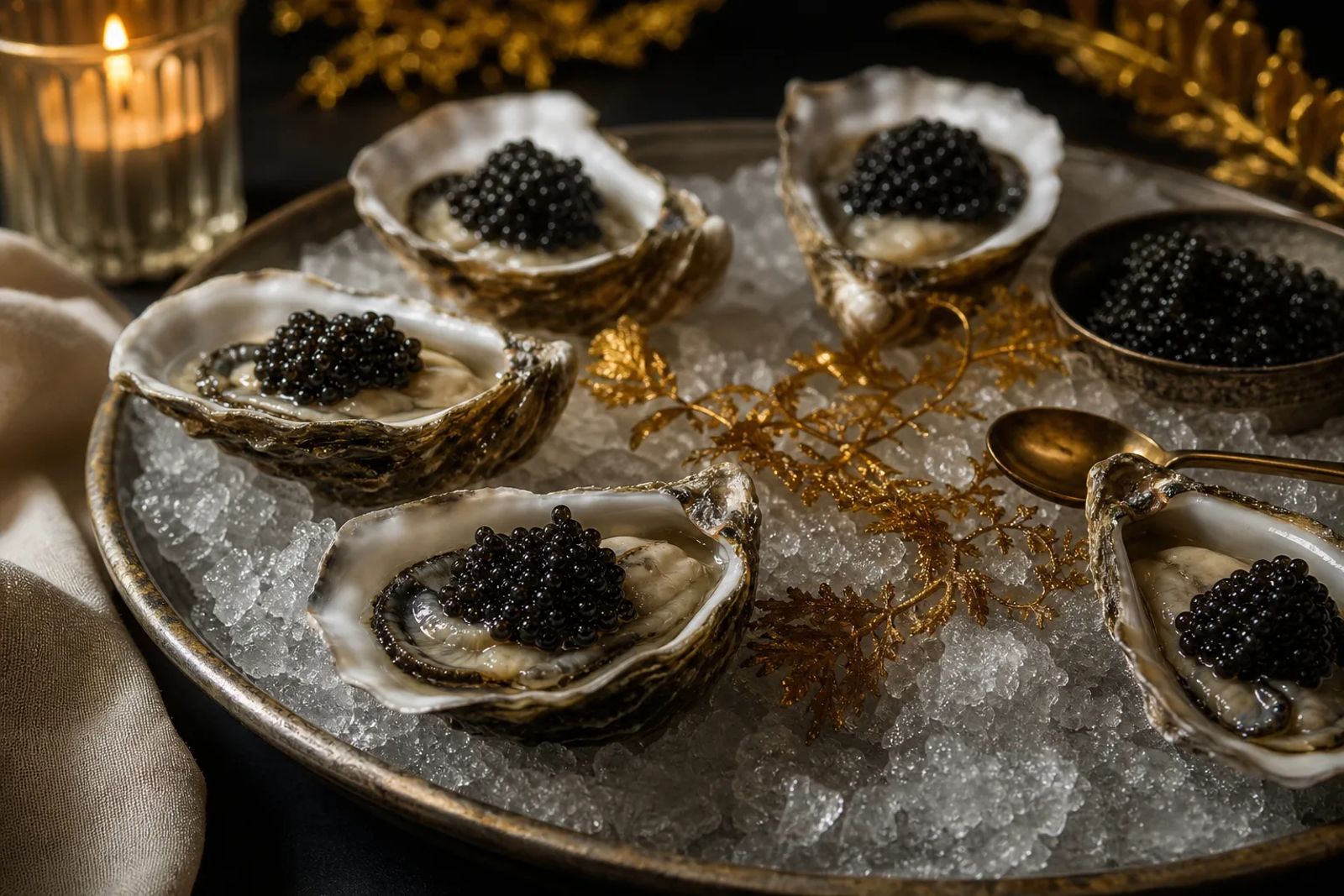
Once a tin is opened, Petrossian's French guidance calls for its caviar to be eaten within 24 hours under its specified refrigeration conditions. Christmas and New Year deserve separate openings, not one tin stretching between celebrations. Give caviar its own moment at the table, rather than leaving it to linger through a long party buffet.
Plan around the meal, the delivery and the storage instructions on the actual tin. Reserve ahead of the holiday rush, choose a delivery you can receive and keep the caviar refrigerated until a short, deliberate service.
Different traditions, different tables
For Novy God, the secular New Year celebration, caviar belongs among the zakuski, the cold appetisers documented by ANU Museum's Foodish project. This account concerns the former Soviet cultural tradition, distinct from Christmas observance, rather than a compulsory menu for every Russian household. The Russian caviar traditions article explores that setting.
In France, the national tourism website France.fr suggests oysters with French caviar for New Year's Eve, an example of a contemporary réveillon, or evening feast, setting rather than an ancient, universal custom. The French caviar culture guide sets this serving style in its broader culinary context.
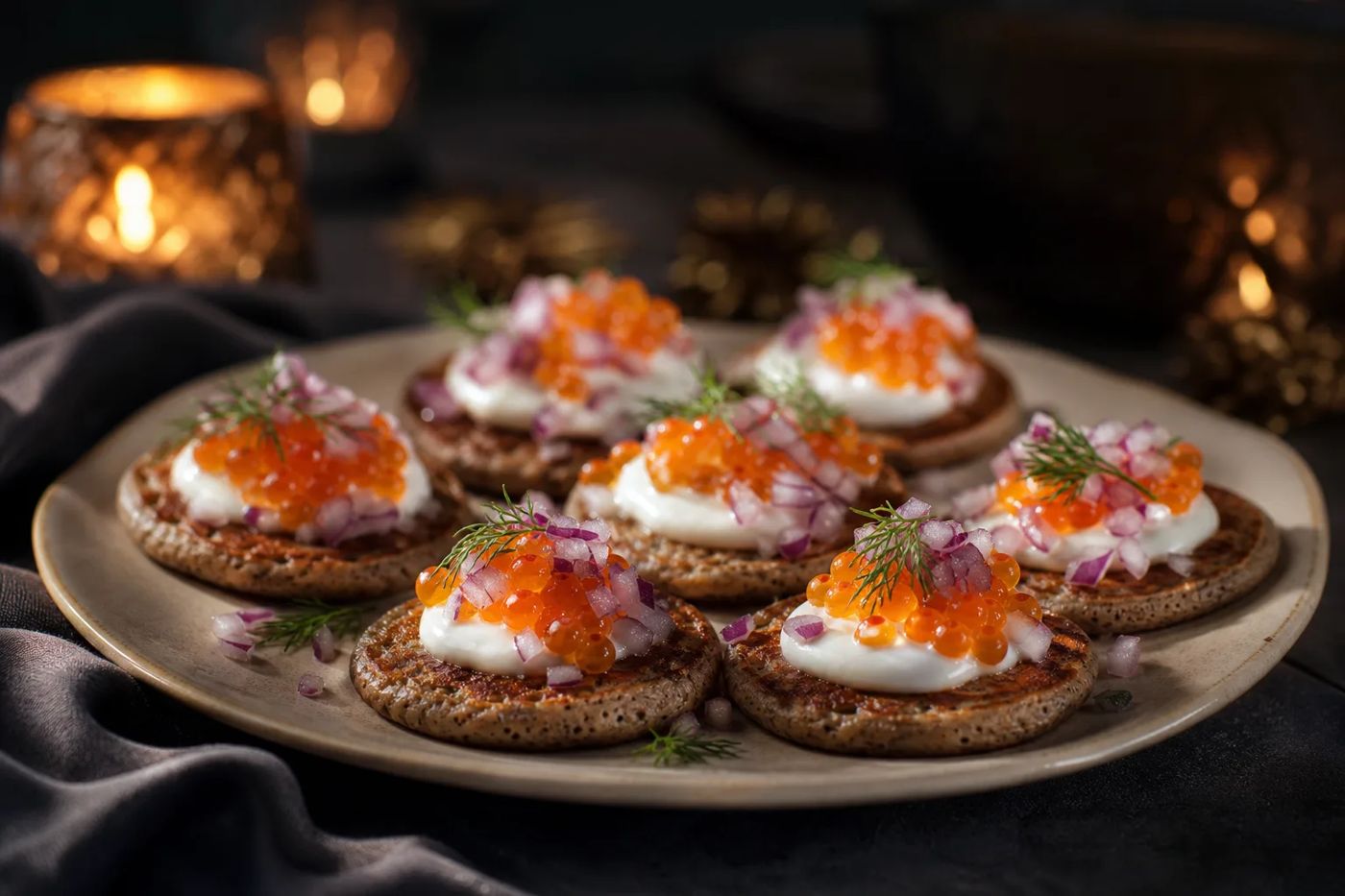
For Nordic inspiration, start with a dish rather than a sweeping claim about Scandinavian Christmas. Visit Finland describes winter blinis, buckwheat pancakes, served with sour cream, fish roe, red onion and dill. Borrow that combination for a winter table without assuming that sturgeon caviar features in every Nordic household's Christmas dinner.
The calendar matters too. Some Orthodox churches celebrate Christmas on 7 January in the Gregorian calendar; others observe it on 25 December. Japan has a distinct New Year roe tradition. The government magazine Highlighting Japan describes kazunoko, herring roe, among osechi, celebratory New Year dishes, and explains its association with wishes for descendants' prosperity.
Ordering caviar for Christmas and New Year
Decide where the caviar will be eaten before arranging where it will arrive. An appetiser at home, a seated course elsewhere and a gift sent to another household present different delivery problems. A parcel reaching your house is little help once you have left for your host's home. Use caviar gifts to choose the format first.
Ask the supplier for its current Christmas and New Year delivery schedule, your destination's ordering deadline and the last supported dispatch. Do not reuse last year's cutoff. Nor is an order deadline necessarily a promised arrival date, especially when delivery services close for holidays or do not operate daily.
Reserve ahead, but time receipt to the product's dated life rather than accepting the earliest delivery offered. Ask whether the supplier can confirm the intended eating date before dispatch, and establish what happens after a missed delivery or disruption. Those answers are more useful than an unsupported promise of holiday freshness.
For a gift, agree who will receive it and tell the recipient that something perishable is coming. University of Florida extension guidance advises notifying recipients and arranging someone to receive food. Keep the contents a surprise, not the arrival of a chilled parcel while everyone is away visiting family.
Fresh or pasteurised for the holiday?
“Fresh” usually means unpasteurised caviar in this context. It does not tell you how many days the tin can safely remain in the fridge. Ask for three things for the exact product supplied: its unopened shelf life, required storage temperature and instructions after opening.
Pasteurisation is a heat treatment that can extend storage life. Codex code CXC 52-2003, section 20.19, lists flavour change and hardening of grains as possible defects. Ask about the finished texture; judge how long the caviar will keep by the supplied storage instructions, not the word pasteurised alone.
Plan unopened and opened tins separately. Petrossian's French guidance gives about one month unopened under its specified refrigeration conditions, followed by consumption within 24 hours after opening. Those timings apply to its caviar under those conditions; use the instructions supplied for another producer's tin or a different storage arrangement.
Make room in the fridge
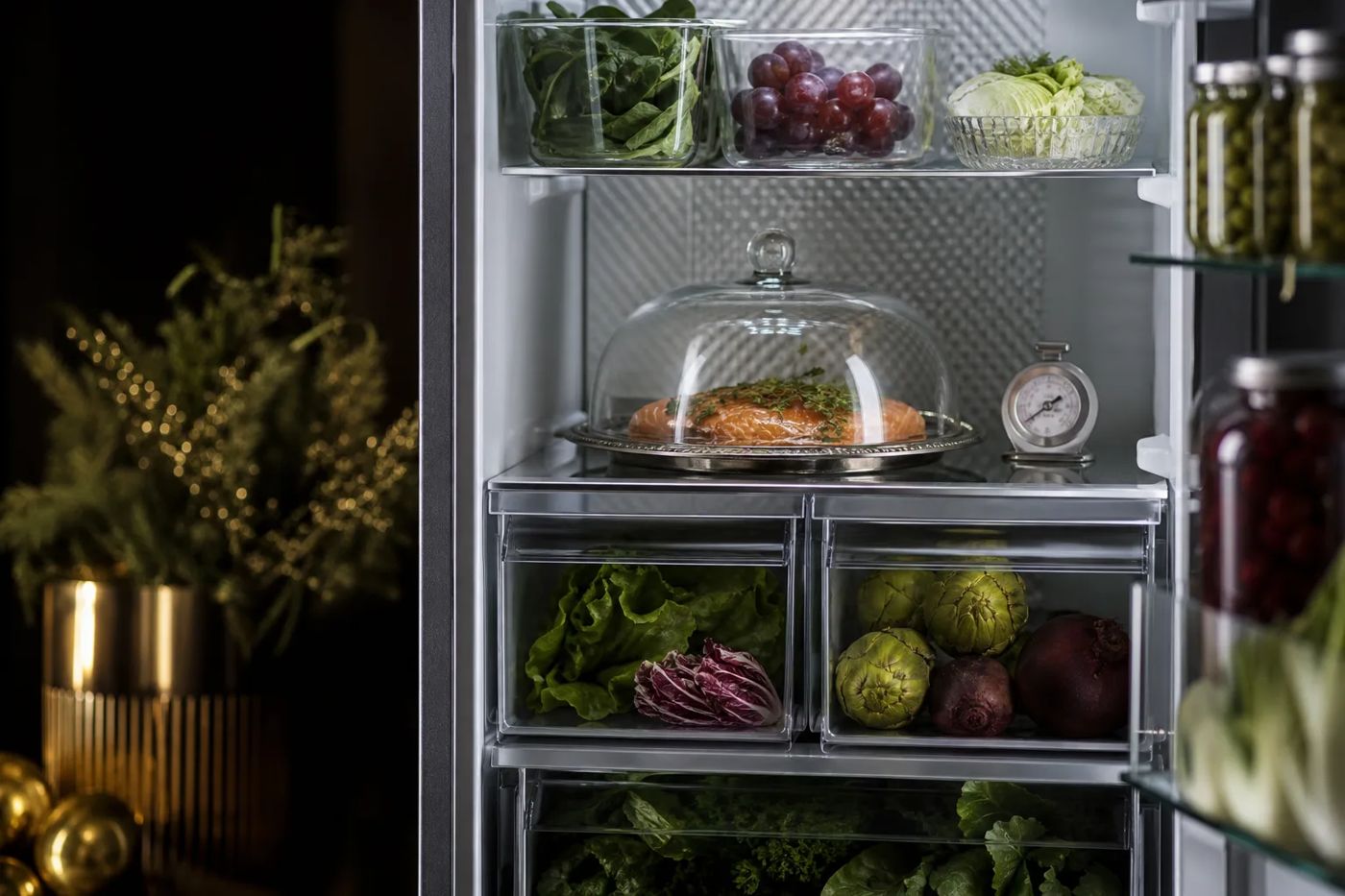
Clear a proper refrigerated space before delivery. A tin balanced against the Christmas pudding is not a storage plan. The Food Standards Agency's guidance for England, Wales and Northern Ireland advises removing items that do not need chilling, such as unopened soft drinks, and keeping raw meat and fish separate from food ready to be eaten.
Check a fridge thermometer, not just the control dial. The FSA's general household advice is 5°C (41°F) or below; follow any colder requirement on your caviar. Petrossian's French instructions, for example, specify 0 to 4°C (32 to 39°F). That is a storage range, not a direction to warm the caviar before eating.
The home storage guide explains how to keep an unopened tin cold. Keep raw poultry covered on the bottom shelf, where drips cannot reach ready-to-eat food. When taking caviar to another house, use an insulated cool bag with cold packs and refrigerate it on arrival. Do not leave it sitting in its gift wrapping.
Unpack deliveries promptly and check them against the supplier's temperature and packaging instructions. US FoodSafety.gov recommends checking delivered perishables with a food thermometer. Never taste a questionable delivery to decide whether it is safe: pleasant smell and appearance cannot establish whether it has stayed properly chilled.
A short planning timeline
Order: reserve once the occasion and guest list are settled. Ask which delivery options and unopened date will apply to your order. A product photograph or generic description cannot settle those details.
Receive: arrange for someone to take the parcel straight inside and check that it arrived under the agreed conditions. Keep the supplier's contact details handy so any delivery problem can be addressed before the celebration.
Keep the contents a surprise, not the arrival of a chilled parcel while everyone is away visiting family.
Store: leave Christmas and New Year tins unopened and identify which belongs to each meal. Put dates and handling instructions somewhere visible, so anyone helping in the kitchen can find them without guessing.
Serve: prepare the accompaniments first, then open only what you intend to offer. Make it a short course or a small round of appetisers, leaving the remaining unopened tins in their refrigerated space.
Choose a manageable menu
A small, separate caviar course gives guests a moment to enjoy the roe before returning to the bustle of Christmas dinner. No juggling gravy, serving dishes and a rapidly cooling meal. It also gives the host a clear moment to serve and clear away, rather than adding another busy platter to the main table.
Blinis or plain toast with a little crème fraîche keep preparation straightforward. Petrossian lists blinis and brioche among its accompaniments. Choose one base and one optional garnish for Christmas, rather than several different bites, each demanding another last minute job. The caviar canapé recipes offer the next step.
For quantities, Petrossian's tasting guidance suggests 15 to 20 g per person. Use portions by occasion to fit the amount to your menu rather than treating that tasting portion as a canapé allowance. For drinks, caviar and champagne helps with the pairing. Have a separate nonalcoholic choice ready for guests who prefer it.
Ask about fish allergy and pregnancy before fixing the menu. The US FDA advises avoiding raw seafood during pregnancy because of microbial risks, including Listeria; discuss personal concerns with a doctor or midwife. Check the accompaniments as well. Prepare any agreed alternative separately, rather than removing roe from an already assembled canapé.
New Year's Eve without the waiting buffet
If caviar is for the midnight toast, bring it out for midnight. Do not put it on the table when the first guest arrives. Choose the serving moment before the table arrangement, and assign one person to bring it out and another to clear away.
Use small plates and replenish with a fresh plate rather than topping up an old one. Keep the food cold with ice or suitable refrigerated equipment. The US FDA advises holding cold food at 4°C (40°F) or below. This is temperature control during service, not a recommendation to warm caviar before tasting.
USDA FSIS says to discard perishable buffet food left out for more than two hours, or one hour above 32°C (90°F). These are US consumer discard limits, not a target length for a caviar course. Keep service brief and observe any shorter limit specified by the producer for the tin being served.
Treat Christmas and New Year as two separate openings. An opened Christmas tin should not automatically become a New Year's Eve leftover. Plan a second unopened tin within its labelled life, then give the later meal a fresh service, with its own accompaniments, plates and spoon.
Sources
-
ANU Museum of the Jewish People, Foodish. Novy God. Undated web edition, checked 2026. Used for the New Year meal and zakuski, not its historical calendar account.
-
Atout France, France.fr. French New Year's Eve: top products to include on the menu. Current web edition, checked 2026; publication year not given.
-
Visit Finland. A year in food: Taste Finland's four seasons. Undated web edition, checked 2026.
-
Government of Japan, Highlighting Japan. New Year's O-sechi Cuisine: Wishing for Happiness in the Year Ahead. January 2025 edition.
-
Petrossian, United States. Frequently Asked Questions. Undated web edition, checked 2026. Supplier instructions and delivery arrangements, not independent food safety guidance.
-
University of Florida, IFAS Extension. Food Safety Tips for the Holiday Season. Publication FSHN14-13/FS260, current web edition checked 2026; revision year not displayed.
-
FAO. Sturgeons (Acipenseriformes). Web chapter, publication year not displayed; checked 2026.
-
FAO and WHO, Codex Committee on Fish and Fishery Products. FFP34/CRD05: draft caviar processing provisions. Undated session document, checked 2026. Used for identified processing defects, not as binding law or current household guidance.
-
Petrossian, France. Frequently Asked Questions. Undated web edition, checked 2026. Product-specific storage, opening, accompaniment and portion advice.
-
Food Standards Agency. Christmas food hygiene. Published 2018, current web edition checked 2026. The page applies to England, Wales and Northern Ireland.
-
US Department of Health and Human Services, FoodSafety.gov. Holiday Tips for Food Gifts. Current web edition checked 2026; publication year not given.
-
US Food and Drug Administration. Food Safety for Pregnant Women, Their Unborn Babies, and Children Under Five. PDF edition, 2021.
-
US Food and Drug Administration. Fact or Fiction: Food Safety for Moms-to-Be and Listeria: Food Safety for Moms-to-Be. Current web editions checked 2026.
-
Paramount Caviar. Caviar General Information. Undated product information, checked 2026. Used only to corroborate the fish allergen declaration.
-
US Department of Agriculture, Food Safety and Inspection Service. How do I keep foods safe at a buffet?. Current web answer checked 2026.
-
US Department of Agriculture, Food Safety and Inspection Service. Mail Order Food Safety. Revised January 2008, archived by GovInfo. Used only for its distinction between fresh and pasteurised caviar, not its generic storage durations.
The piece was researched through museum and national cultural accounts, public food safety guidance and explicitly attributed supplier instructions; serving organisation is editorial advice, not a tested recipe.
Last checked: November 2026