
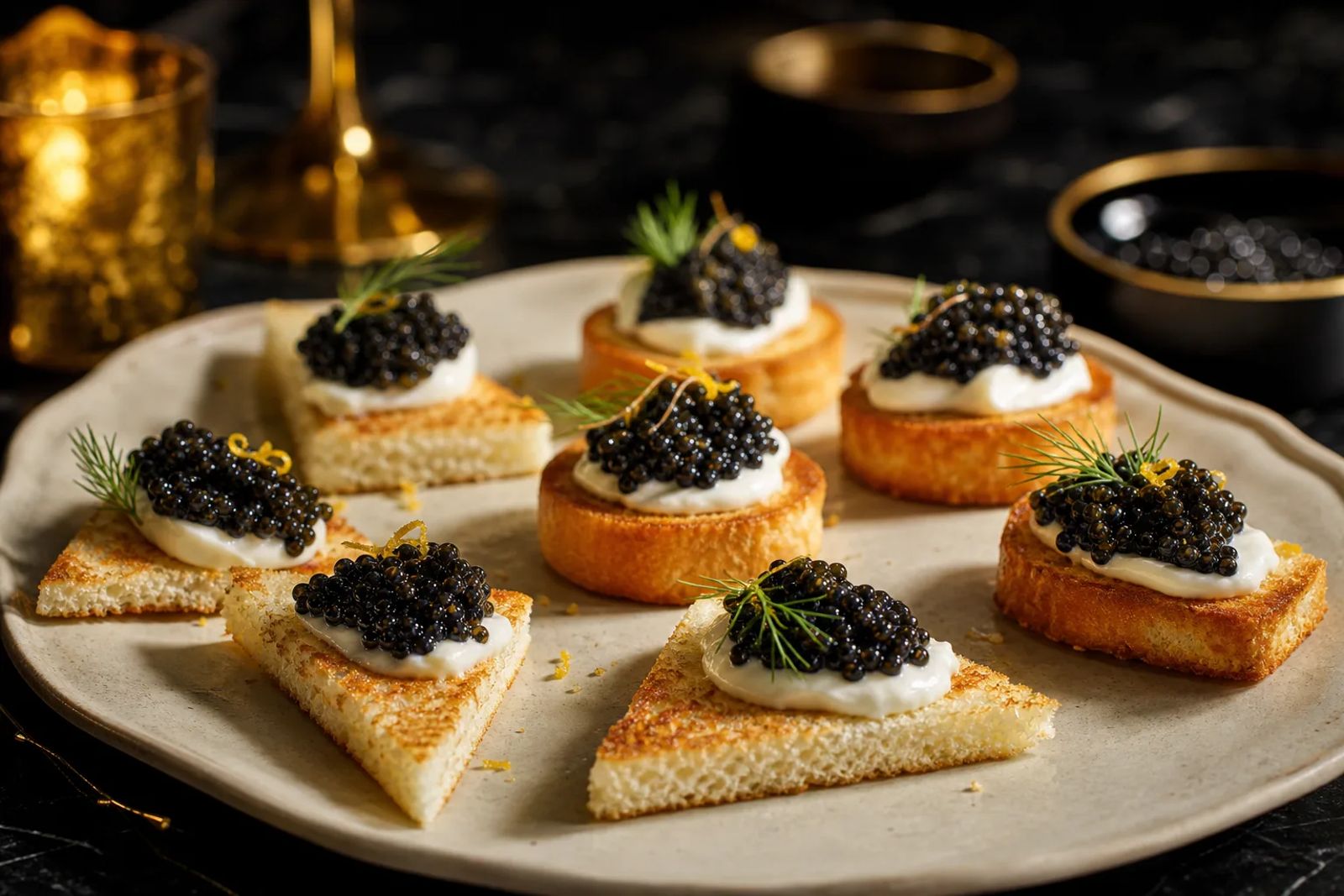
Lightly crisp toast points, tender brioche, thin sheets of Melba toast: three different textures beneath the roe. Choose crustless white toast triangles for simplicity, brioche for richness and slight sweetness, or Melba toast for extra crispness. Whichever you choose, let the bread cool before adding caviar and its dairy accompaniment.
Choosing bread for caviar
The bread can stay quiet or make itself known. Seattle Caviar Co. recommends thin white toast points, while Williams Sonoma's cookbook recipe uses lightly golden brioche rounds for delicate toppings. Both approaches have their place.
Crisp toast offers contrast; soft bread gives way. In a Tasting Table interview, chef Walter Manzke favours soft bread because hard accompaniments interfere with caviar's texture. If you want toast, aim for a light crunch, not a thick, hard slab competing with the roe.
For other bases, see accompaniments and pairings; soft pancakes have their own method in blinis. The method cards below cover the bread alone, ready for your chosen caviar service.
Toast points: thin, plain and lightly golden
A thin slice and a light toast keep this base simple. Use white sandwich bread and remove the crusts for an even texture. Seattle Caviar Co. cuts each slice diagonally twice to make four triangles before baking. Butter is optional; leave it out for the plainest accompaniment.
Toast point method card
Ingredients: One thin-sliced white loaf; optional light buttering. No loaf weight in g or butter quantity is specified.
Equipment: Bread knife, board, baking sheet and wire cooling rack.
Time: Bake for 8 to 10 minutes; preparation and cooling are untimed. Serves: Not stated; each slice makes four points.
- Heat the oven to 175°C (350°F). Trim the crusts and cut each slice diagonally twice into four triangles.
- Arrange in a single layer on the baking sheet. Butter lightly if using, then bake until lightly coloured. Watch the edges: they should not become dark.
- Transfer to the rack and cool before topping. Add caviar only after the toast has left the heat.
Ingredient note: Ordinary white bread contains wheat; butter adds milk. Check the loaf's ingredients for other additions.
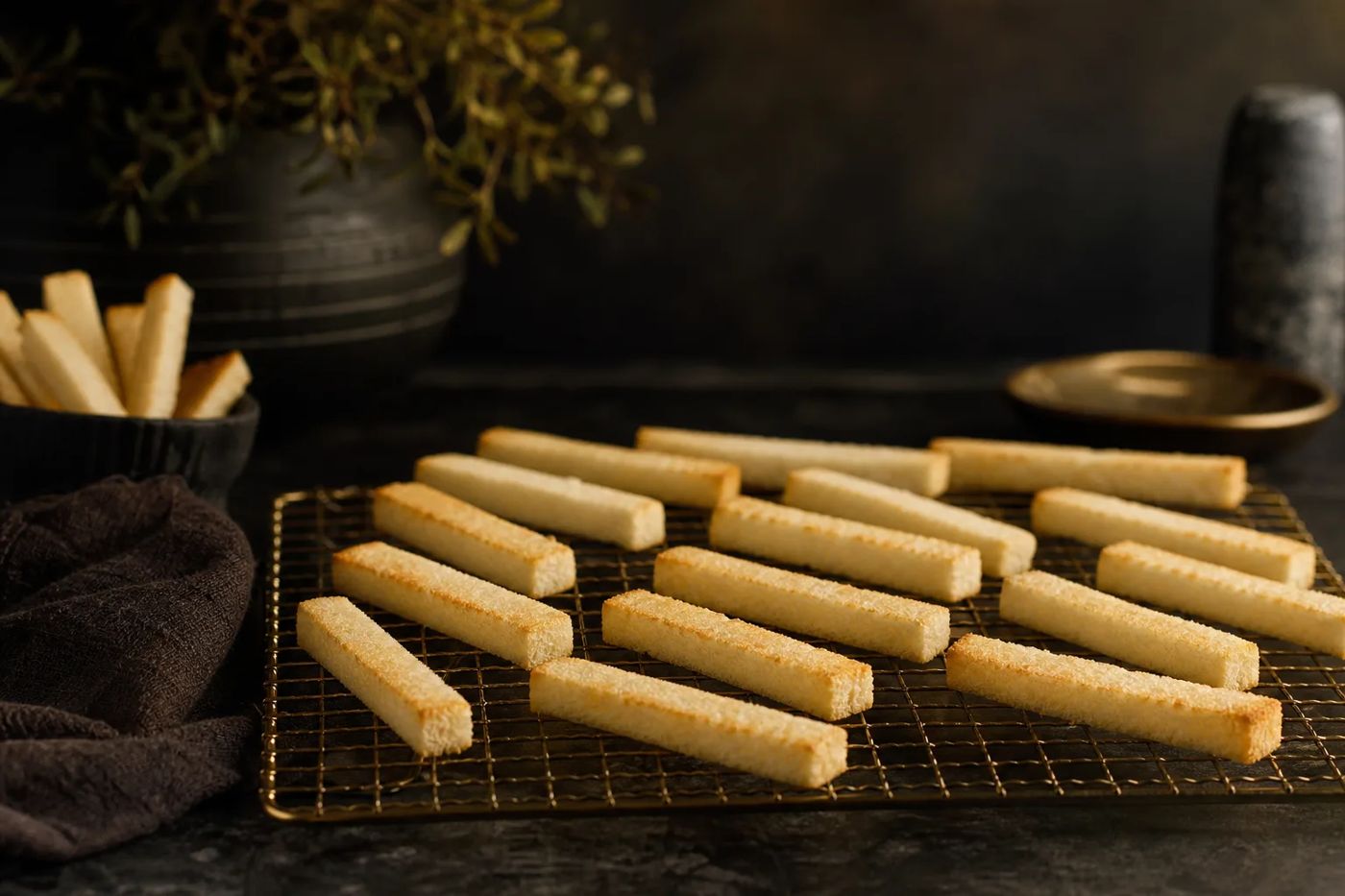
Brioche: tender, rich and slightly sweet
Brioche does not disappear beneath the caviar. Its tender crumb, richness and sweetness are part of the bite. Chef Norman Van Aken embraces that character in his caviar sandwich, using lightly toasted brioche and unsalted butter. Williams Sonoma likewise recommends brioche for delicate toppings.
For a first tasting, our preference is plain white bread: it adds less sweetness and richness alongside the roe. Brioche remains a good option when that fuller accompaniment appeals. Manzke's broader concern is distraction, particularly when the accompaniment's texture gets in the way of the caviar.
Brioche method card
Ingredients: 15 thin slices of plain brioche, without fruit or a sugar topping. Williams Sonoma specifies slices rather than a weight in g.
Equipment: A 38 mm (1½ inch) round cutter, baking sheet and cooling rack.
Time: Williams Sonoma allows 20 minutes for preparation and about 20 minutes for baking, plus cooling. Serves: 14 to 16 in the original topped recipe.
- Heat the oven to 200°C (400°F). Cut four rounds from each slice and arrange on an ungreased baking sheet.
- Bake until lightly golden on both sides, turning once. About 20 minutes is the recipe's guide; judge by colour as well as the clock.
- Cool before topping. Chef Carrie Walters' brioche canapé recipe calls explicitly for complete cooling before adding crème fraîche and caviar.
Ingredient note: Standard brioche contains wheat, eggs and milk. A crème fraîche topping adds milk; caviar adds fish.
Melba toast: toast, split, toast again
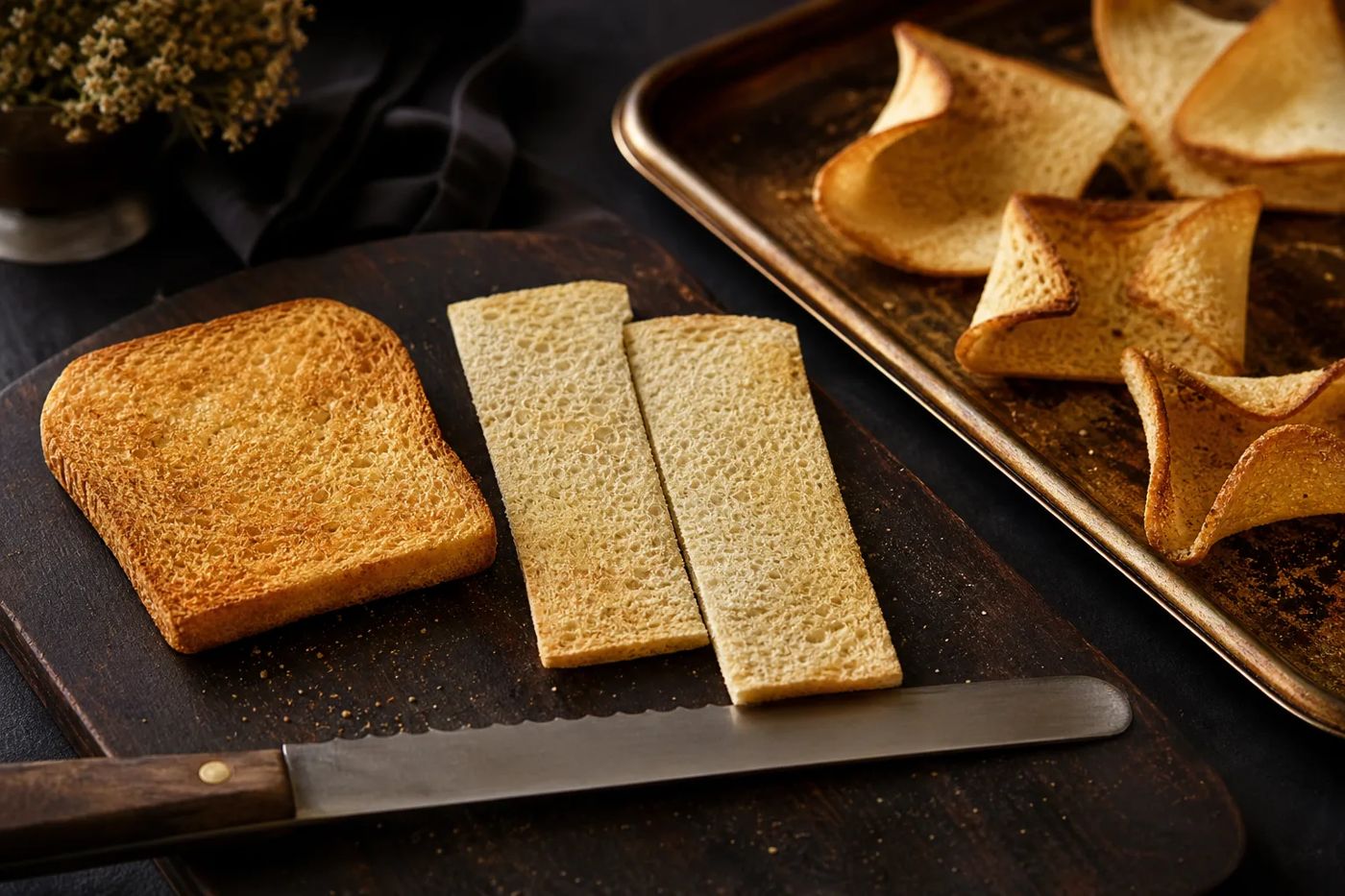
Jacques Pépin's KQED method begins with slices about 13 mm (½ inch) thick, yielding two much thinner sheets. The distinctive step is splitting the toasted bread horizontally through its soft centre. Many methods toast these sheets again; the second toasting in the card below follows Food.com contributor Millereg's published method.
Melba method card
Ingredients: 8 slices white bread; no butter needed for toasting. No weight in g is given.
Equipment: Toaster or grill, serrated knife, board, baking sheet and cooling rack.
If you want toast, aim for a light crunch, not a thick, hard slab competing with the roe.
Time: Food.com lists 15 minutes overall, with no separate cooling allowance. Serves: No dependable portion count stated.
- Toast the bread lightly on both sides, then remove the crusts. Lay each slice flat on the board.
- Keep the knife parallel to the board and split through the soft centre to make two thin sheets. Cut these into triangles.
- Place the triangles under a hot grill with their untoasted sides upwards. Watch closely as they turn golden and the edges curl, then cool on the rack.
Ingredient note: White bread contains wheat. Check its ingredients for milk or other additions.
The singer behind Melba toast
The name belongs to Australian opera singer Nellie Melba. Pépin credits Auguste Escoffier with creating the thin toast and naming it for her.
A Merriam-Webster account published by Deseret News in 1996 repeats a story about Melba's illness in 1897, presenting it as something that is said rather than an established record. The familiar bedside story remains uncertain: the precise date, location and circumstances of the toast's creation are undocumented.
Cool completely, then keep crisp
Dorothy Lane Market's recipe calls for complete cooling before topping. Cool the bread on a rack, and keep the caviar chilled according to its producer's instructions until needed. For topping choices, see crème fraîche, smetana and butter.
To make the bread ahead, pack it only when cool and leave it untopped. A Food.com reviewer suggests an airtight container. Millereg's method also gives a brief oven refresh before serving, printing the temperature as 170°C (325°F), but no fixed keeping period. After refreshing, cool the toast again before assembling.
For gluten-free alternatives, choose potato crisps labelled gluten-free, or potatoes prepared with gluten-free ingredients and clean equipment: see potatoes and caviar.
Sources
- Seattle Caviar Co. Toast Points. Undated online recipe, retrieved November 2026. Source for crust removal, triangular shape, optional butter, oven method and rack cooling. Recipe.
- Williams Sonoma. Brioche Rounds with Caviar. Online recipe adapted from Williams-Sonoma Entertaining with the Seasons, Free Press, 2010. Source for brioche rounds, cutter size, preparation time, baking and original servings. Recipe.
- Tasting Table, Joanna Kalafatis. Simple Tips For Pairing Caviar, According To Chef Walter Manzke. Interview, 19 December 2023. Source for Manzke's preference for soft bread and his objection to hard accompaniments. Interview.
- WLRN Public Media, Norman Van Aken. Caviar, including Mama Ruth's Caviar Sandwich. Published 16 March 2019; recipe copyright 2012. Source for Van Aken's use of lightly toasted brioche and unsalted butter. Chef's recipe.
- Dorothy Lane Market, chef Carrie Walters. DLM Brioche with Caviar. Published 9 September 2021. Source for complete cooling before topping. Recipe.
- KQED, Jacques Pépin. Minute Recipe: Melba Toast, accompanying More Fast Food My Way. 2008 programme material. Source for initial bread thickness, horizontal splitting and the attributed Escoffier and Melba connection. Recipe PDF.
- Food.com, contributor Millereg. Melba Toast. Undated online contributor recipe, retrieved November 2026. Source for toasting after splitting, the listed total time, airtight storage and oven refreshing. Recipe.
- The Kitchn. How to Eat Caviar and Where to Buy the Best Caviar. Online article and toast-point recipe, retrieved November 2026. Source for cooling before spreading dairy. Article and recipe.
- Deseret News, editors of Merriam-Webster Inc. “Melba” Toast Linked to Famed Opera Singer. Published 9 June 1996. Source for the explicitly qualified account of the 1897 illness story. Historical account.
This piece was researched by comparing published bread methods, chefs' recipes and interviews, and attributed accounts of the Melba toast name; the methods were not tested by caviar.uk.
Last checked: November 2026