
Beneath the ice at Kukkolankoski on Finland's Tornio River, burbot are caught in traps and prized for both liver and roe. It is one vivid chapter in a freshwater roe tradition that stretches from Finland to Romania, with carp roe also finding its way into Greek and Turkish tarama.
These eggs can arrive at the table loose and salted, or beaten into a spread. Each preparation has its own character. With raw freshwater roe, handling must account for the fish, the product and the parasites involved.
- Whitefish is a name, not a guarantee of one species or origin.
- Pasteurised roe is a different product from simply salted raw roe.
- US model food safety guidance distinguishes eggs removed from the roe sac and rinsed from some other fishery products.
Four freshwater roes at a glance
Loose eggs, an intact roe sac and a prepared salad are three different ingredients in the kitchen. Roe means fish eggs used as food; knowing their form is the first step towards using them well.
| Roe | Fish and scientific name | Documented setting | Preparation |
|---|---|---|---|
| Whitefish | European whitefish, Coregonus lavaretus and related Coregonus | Finland | Salted loose eggs |
| Pike | Northern pike, Esox lucius | Finland, Russia, Romania | Separated and salted; also pasteurised in Russian production |
| Burbot | Lota lota | Finland, including the Tornio River tradition | Salted loose eggs; served with bread, onion and sour cream |
| Carp | Common carp, Cyprinus carpio | Romania, Greece, Turkey | Salted and matured roe; emulsified into salads or tarama |
Use this as a culinary map, rather than a way to identify unknown eggs. Explore the wider range of fish and preparations in other fish roe.
Whitefish roe: Finnish siika is not vendace
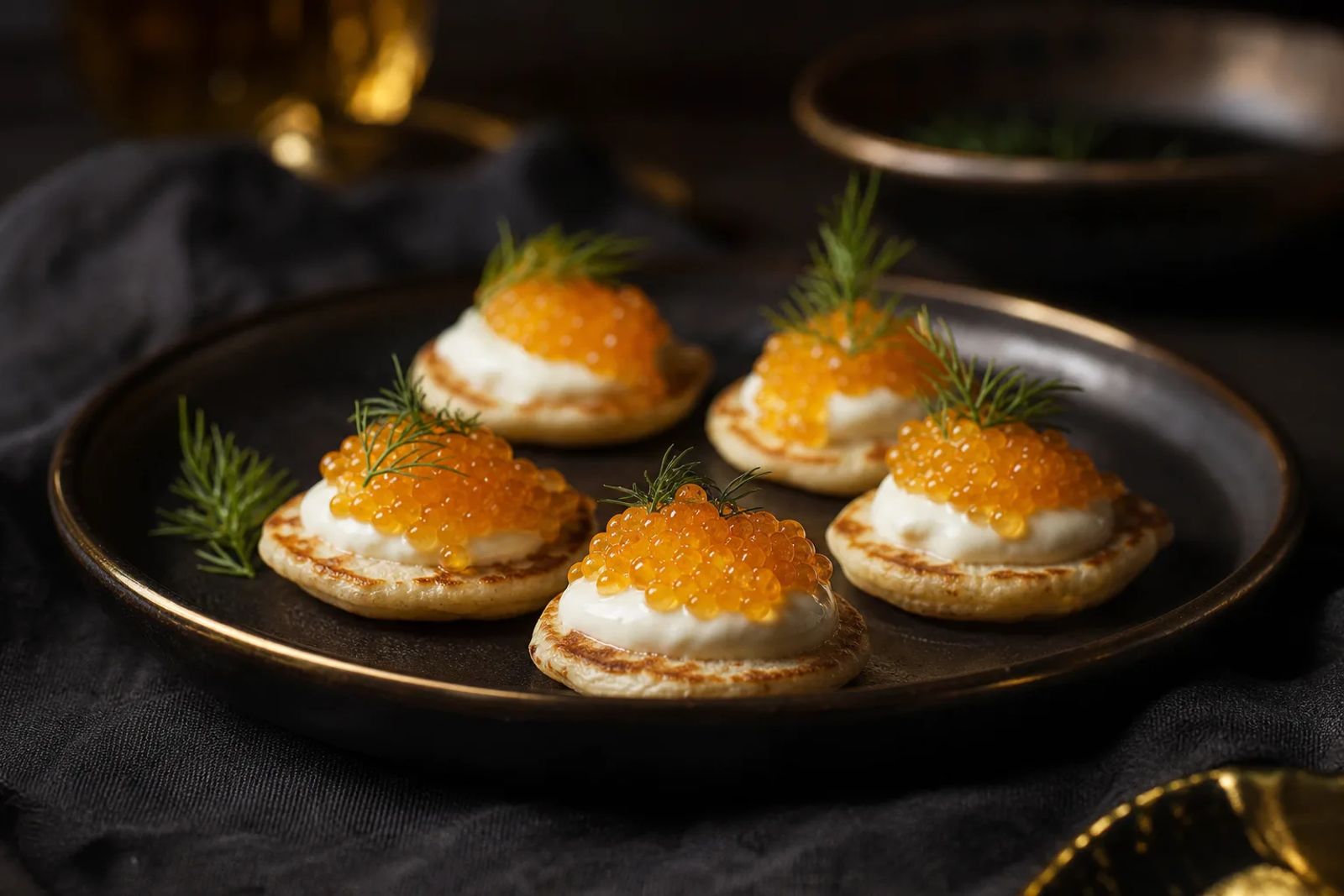
Orange-yellow and small-grained: that is how Finnish cookery magazine Maku describes whitefish roe. Salted and loose, it belongs to Finland's blini and cold-starter table. K-Ruoka, the Finnish retailer's cookery service, recommends it with blinis and in small savoury bites. The broader setting is explored in Nordic roe culture.
The fish behind Finnish siika is usually presented as European whitefish, Coregonus lavaretus. Whitefish names become more complicated across countries and closely related Coregonus populations, however. Siika should not be confused with vendace, the smaller fish behind the separate tradition of vendace roe and Kalix löjrom.
Nor is whitefish roe solely a by-product of wild fishing. Finland's Natural Resources Institute, Luke, records it separately in its aquaculture statistics. K-Ruoka also records imports of whitefish roe from Canada, so the English name establishes neither European origin nor a single species.
Maku's description gives a useful picture of the ingredient, but colour and grain size cannot identify it. No dependable millimetre range for the prepared roe was found.
Pike roe: a shared northern ingredient
Pike roe has a place in Finnish, Russian and Romanian food traditions. It comes from the northern pike, Esox lucius, rather than a sturgeon. Finnish roe guides include it among edible roes, and Romanian documentary records describe pike eggs being salted alongside carp eggs.
A Russian technical account by B. P. Nikitin, preserved in a Canadian government translation, describes lightly salted pike roe and processing at plants in Siberia and the northern Caspian. Nikitin praises freshly prepared roe, a judgement of his own. His account also links concentrated pike processing with spring, a regional harvest pattern rather than a worldwide calendar. Preserved roe can remain available beyond the period when mature fish are landed.
Contemporary producer Russian Fish World documents screened, salted and pasteurised pike roe. Screening separates the eggs from their surrounding tissue. Pasteurisation then uses heat to reduce microorganisms and can alter texture. The result is a different product from simply salted raw roe, a distinction worth checking on the label.
Burbot roe: beneath the Finnish winter ice
Burbot, Lota lota, is firmly rooted in Finland's winter fish cookery. The local account of traditional ingredients at Kukkolankoski on the Tornio River describes fish caught in traps beneath the ice, with both liver and roe valued for the table.
The tradition continues in documented products. Finnish producer Lapland Wild Fish lists unsalted burbot roe from Lake Miekojärvi. A Finnish wholesale specification gives a straightforward example of salted burbot roe: its ingredients are burbot roe and salt, and the fish is identified as Lota lota.
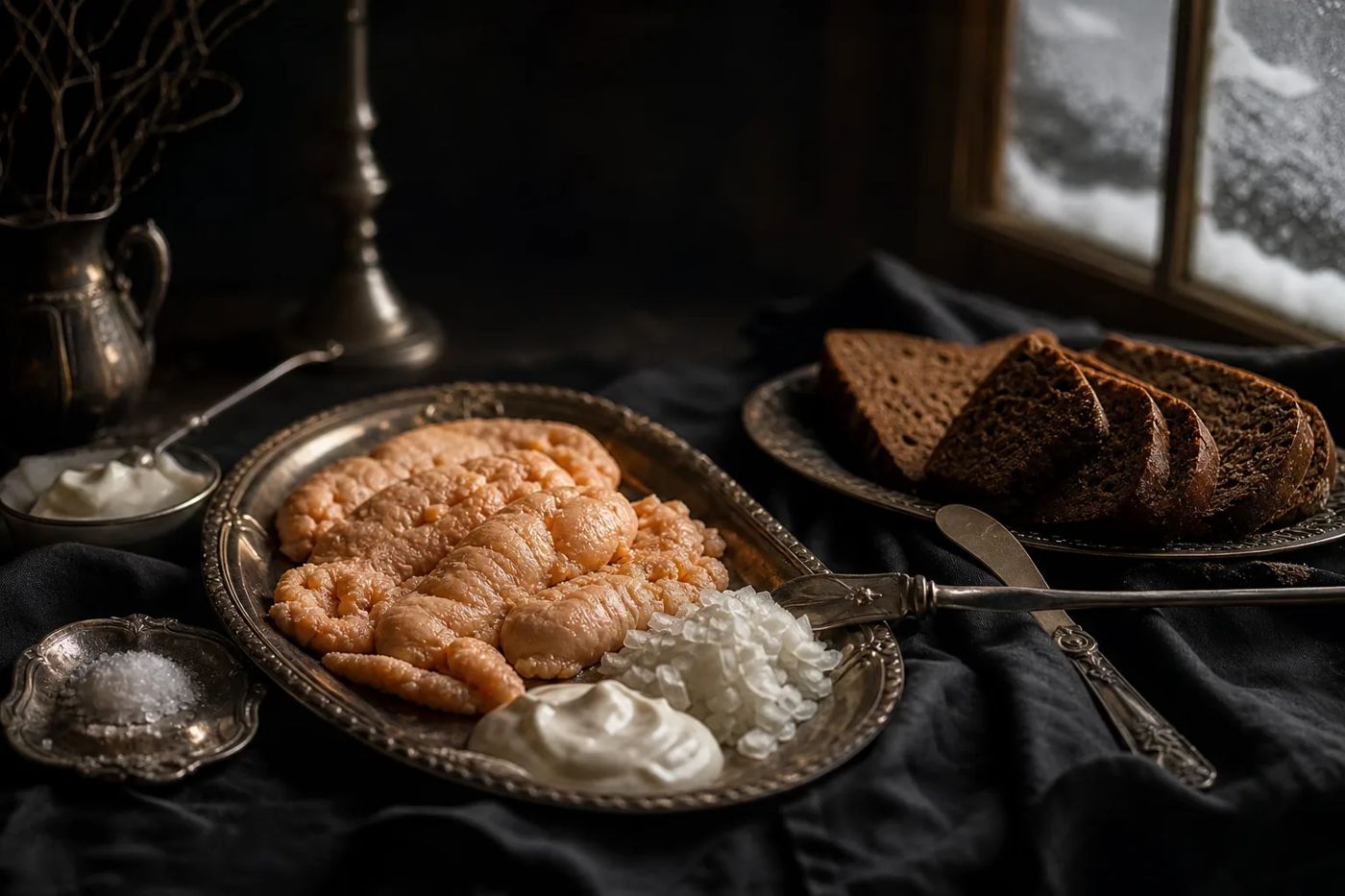
For serving, salted loose eggs belong alongside bread, onion and sour cream. These sources establish no single flavour profile for the roe: descriptions of burbot's mild flesh do not describe its eggs, whose salt level and preparation need separate attention.
Carp roe: from salted eggs to a whipped spread
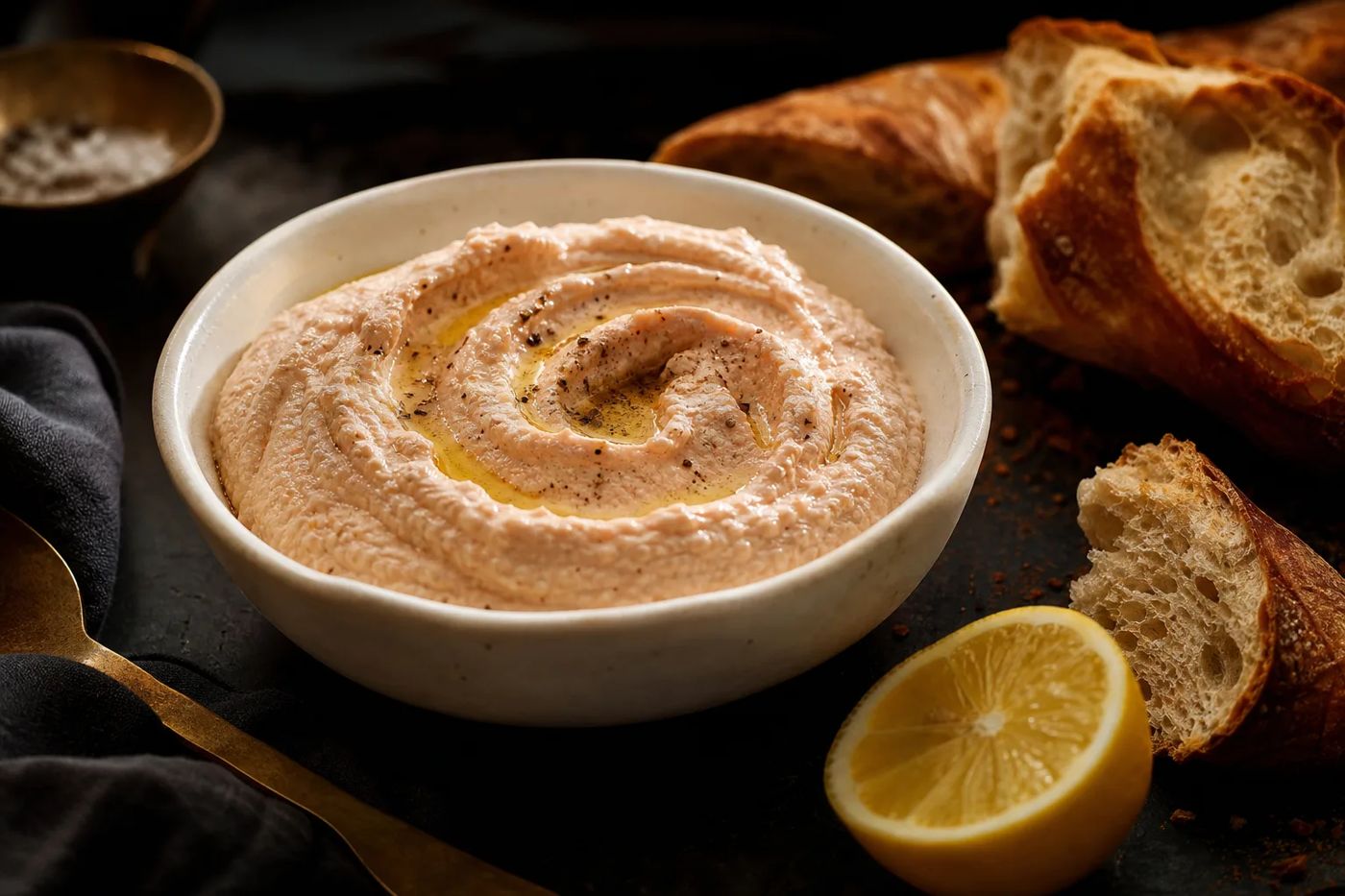
In Romanian salată de icre, salted eggs are beaten with oil and other ingredients into a spread, rather than served as a mound of separate beads. Common carp, Cyprinus carpio, takes the freshwater roe story towards the Danube and the eastern Mediterranean.
The EU TSG specification for Salată tradițională cu icre de crap lists salted carp roe, other salted freshwater roe, sunflower oil, carbonated water and lemon juice. It traces salted carp and pike roe to Grigore Antipa's 1916 account of Romanian fisheries, which includes removing the membranes before salting.
Carp roe also enters tarama preparations in Greece and Turkey. FishBase's culinary glossary describes tarama in those countries as based mostly on carp roe. Other fish roes are used too, so the name alone does not guarantee carp.
Keep the product distinctions clear: salted roe, a whipped salad and a fried roe sac should not receive identical handling instructions merely because all are called roe.
Raw freshwater roe: match parasite control to the product
Salt and lemon do not reliably replace a validated parasite-control treatment. Before serving freshwater roe raw, establish whether that particular product is ready to eat and what control its producer has applied. Salting alone does not answer either question.
Freshwater fish can carry parasites, including broad fish tapeworms. The US FDA distinguishes the roe sac, also called the skein, from the eggs themselves: eggs removed from the sac and rinsed are unlikely to contain parasites. How that distinction affects the requirements depends on the jurisdiction.
EU and UK
In the EU, food business operators must establish whether raw or insufficiently treated roe falls within Regulation (EC) No 853/2004, Annex III, Section VIII, Chapter III, part D, and whether an exemption applies.
For products subject to its freezing requirement, the specified treatments for parasites other than trematodes, or flukes, are:
- Minus 20°C (minus 4°F) for at least 24 hours throughout the product.
- Minus 35°C (minus 31°F) for at least 15 hours throughout the product.
Great Britain and Northern Ireland have different legislative frameworks. Consult FSA guidance for England, Wales and Northern Ireland, and Food Standards Scotland guidance for Scotland, alongside the law applicable to the product. These commercial controls should not be treated as household instructions for every freshwater roe, particularly where flukes are a concern.
Finland's household advice
The Finnish Food Authority advises freezing roe from self-caught fish at minus 20°C (minus 4°F) or colder for at least 24 hours. It separately recommends at least seven days for cyprinid fish because of liver-fluke risk; do not assume that the shorter roe instruction validates every carp-roe preparation.
United States
The FDA's 2026 Food Code exempts fish eggs removed from the skein and rinsed from its parasite-destruction freezing requirement. For fish requiring treatment, one specified option is minus 20°C (minus 4°F) or colder for seven days. The Code is a model: enforceability depends on adoption by the relevant jurisdiction.
At home, choose roe explicitly supplied as ready to eat, or cook it using reliable instructions for that product. A domestic freezer setting cannot establish whether the centre of a container has reached the required temperature for the required time.
Parasite control and bacterial safety are separate matters. Chilled ready-to-eat roe can still carry a risk of bacterial contamination, so follow the producer's refrigeration and use-by instructions. Finland's safe-use guidance places unpasteurised roe among foods requiring particular precautions for pregnant people, older people and those with weakened immunity.
Names and labels: start with the fish
The most useful label tells you which fish supplied the eggs and how they were prepared. Whitefish roe, pike roe, burbot roe and carp roe are clearer names than freshwater caviar alone. Ask for the scientific name when identity matters, especially with whitefish, and check the ingredients to distinguish salted eggs from an oil-based spread.
In the United States, FDA Compliance Policy Guide 540.150 says non-sturgeon roe prepared by salting may be named with the fish followed by caviar. The fish name and caviar should have substantially the same size and prominence. Added artificial colour must be prominently declared. This is FDA guidance, rather than a separate statutory standard of identity.
Finally, check whether the roe is raw, pasteurised or intended for cooking, and whether the eggs come from one named fish or a mixture. Let the fish and the preparation guide its place at the table.
Sources
-
Finnish Federation for Recreational Fishing, Fishing in Finland. Fish species of Finland, undated online edition. Identifies Finnish whitefish as Coregonus lavaretus and northern pike as Esox lucius. Source.
-
Natural Resources Institute Finland, Luke. Roe production (rainbow trout and whitefish), Official Statistics of Finland, live statistical table, checked 2026. Source.
-
Maku, Meillä kotona. Mäti: sulatus, säilyvyys ja käyttö, online edition retrieved November 2026. Whitefish roe colour and grain description. Source.
-
K-Ruoka. Mäti on herkkujen herkku, published 11 February 2025. Finnish serving uses and Canadian whitefish roe imports. Source.
-
Nikitin, B. P.; Canadian Translation Bureau and Fisheries Research Board. Fish products, Translation Series No. 2297, undated retrieved translation. Section discussing lightly salted pike roe and spring processing. Source.
-
Russian Fish World LLC. Breakout caviar, undated producer catalogue. Documents screened, salted, pasteurised pike roe; used as evidence of that producer's processing, not independent sensory evidence.
-
Kukkolankoski. Lamprey and burbot, undated local heritage account. Under-ice trapping and use of burbot roe. Source.
-
Lapland Wild Fish. Burbot (Lota lota) in the Arctic Circle of lake Miekojärvi, undated producer account. Roe serving suggestion. Source.
-
Kespro. Eriksson burbot roe 250g frozen, undated wholesale specification. Ingredients and scientific identity. Source
-
European Commission. Implementing Regulation (EU) 2021/1723, Salată tradițională cu icre de crap (TSG), 22 September 2021; specification OJ C 222, 2021. Product specification and documentary history, including Antipa's 1916 account.
-
FishBase. Glossary: Tarama, undated online entry. Documents carp-based tarama preparations in Greece and Turkey.
-
US Food and Drug Administration. Fish and Fishery Products Hazards and Controls Guidance, June 2022 edition, Chapter 5, “Parasites”. Roe sacs, separated eggs, curing limitations and freezing controls. Source.
-
Finnish Food Authority. Kalastustuoteohje elintarvikevalvojille ja elintarvikealan toimijoille, version 3039/04.02.00.01/2022/2, effective 1 July 2026. Fishery-product scope and interpretation of Regulation (EC) No 853/2004. Source.
-
Food Standards Agency. Freezing fish, fishery products and treatment for parasites, 2018 guidance, current online edition. Applies to England, Northern Ireland and Wales. Source.
-
Food Standards Scotland. Freezing fish and fishery products, current online edition, undated. Standard treatments, exemptions and distinction concerning trematodes. Source.
-
Finnish Food Authority. Turskamato, updated 19 December 2025. Consumer instructions for self-caught roe and additional cyprinid precautions. Source.
-
US Food and Drug Administration. Food Code 2026, sections 3-402.11 and 3-402.12; accompanying publication guidance explains its model status. Code.
-
Finnish Food Authority. General instructions on safe use of foodstuffs, 2025 online edition. Unpasteurised roe and vulnerable consumer groups. Source.
-
US Food and Drug Administration. CPG Sec. 540.150: Caviar, Use of Term, Labeling, October 1989, current published guidance. Source.
This piece was researched through official food-safety guidance, Finnish fisheries information, a published Romanian product specification and clearly attributed culinary and producer accounts.
Last checked: November 2026