
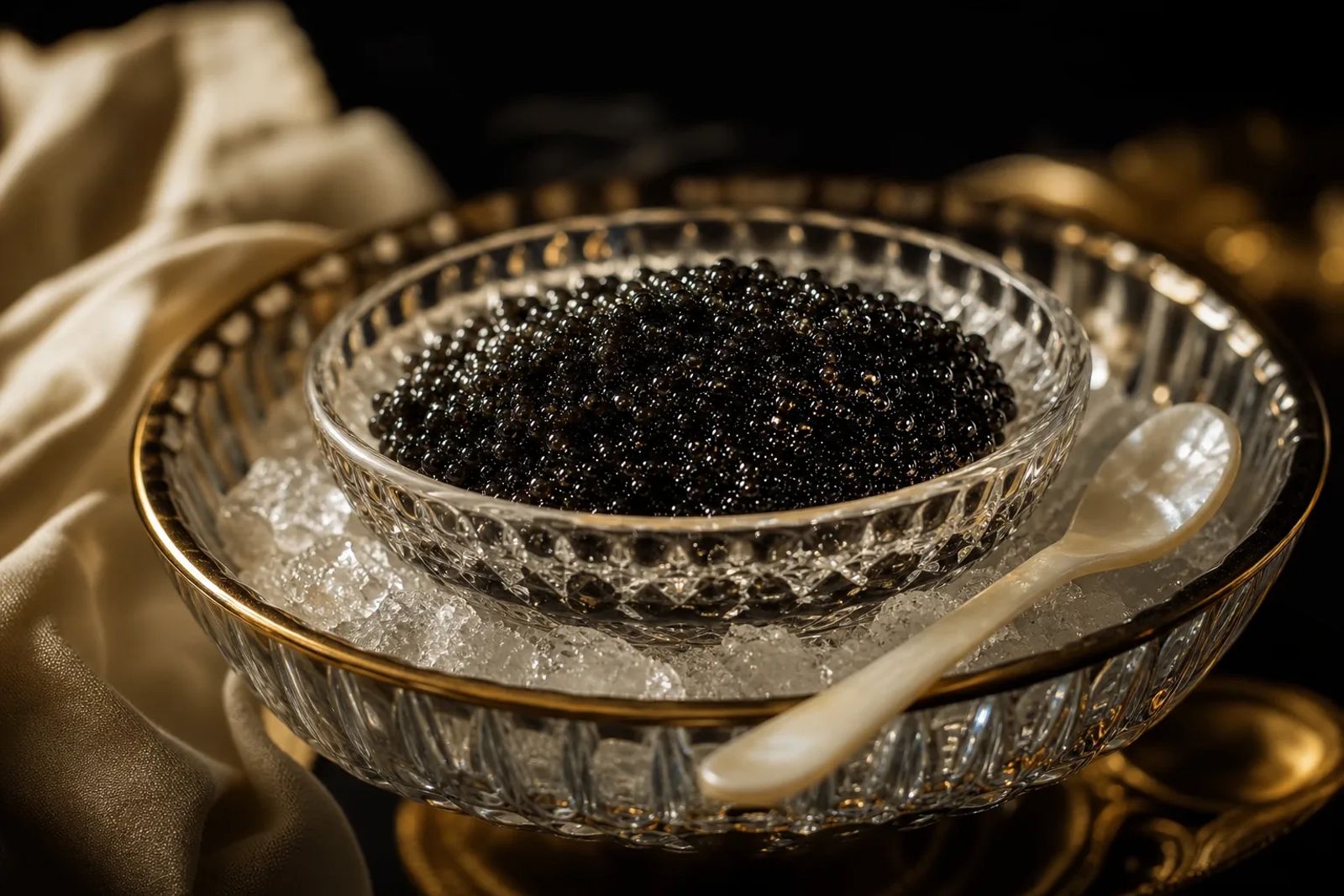
In 2011, 32 people tasted seven metal-plated spoons of identical dimensions. This was not a caviar trial, but the metals produced different taste ratings. Even the spoon can become part of what you taste.
For caviar, the equipment has three clear jobs: lift the roe without distracting from its flavour, keep it cold at the table, and open the container safely. A suitable spoon, an ice bowl and an opener matched to the tin cover those needs. Everything else should earn its place in the way you serve.
Which caviar accessories are worth having?
A cold tin matters more than a grand presenter. Start with the job each piece must do, rather than buying a matching set.
| Accessory | What it does | Essential or optional | Read more |
|---|---|---|---|
| Food-contact spoon | Lifts and portions roe | Essential | spoon materials |
| Ice bowl or double bowl | Keeps the container chilled | Essential function | servers and bowls |
| Suitable opening tool | Releases the lid | Essential function | tin openers |
| Decorative presenter | Supports the serving arrangement | Optional | servers and bowls |
| Tasting kit | Organises a comparison | Optional | tasting kits |
| Glassware | Holds the accompanying drink | Specialist purchase optional | Not needed for the roe |
| Blini pan | Cooks small pancakes | Optional | Not needed for the roe |
The caviar accessories hub covers the wider equipment directory. Before choosing individual pieces, check their dimensions, cleaning instructions and suitability for food contact.
The three essentials
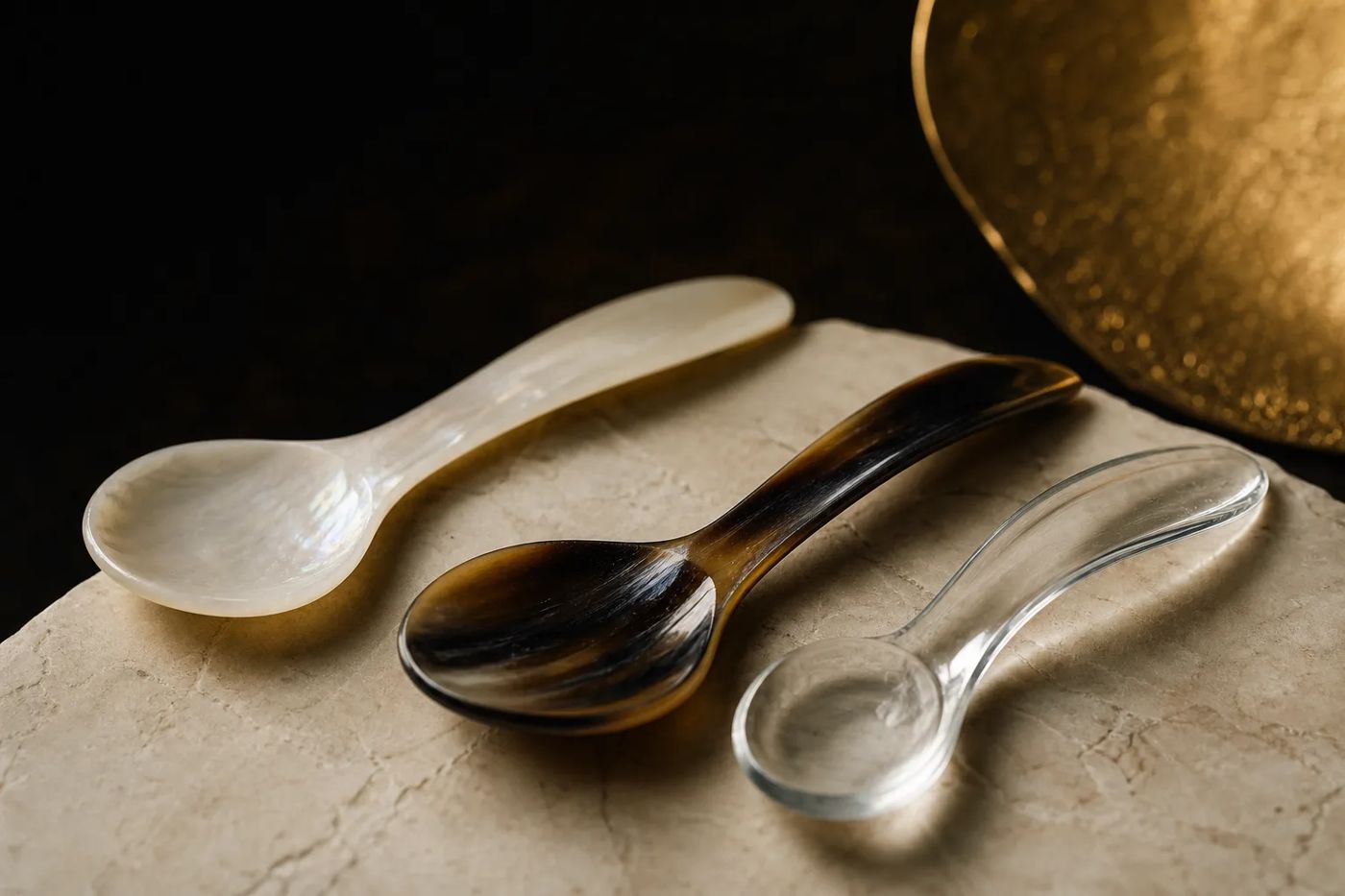
Choose a small, smooth spoon sold for food use, preferably in a material that introduces no obvious taste. Mother-of-pearl, horn and glass are options. Run your eye over the bowl and rim before serving: chips, cracks and rough edges have no place near the roe.
For chilling, a stable outer bowl of ice can hold a smaller food-safe bowl or the original container above the meltwater. Keep water out of the caviar. The arrangement should stay steady when someone takes a spoonful, so choose the size with that movement in mind.
Ice is a serving aid, not a substitute for refrigeration or the producer's handling instructions. US FDA guidance says to keep chilled seafood refrigerated until serving. Follow any stricter handling instructions from your producer.
Match the opener to the closure and follow the container supplier's directions. A purpose-made lever opener can help with suitable vacuum tins, but will not work with every lid. Never improvise with a pointed knife.
An old bone spoon that cannot withstand appropriate food-use cleaning belongs on display, not in the caviar.
Before guests arrive, check that the opener fits and the serving bowl sits securely. The serving guide takes you through the sequence at the table rather than the equipment itself.
Spoon materials: what changes the taste?
Cutlery material can affect taste perception. The peer-reviewed 2011 study described above, and a 2012 follow-up, demonstrate that effect. Neither tested caviar, so they do not support the claim that all metal spoons spoil roe.
Traditional shell and horn spoons keep metal away from both mouth and food. Choosing them expresses a preference for non-metal service, rather than establishing that metal damages roe. Tradition alone cannot make every natural material suitable for eating. When choosing an accessory, put its surface condition and documented food use ahead of its material's reputation. Look closely at unidentified coatings, worn plating and repaired joints. Those details deserve more attention than a seller's assurance that a piece is traditional.
Food contact: check the finished piece
“Is this suitable for serving food?” is a better question than simply “What is it made of?” Food contact rules address what an article can transfer into food under its intended conditions of use. The finished piece matters, including its surface and construction.
- EU: Regulation (EC) No 1935/2004 requires covered materials not to transfer constituents in quantities that endanger health, unacceptably change composition or impair taste and smell. Article 1(3)(a) excludes materials supplied as antiques.
- Great Britain: the assimilated version of Regulation (EC) No 1935/2004 provides the framework. Material-specific requirements and national enforcement provisions also matter.
- Northern Ireland: relevant EU food contact rules continue to apply under the Windsor Framework.
- US: the Federal Food, Drug, and Cosmetic Act and FDA food contact regulations govern applicable substances according to their regulatory status and intended conditions of use.
Ask for clear care instructions and confirmation that any finish, adhesive or lining is suitable for food contact. A decorative description tells you little about those details. The word “natural” does not settle them either.
Extras: give every piece a job
A presenter earns its place by holding the container securely and making the ice easy to replenish. Check that the insert lifts out for washing and that your usual container fits. Decoration can make the table more appealing; it does not preserve the caviar.
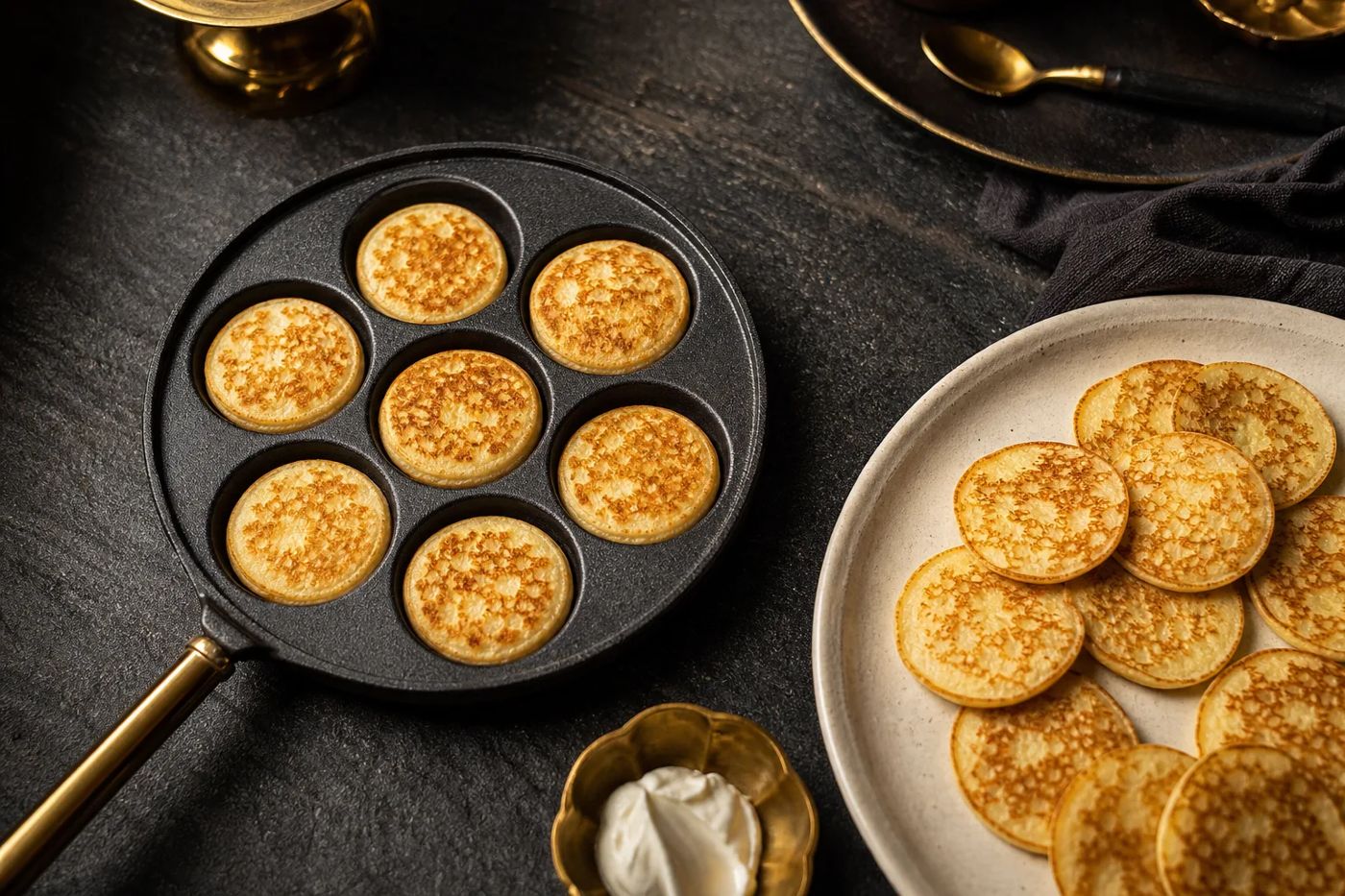
Specialist glassware is optional. Sound drinking glasses suited to your chosen drink will do. A blini pan makes sense if you regularly cook small pancakes, but an ordinary frying pan can do the job when the recipe allows.
A tasting kit should make a comparison easier to organise. Count the clean spoons and separate dishes you will need, then check what the kit actually supplies and whether every component can be cleaned properly. Choose the missing function, rather than another bundle of equipment you already own.
Cleaning mother-of-pearl, horn, bone and wood
Clean for the finished object, not just the headline material. Handles, coatings and glued joints can each change its care requirements. Museum conservation advice helps identify damage risks, but dusting an antique does not hygienically clean a spoon for food use.
For modern mother-of-pearl utensils, maker instructions recommend hand-washing in warm water with mild detergent. Wash gently, protect the edges from knocks and follow the supplier's drying instructions. A shell spoon needs different treatment from ordinary dishwasher-safe cutlery.
For horn, maker guidance for drinking vessels recommends tepid water, mild soap where necessary, and immediate, thorough drying. It warns against prolonged contact with liquid and dishwasher use. Check the instructions for your own utensil before cleaning it.
Bone needs particular care because condition and porosity vary. The Canadian Conservation Institute warns against soaking and applying water to cracked or porous surfaces. An old bone spoon that cannot withstand appropriate food-use cleaning belongs on display, not in the caviar.
For wood, utensil-maker guidance recommends hand-washing with hot soapy water and drying in a rack, rather than using a dishwasher. Apply conditioning treatments only as directed for food-contact utensils. Store natural materials completely dry, and retire pieces with splits or damaged eating surfaces.
Natural materials and antiques: know the provenance
Ask which animal or shellfish supplied the material, where it came from and what documentation supports the seller's account. “Horn”, “bone” and “mother-of-pearl” describe materials. They do not identify a species, establish lawful trade or verify a by-product claim.
Shell materials do not all share the same trade status. Hawksbill turtle, associated with tortoiseshell, is listed in CITES Appendix I. CITES controls cover international movements; domestic sale restrictions come from the applicable national or regional law.
Antique ivory and hawksbill tortoiseshell can face strict restrictions on sale and international movement. They are not recommended acquisitions here. Their trade status is also a separate question from whether an object is suitable for contact with food.
- EU: the Wildlife Trade Regulations restrict commercial use and international movement of elephant ivory and tortoiseshell. Certification, permits and exemptions depend on the specimen, its age and the proposed transaction. Check the applicable requirements before proceeding.
- UK: the Ivory Act 2018 restricts dealing in covered ivory, with specified exemptions that may require registration or an exemption certificate. Separate wildlife trade rules govern tortoiseshell. Check the species, provenance and movement with the relevant authority before importing or exporting. Northern Ireland has additional certification requirements for some commercial transactions.
- US: elephant ivory and sea turtle products face federal restrictions on interstate and international commerce, with limited exceptions. State law can impose further restrictions.
With second-hand equipment, establish both material and condition. Do not put roe directly into an old bowl with an unidentified lining, flaking decoration or repairs of unknown composition. A sound outer presenter can still hold a separate modern food-contact insert.
Give lead crystal its own check. Health Canada advises using lead-free tableware to reduce exposure, and never storing food or drinks in lead crystal. Appearance alone may not distinguish it from ordinary glass. For direct contact with caviar, choose an insert documented as lead-free.
A simple setup at home
Lay out a small food-contact spoon, two stable nesting bowls and the correct opener. Fill the outer bowl with ice, keep meltwater below the food container's rim, and set aside a clean plate for the lid and used tools.
A plain glass dish can replace a decorative insert. Ordinary drinking glasses need no caviar-specific replacement. If the equipment already in your kitchen performs the three essential jobs and can be cleaned appropriately, the set is complete. Choose equipment for the job, not the display.
Sources
- European Parliament and Council. Regulation (EC) No 1935/2004 on materials and articles intended to come into contact with food, 2004, particularly Articles 3 and 15.
- Food Standards Scotland. Food contact materials, current online guidance, undated.
- Northern Ireland Business Info, Invest Northern Ireland. Food contact materials and packaging, current online guidance, undated.
- US Food and Drug Administration. Food Packaging & Other Substances that Come in Contact with Food: Information for Consumers, online edition, 2024.
- Laughlin, Z., Conreen, M., Witchel, H. J. and Miodownik, M. The use of standard electrode potentials to predict the taste of solid metals, Food Quality and Preference, volume 22, issue 7, 2011, pages 628 to 637.
- Piqueras-Fiszman, B., Laughlin, Z., Miodownik, M. and Spence, C. Tasting spoons: Assessing how the material of a spoon affects the taste of the food, Food Quality and Preference, volume 24, issue 1, 2012, pages 24 to 29.
- US Food and Drug Administration. Selecting and Serving Fresh and Frozen Seafood Safely, current online edition, 2025.
- Caviar House & Prunier. Caviar tin opener, supplier's description, undated. Used only for the stated opening mechanism and compatibility limitations;
- A2D Asia and A2D Deutschland. Mother of pearl spoon: Data sheet, created 15 November 2022, care instructions.
- Abbeyhorn. Product care, current online instructions, undated, particularly horn drinking vessels.
- Canadian Conservation Institute. Basic care: Ivory, horn, bone and antler objects, online conservation guidance, 2018.
- Earlywood. Caring for Your Earlywood Utensils, maker's guidance, 10 February 2015.
- NOAA Fisheries. Hawksbill turtle: Conservation management, current online species guidance, undated.
- European Commission. Revised guidance document: EU regime governing trade in ivory, Commission Notice 2021/C 528/03, 2021.
- European Commission. Are specimens exempted by acquisition date?, EU Wildlife Trade Reference Guide, section 4.3, current online edition, undated.
- Defra and APHA. Deal in items made of or containing ivory, current guidance on the Ivory Act 2018, online edition checked November 2026.
- Defra and APHA. Check if your item from an endangered species is a worked specimen, published 22 May 2025, current online edition.
- US Fish and Wildlife Service. Elephant Ivory FAQs, current online guidance, undated.
- US Fish and Wildlife Service. Can I sell it?, wildlife-products fact sheet, 2016.
- Health Canada. Lead crystalware, current online health guidance, 2024.
This guide was researched using official food-contact and wildlife-trade guidance, original sensory research, conservation advice and makers' material-specific care instructions.
Last checked: November 2026