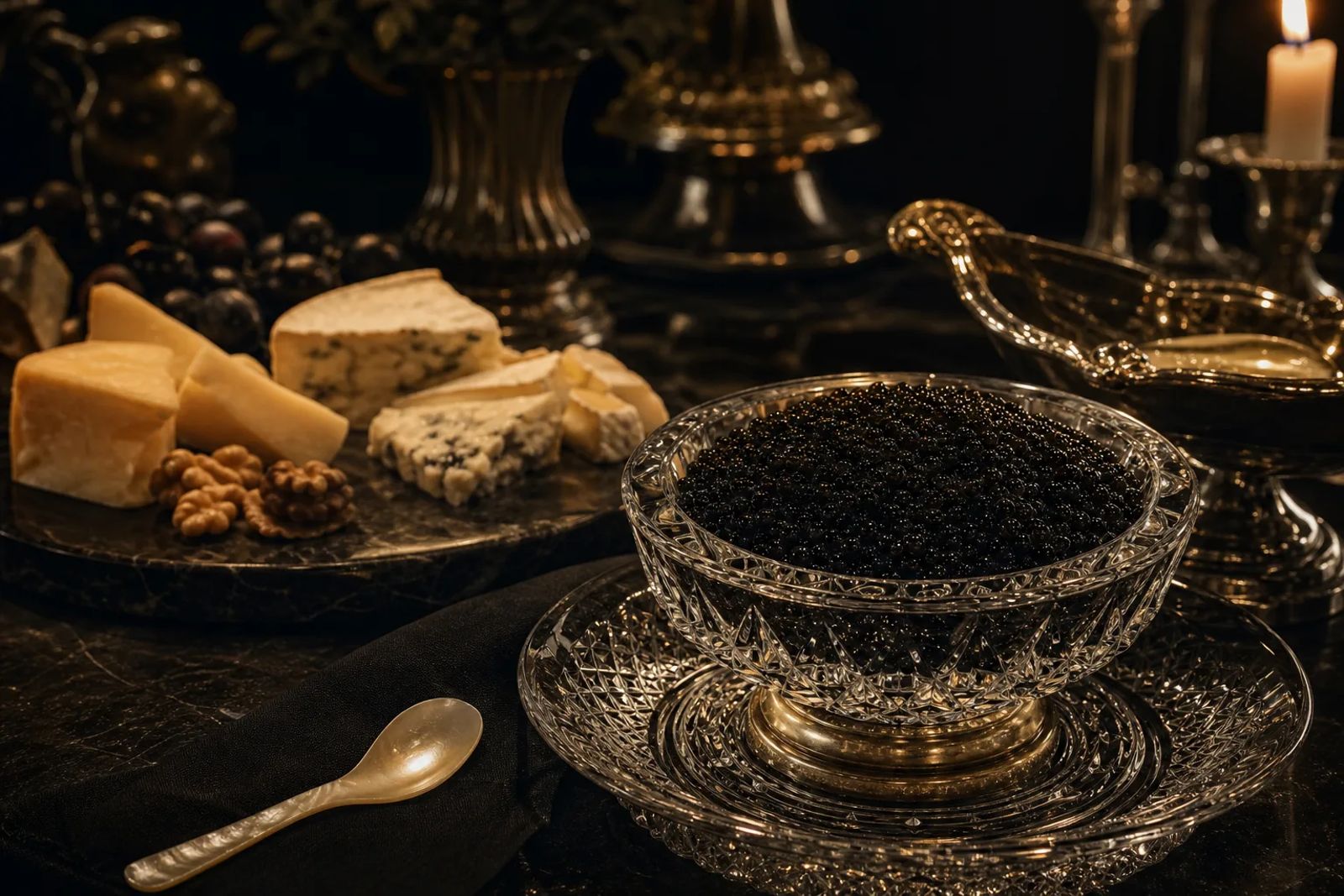
“Down with cheese, long live caviar!” declared Soviet Foreign Minister Andrei Gromyko at the Moscow summit on 28 May 1972. Henry Kissinger replied that they should put it into the Principles. The exchange survives in an official memorandum, a flash of table talk amid substantive diplomacy. These records show diplomatic uses of caviar, but do not establish that it changed an outcome.
Caviar could carry a welcome, signal national identity or become a gift requiring its own paperwork. Soviet gift registers, summit memoranda and an Iranian royal visit menu reveal how that worked, from a wooden cask intended for a president to Caspian “pearls” opening a menu.
What caviar could say at the diplomatic table
At dinner, caviar was hospitality. In an official gift register, it was something staff had to receive, describe and account for. Both settings gave the food a diplomatic role, but a shared meal and a consignment presented to a president tell different stories.
This is one strand of the history of caviar: how officials used the finished food to receive foreign visitors or send presents abroad. The question here is what caviar communicated, rather than how a country controlled its production.
Soviet state gifts: twelve jars and a wooden cask
Twelve jars of caviar, each about 57 g (2 oz), and three bottles of vodka made up one gift from Mikhail Gorbachev to President Ronald Reagan. An official American list published on 7 March 1986 describes them as Soviet products, classifies them as perishable and records their receipt on 27 November 1985.
The entry names the donor and recipient, inventories the contents and records their administrative treatment. Its receipt date does not establish the date of a presentation at Geneva. That distinction keeps a precise piece of paperwork attached to the event it actually records.
A second gift came in a wooden cask. A White House Gift Unit card, explicitly associated with Reagan's meeting with Gorbachev in Reykjavík in October 1986, describes black Russian caviar estimated at about 1.36 kg (3 lb), intended for the President and First Lady. Its disposition field assigns it to official use or display.
The card separates presentation, arrival and logging into entries for 10, 14 and 23 October. The cask gives the gift a tangible presence; those three dates show its passage through the presidential gift system.
Caviar at Soviet summit tables
At Geneva on 19 November 1985, the arrival of caviar turned dinner conversation towards rivers and fish. The Gorbachevs were hosting at the Soviet mission villa. According to the dinner memorandum, Reagan mentioned sturgeon in California's Sacramento River; Gorbachev then spoke to Nancy Reagan about hydroelectric dams on the Volga and their effect on beluga in the Caspian Sea.
Gorbachev said earlier mistakes had been corrected and the fish were thriving. That was his account to his guests, rather than an independent assessment of sturgeon stocks. The revealing detail is the conversational turn: a dish on the table opened a discussion of rivers, infrastructure and fish.
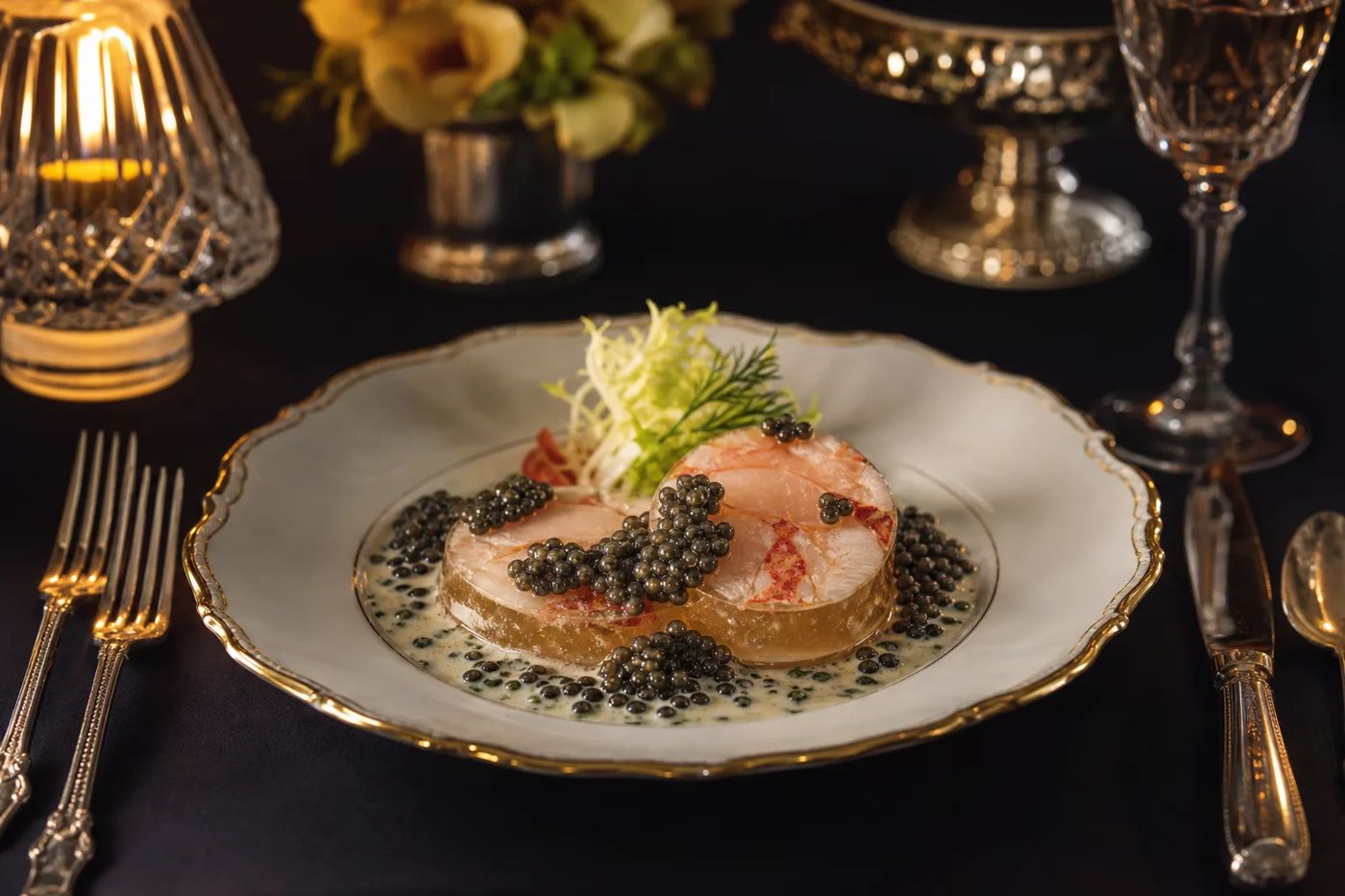
Caviar also appeared when the Americans hosted. At the White House state dinner honouring Gorbachev and his wife on 8 December 1987, the menu paired Columbia River salmon and lobster medallions in jelly with caviar sauce. Veal followed, then a salad and cheese course, and tea sorbet in honey ice cream.
Here, caviar belonged to a composed course rather than a separate bowl. The surviving menu preserves the dish chosen for that particular official dinner, placing the roe within a different style of hospitality.
Iranian hospitality in the official record
Four cans flown in from Iran appear in presidential gift paperwork from 1974. A White House Gift Unit memorandum dated 5 November 1974 lists them as supplied by Ardeshir Zahedi, Iran's ambassador in Washington, and collected by a Secret Service agent for Richard E. Keiser.
The memorandum concerns foreign gifts for the President and First Family, but records the caviar's location as unknown. It supports the interpretation of an embassy gift entering presidential channels, without establishing that the Shah personally handed the cans to Ford.
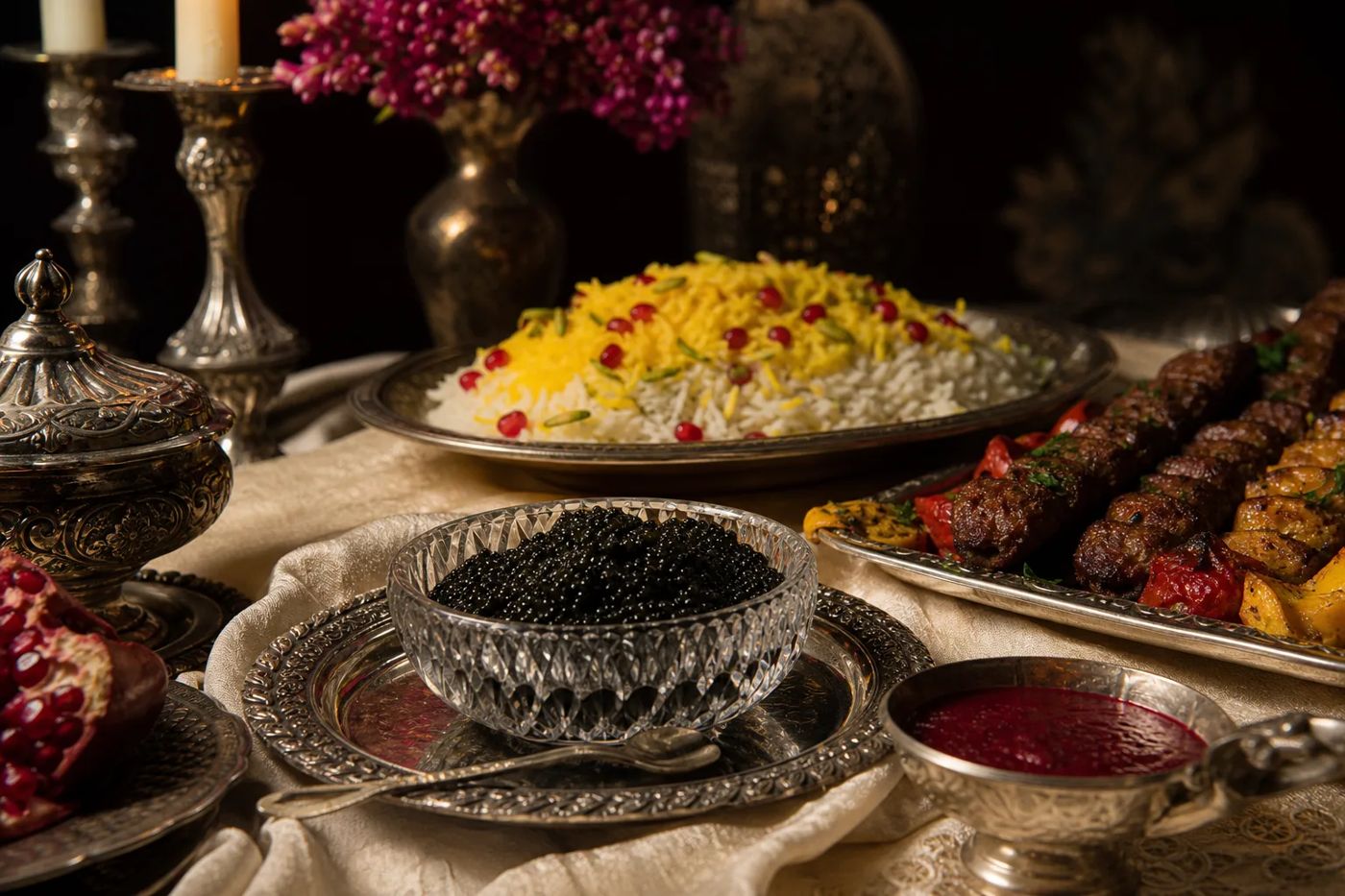
A dinner menu offers a more ceremonial picture. The Ford Library's Iranian state visit file preserves the Imperial Iranian Embassy's menu for the Fords on 16 May 1975. The menu opened with “Pearls of the Caspian Caviar” and listed kabab and rice with pomegranate sauce among the dishes following the caviar.
The name puts the Caspian at the centre of the welcome; the wider menu sets the caviar beside Persian dishes. Together, they show food presenting national identity at a diplomatic occasion. Caviar was not solely a Soviet emblem. For the two countries' longer relationship with the fishery, see Russian and Iranian caviar history.
Famous stories: the record and the anecdote
Documented: Gromyko's preference for caviar. The Moscow summit memorandum records Gromyko sampling the food before the exchange quoted above. Later, the notetaker recorded another serving of caviar.
The recorded exchange about food briefly changes the register of substantive diplomatic discussion. It shows familiarity at the table.
Anecdote here: Stalin's caviar for Churchill. A 2016 NPR book review says Stalin sent Churchill caviar until they fell out over his Iron Curtain speech. The story comes through that review as an attributed anecdote, rather than the official gift records and memoranda used elsewhere here.
Personal appetite requires its own evidence. Receiving caviar does not establish that a leader enjoyed it: a menu records an offered dish, and a gift card records a present.
A short timeline of documented cases
| Date | Event | What the record establishes |
|---|---|---|
| 28 May 1972 | Moscow summit | An official memorandum records Gromyko's caviar remark. |
| 5 November 1974, memorandum date | Iranian embassy cans | The memorandum lists four cans supplied by Zahedi. |
| 16 May 1975 | Iranian state visit | The preserved menu opens with Caspian caviar. |
| 19 November 1985 | Geneva summit dinner | Caviar prompts talk of sturgeon and rivers. |
| 27 November 1985, receipt date | Soviet gift register entry | The entry records twelve jars of caviar and three bottles of vodka. |
| October 1986 | Reykjavík summit gift | A White House card records Gorbachev's cask of caviar. |
| 8 December 1987 | White House state dinner | Salmon and lobster appear with caviar sauce. |
How to read a diplomatic menu
Start with what the document was made to do. A menu identifies dishes planned for an occasion. A conversation memorandum can record what was actually served. A gift register answers different questions: who gave, who received, how the gift was described and what officials decided to do with it.
Then check the host, not just the guest. An Iranian visit file can hold records of both American and Iranian hospitality; a Soviet summit can include meals hosted by either delegation. The file's subject alone does not identify who gave the dinner.
Finally, separate the event date from any later filing or publication date. Together, these checks keep a surviving menu attached to the right occasion and sponsor, and prevent an administrative date from becoming a diplomatic encounter.
What governs a caviar gift today?
Historical gift records describe reception and disposition. Assessing a comparable gift today also means considering wildlife trade rules.
Today, an official gift crossing a border needs a separate wildlife trade assessment. International transfers generally require CITES export or re export documentation, and sometimes import permits. Any 125 g personal effects exemption depends on the species and national rules.
Resolution Conf. 12.7 (Rev. CoP17) recommends a universal caviar labelling system; US requirements appear in 50 CFR 23.71. Labels support traceability but do not independently verify the contents.
Separate rules govern the gift itself. The US Foreign Gifts and Decorations Act and GSA guidance cover acceptance and disposition of foreign government gifts to US federal employees. Gifts above the applicable minimal value threshold may, under specified conditions, be accepted on behalf of the United States rather than as personal property. The current texts are linked in Sources.
Sources
-
US Department of State. Foreign gifts listing, Executive Office of the President entries, Federal Register, volume 51, number 45, 7 March 1986. Records the Gorbachev gift received on 27 November 1985. Official issue PDF.
-
Ronald Reagan Presidential Library, White House Gift Unit. Gift record 8600904 C, October 1986, preserved in Jack Matlock's files, box 19. Describes the caviar cask associated with Reykjavík. Digitised archival file.
-
Ronald Reagan Presidential Library. Memorandum of conversation: Dinner hosted by the Gorbachevs, 19 November 1985, Jack Matlock's files, box 14. Digitised archival file.
-
Ronald Reagan Presidential Library, White House Social Office records. State dinner menu and arrangements honouring Mikhail Gorbachev and Mrs Gorbachev, 8 December 1987. Digitised archival file.
-
Gerald R. Ford Presidential Library, Philip W. Buchen files. President: Gifts policies (1), box 46, including the Gift Unit memorandum of 5 November 1974 and its fourth-page Zahedi entry. Digitised archival file.
-
Gerald R. Ford Presidential Library, Betty Ford White House Social Office files. 5/15/75: State visit of Shah and Empress of Iran (1), including the menu dated 16 May 1975. Digitised archival file.
-
US Department of State, Office of the Historian. Foreign Relations of the United States, covering 1969 to 1976, Volume XIV, Soviet Union, October 1971 to May 1972, document 293, memorandum of conversation, Moscow, 28 May 1972. Official transcription.
-
KPBS, carrying NPR programming. Hitler Couldn't Defeat Churchill, But Champagne Nearly Did, 1 April 2016. Interview article.
-
CITES. Conservation of and trade in sturgeons and paddlefish, Resolution Conf. 12.7 (Rev. CoP17), 2016 revision. Official US regulatory docket copy. Resolution PDF.
-
US Fish and Wildlife Service, Electronic Code of Federal Regulations. 50 CFR 23.71: How can I trade internationally in sturgeon caviar?, electronic text, as of November 2026. Regulatory text.
-
US General Services Administration. Foreign gifts, guidance on the Foreign Gifts and Decorations Act and government ownership of gifts above the applicable threshold. Official guidance.
Last checked: November 2026