
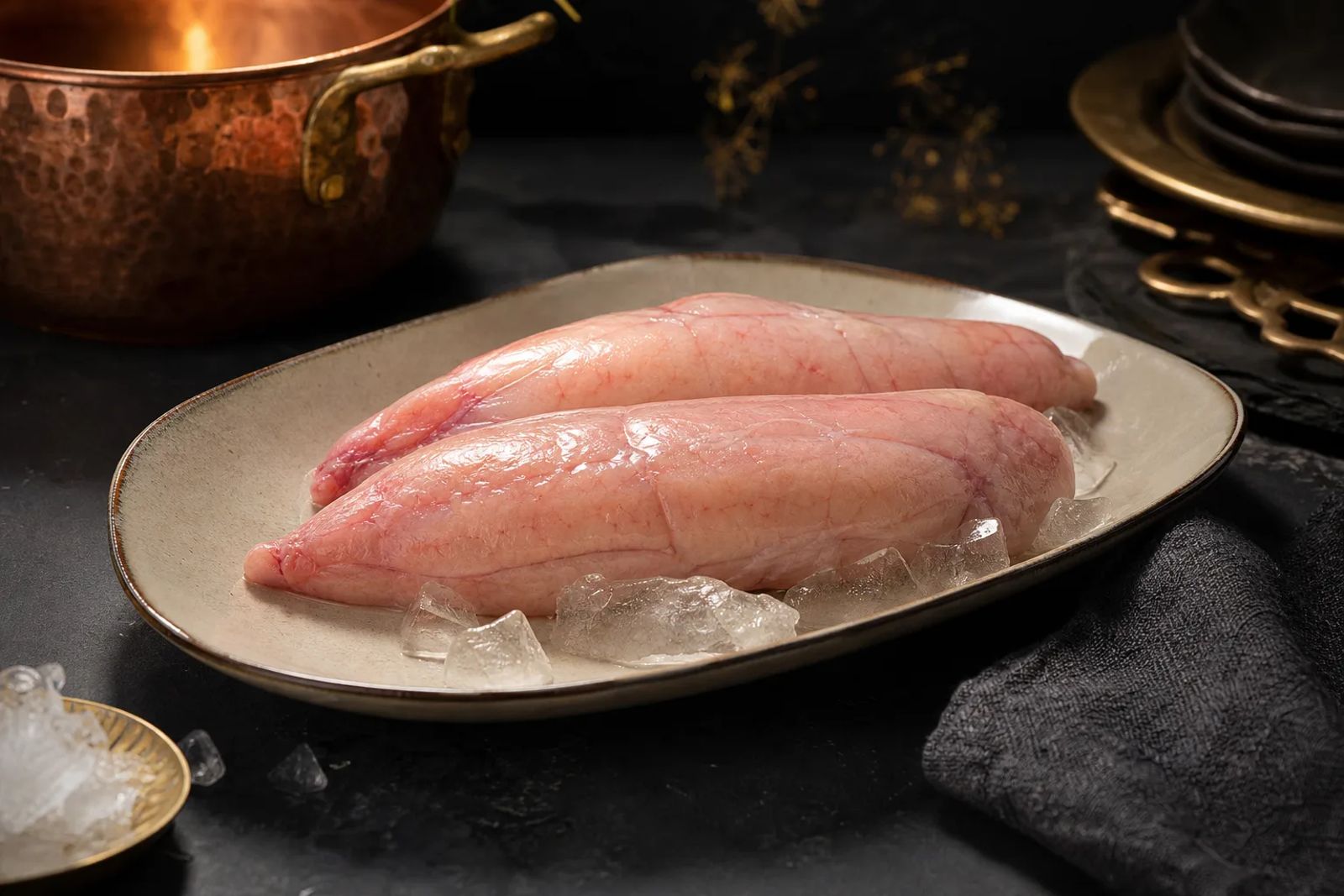
Dark red, firm and easily sliced: that is how the Torry Research Station describes traditional smoked cod's roe. Fresh roe is a different proposition, with the eggs still enclosed in their sacs, ready for cooking. In a Nordic tube spread, roe becomes part of a mixture with oil, sugar and other ingredients.
Cod roe is the egg-bearing tissue of a female cod, usually sold as whole sacs, smoked roe, canned roe or a prepared spread. Some Nordic spreads use roe described more broadly as coming from cod family fish. These forms need different treatment. Fresh cod roe must be cooked. For smoked and cured products, follow the handling instructions: neither salt nor smoke automatically makes roe safe to eat uncooked.
- Check the species and catch area, not just the country where the roe was packed.
- Compare roe percentage and salt when choosing tube spreads, which contain other ingredients.
- Keep raw sacs separate from anything that will be eaten without further cooking.
What is cod roe?
Atlantic cod roe comes from Gadus morhua. Unlike the separate, firm beads of sturgeon caviar, its eggs sit inside a membrane. The guide to other fish roe explores these differences.
The species matters. Pacific cod, Gadus macrocephalus, is a different species from Atlantic cod. The broader wording used by some Nordic spreads does not establish that haddock or pollock roe may be sold simply as Atlantic cod roe.
To choose Atlantic cod specifically, look or ask for Gadus morhua, particularly when the front label says only “roe” or “kaviar”. Japanese and Korean preparations bring their own naming questions, explained in the pollock roe guide.
Fresh cod roe: choose intact sacs, cook thoroughly
Fresh roe sacs are seasonal. Torry's processing guide records the heaviest British landings from January to April, during the spawning period; frozen roe can extend availability beyond those months.
Choose intact sacs for cooking whole, and ask whether they have previously been frozen. Boiling is one documented preparation, recorded in Norway's national food composition table. Follow a reliable recipe suited to the size of the sac, and cook the roe thoroughly before eating.
Plain cooked roe and seasoned products can differ in salt content. Norway's table records boiled Atlantic cod roe with 0.2 g salt per 100 g. That figure belongs to the food described in the database; roe cooked in salted water or sold ready-seasoned may contain a different amount.
Smoked cod's roe and tarama
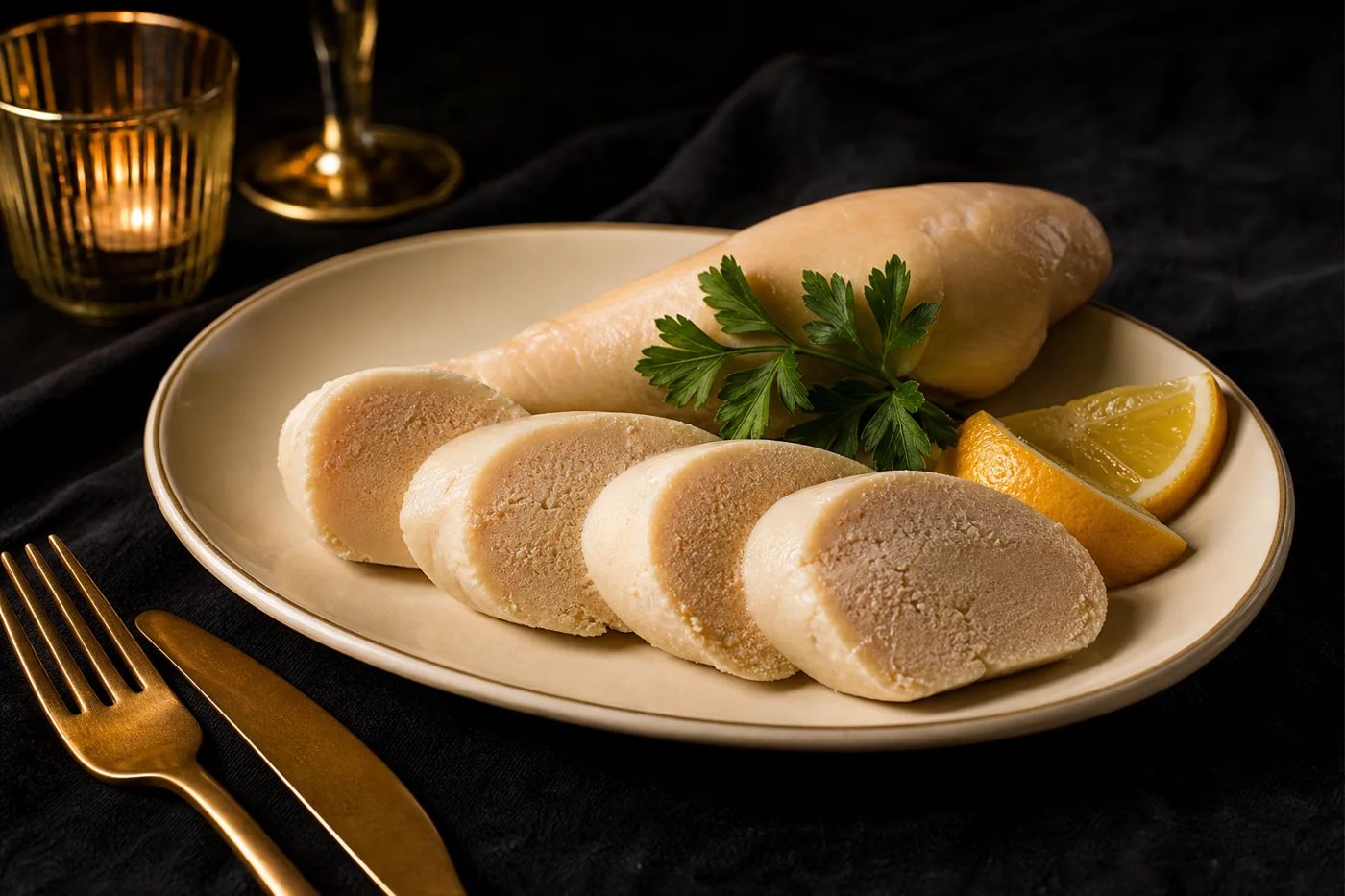
Salt comes before smoke in traditional smoked cod's roe, applied either as brine or dry salt. Torry describes the finished roe as dark red, firm and easy to slice, and documents cold smoking in a Norwegian preparation.
Cold smoking is not cooking. Before serving a whole smoked sac, check whether it is ready to eat or requires cooking rather than judging by colour or firmness. Follow the Listeria precautions below for ready-to-eat smoked roe.
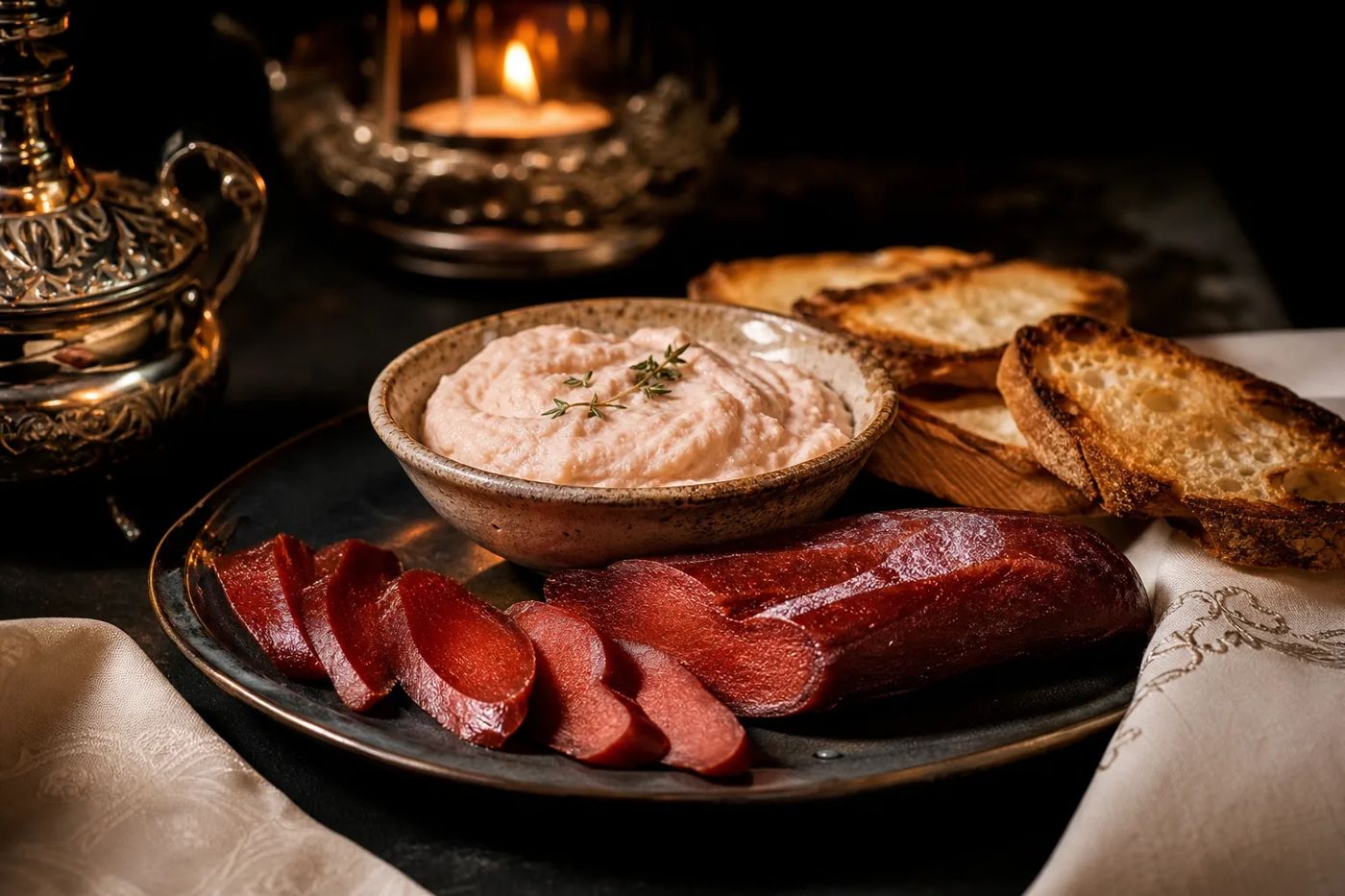
In Britain, smoked roe can be sliced or worked into spreads. Greek taramasalata is a dip made with cured fish roe, but the species and use of smoked roe depend on the recipe.
Cured, pressed, canned and tube-packed roe
Cured roe. Cured means treated with salt, not necessarily smoked. Torry documents both salted whole sacs and preparations made from loose eggs. Read the description to find the right form for slicing or spreading.
Pressed roe. Pressed cod roe also varies between producers. Its shape tells you neither what else it contains nor whether it needs cooking; check the ingredients and instructions.
Canned roe. This is a distinct form, also documented in Torry's processing guide. For storage, a shelf-stable, heat-treated can is different from a chilled roe product. The CDC distinguishes heat-treated shelf-stable seafood from refrigerated smoked products, which carry different handling risks.
Nordic tube spreads. These are mixtures, not plain roe. Norwegian and Swedish manufacturers' declarations list salted, smoked roe alongside oil, sugar and ingredients such as potato flakes and tomato purée. Check the ingredient list for the proportion of roe. One Swedish manufacturer describes its spread as mildly smoky, a description of that product rather than every tube.
Two spread declarations give 6.3 to 6.5 g salt per 100 g. Use those as individual examples, not a market-wide range or figures for whole smoked or pressed roe. Compare similar products using their own labels, and distinguish salt from sodium: Norway's table lists them separately.
Choose by fishery, not nationality
The catch area tells you more than a national flag. Atlantic cod is managed as separate stocks, not one worldwide population. Iceland sets catch limits for its cod fishery; Norway and Russia jointly manage Northeast Arctic cod.
The following advice was checked in November 2026. These are scientific catch recommendations, which can differ from the quotas ultimately set by managers.
- Iceland: MFRI and ICES advised no more than 201,674 tonnes for 2026/2027. Spawning stock was above the assessment's precautionary and management reference points, while fishing pressure was below its maximum sustainable yield reference.
- Northeast Arctic: The joint Norwegian-Russian scientific group advised no more than 312,667 tonnes for 2027. Its assessment described weak recruitment, meaning too few young fish entering the stock, and spawning biomass below the precautionary threshold. This assessment was produced outside ICES.
- Northern shelf: ICES's October 2026 advice called for zero catches in 2027 across the three substocks covering the North Sea, West of Scotland, eastern English Channel and Skagerrak.
The MSC register listed the Iceland cod fishery as certified when checked. Look for a product-level certification claim: certification covers a defined fishery and supply chain, not every product bearing an Icelandic address.
Read the name and label
Read five things together: species, processing description, ingredients, salt declaration and storage instructions. If the catching area is missing, ask the seller. A processor's address identifies where that business operates, not necessarily where the fish was caught.
Norwegian and Swedish manufacturers' declarations list salted, smoked roe alongside oil, sugar and ingredients such as potato flakes and tomato purée.
Food names also have legal requirements. For EU consumers, Regulation (EU) No 1169/2011 prohibits misleading information about a food's identity and composition. Great Britain applies its assimilated version of that regulation, while Northern Ireland generally follows EU food-information law. Customs categories do not settle whether a retail description is truthful.
In the US, FDA's nonbinding caviar naming guidance says salted roe from fish other than sturgeon should carry the fish name with “caviar”, in substantially equal size and prominence. It also calls for a prominent declaration of artificial colour where used under the applicable additive rules.
Ready-to-eat roe and Listeria
Listeria can survive cold smoking and grow during refrigeration. Treat refrigerated smoked roe with the same care as other ready-to-eat smoked seafood, even when it smells pleasant and the package is intact.
For smoked roe, follow the relevant smoked fish guidance as a precaution. In the UK, NHS advice says pregnant people and people with weakened immunity should avoid ready-to-eat cold smoked or cured fish unless it is cooked until steaming hot. In the US, FDA advises susceptible groups to avoid refrigerated smoked seafood except in a cooked recipe; canned or shelf stable smoked seafood is an acceptable alternative.
EFSA lists smoked fish among foods that can carry Listeria. Listeriosis mainly affects older people, pregnant women, newborns and people with weak immunity. This EU risk information does not prescribe a single pregnancy menu for every member state: follow your national authority's advice, and discuss personal concerns with a doctor or midwife.
The guide to roe food safety covers the broader risks and who needs extra care. Freshness checks and microbial safety answer different questions.
Store it cold, serve it promptly
- Bring chilled roe home promptly and refrigerate it. UK FSA household guidance recommends 0 to 5°C (32 to 41°F). US FDA guidance specifies 4°C (40°F) or below for seafood. Follow any colder instruction on the pack.
- Keep raw sacs covered and separate from ready-to-eat spreads or smoked roe. FDA advises using fresh seafood within two days of purchase or freezing it. An earlier use-by date or shorter supplier instruction takes priority.
- Follow the label for smoked roe, spreads and opened cans. Observe refrigerated storage instructions and after-opening limits. An unopened shelf-stable can's storage allowance no longer applies once it has been opened.
- Refrigerate cold portions until serving, and put out only what you need. FDA's general seafood guidance limits unrefrigerated holding to two hours, or one hour above 32°C (90°F). Treat these as maximum limits, not serving targets.
Storage guidance is not an instruction to warm roe before eating. No separate serving temperature is needed: follow the product instructions and keep the cold portion out only briefly.
Sources
-
Torry Research Station, hosted by FAO. A. McK. Bannerman, Processing Cod Roes, Torry Advisory Note No. 18. Historical technical publication; FAO electronic accompanying notes dated 2001. Used for documented processing and seasonality, not current safety validation.
https://www.fao.org/4/x5899e/x5899e00.htm
https://www.fao.org/4/x5899e/x5899e01.htm -
Norwegian Food Safety Authority, Norwegian Food Composition Table. Cod roe, boiled, food ID 04.312. Live database entry, publication year not stated; retrieved November 2026.
https://www.matvaretabellen.no/en/cod-roe-boiled/ -
Klädesholmen Seafood AB. Kaviar, manufacturer ingredient declaration, sensory description and nutrition panel. Undated live product specification; retrieved November 2026.
https://kladesholmen.se/produkt/kaviar-100g/ -
Orkla Foods Norge. Kaviar porsjonstube, manufacturer ingredient declaration and nutrition panel. Undated live product specification; retrieved November 2026.
https://orklafoods.no/produkter/kaviar-porsjonstube-4/ -
Marine and Freshwater Research Institute, Iceland. Cod: Gadus morhua, advice 2026/2027. Published 12 June 2026.
https://www.hafogvatn.is/static/extras/images/1_cod_2026_1_advice_en.html -
Joint Russian-Norwegian Arctic Fisheries Working Group, published by the Norwegian Institute of Marine Research. Advice on fishing opportunities for Northeast Arctic cod in 2027 in ICES subareas 1 and 2. IMR-VNIRO 2026-1, 26 June 2026.
https://www.hi.no/en/hi/nettrapporter/imr-vniro-en-2026-1 -
International Council for the Exploration of the Sea. Cod in Subarea 4, divisions 6.a and 7.d, and Subdivision 20. Advice and Scenarios Database, assessment year 2026; advice published 9 October 2026.
https://asd.ices.dk/viewAdvice/7245 -
Marine Stewardship Council. ISF Iceland Cod, live fishery certification record, and What is cod?, certification and chain-of-custody explanation. Retrieved November 2026.
https://fisheries.msc.org/en/fisheries/isf-iceland-cod/
https://www.msc.org/what-you-can-do/eat-sustainable-seafood/fish-to-eat/cod -
European Parliament and Council. Regulation (EU) No 1169/2011 on the provision of food information to consumers, Article 7.
-
Food Standards Agency. Packaging and labelling. Updated 4 September 2026.
https://www.gov.uk/government/publications/packaging-and-labelling/packaging-and-labelling -
US Food and Drug Administration. CPG Sec. 540.150: Caviar, Use of Term, Labeling. October 1989 edition, current posted guidance retrieved November 2026.
https://www.fda.gov/regulatory-information/search-fda-guidance-documents/cpg-sec-540150-caviar-use-term-labeling -
US Centers for Disease Control and Prevention. How Listeria Spread: Pâté and Cold-Smoked Fish. Reviewed 11 August 2024.
https://www.cdc.gov/listeria/causes/meat-fish.html -
NHS. Listeriosis. Current public guidance retrieved November 2026.
https://www.nhs.uk/conditions/listeriosis/ -
European Food Safety Authority. Listeria. Current topic page retrieved November 2026.
https://www.efsa.europa.eu/en/topics/topic/listeria -
US Food and Drug Administration. Selecting and Serving Fresh and Frozen Seafood Safely. Current consumer guidance retrieved November 2026.
https://www.fda.gov/food/buy-store-serve-safe-food/selecting-and-serving-fresh-and-frozen-seafood-safely -
Food Standards Agency. How to chill, freeze and defrost food safely. Published 18 December 2017; current posted guidance retrieved November 2026.
https://www.gov.uk/government/publications/how-to-chill-freeze-and-defrost-food-safely/how-to-chill-freeze-and-defrost-food-safely
This piece was researched using government processing literature, current stock assessments, certification records, national food-safety guidance and explicitly attributed manufacturer declarations.
Last checked: November 2026