
A large Gulf sturgeon can spend the summer in a river without feeding, then head towards the sea for its winter meals. This seasonal migration divides its life between rivers, estuaries and coastal waters along the northern Gulf of Mexico.
Traditionally classified as a subspecies of Atlantic sturgeon, it has been listed as threatened under the US Endangered Species Act since 1991. US authorities prohibit both commercial and recreational harvest.
Gulf sturgeon facts
- Common names: Gulf sturgeon; Gulf of Mexico sturgeon. 1
- Scientific names: Acipenser oxyrinchus desotoi in US federal management; Acipenser desotoi under an alternative species treatment. The CITES code table spells it Acipenser oxyrhynchus desotoi. 1,3,4
- CITES coverage: Appendix II through the Atlantic sturgeon species listing; code DES in Resolution Conf. 12.7 (Rev. CoP17), Annex 2. 1,4
- IUCN Red List: Endangered, listed separately as the Gulf subspecies in a 2022 results table reproduced by the North American Sturgeon and Paddlefish Society. 5
- Native range: Northern Gulf rivers, estuaries and coastal waters, principally Louisiana, Mississippi, Alabama and Florida. 1,2
- Egg colour: Grey, brown or black, according to NOAA.
- Wild harvest and trade: Commercial and recreational harvest prohibited by US authorities; protections checked November 2026. 1,6
Subspecies or species? Understanding the names
Different references may give this fish different names because some treat it as a subspecies of Atlantic sturgeon, others as a species in its own right. US federal agencies continue to use Acipenser oxyrinchus desotoi, the subspecies name retained in this article’s title. The World Sturgeon Conservation Society’s report of the joint specialist workshop on 22 October 2025 supports recognising Acipenser oxyrinchus and Acipenser desotoi as distinct taxa, following Robins and colleagues’ 2018 treatment.
The workshop also rejected two other 2025 proposals to reorganise sturgeon genera and put forward its own classification, including placing Huso species in Acipenser. These distinctions matter when comparing references, but a taxonomic change does not itself change US legal protection. For the Atlantic-coast relative, see Atlantic sturgeon.
Where Gulf sturgeon live
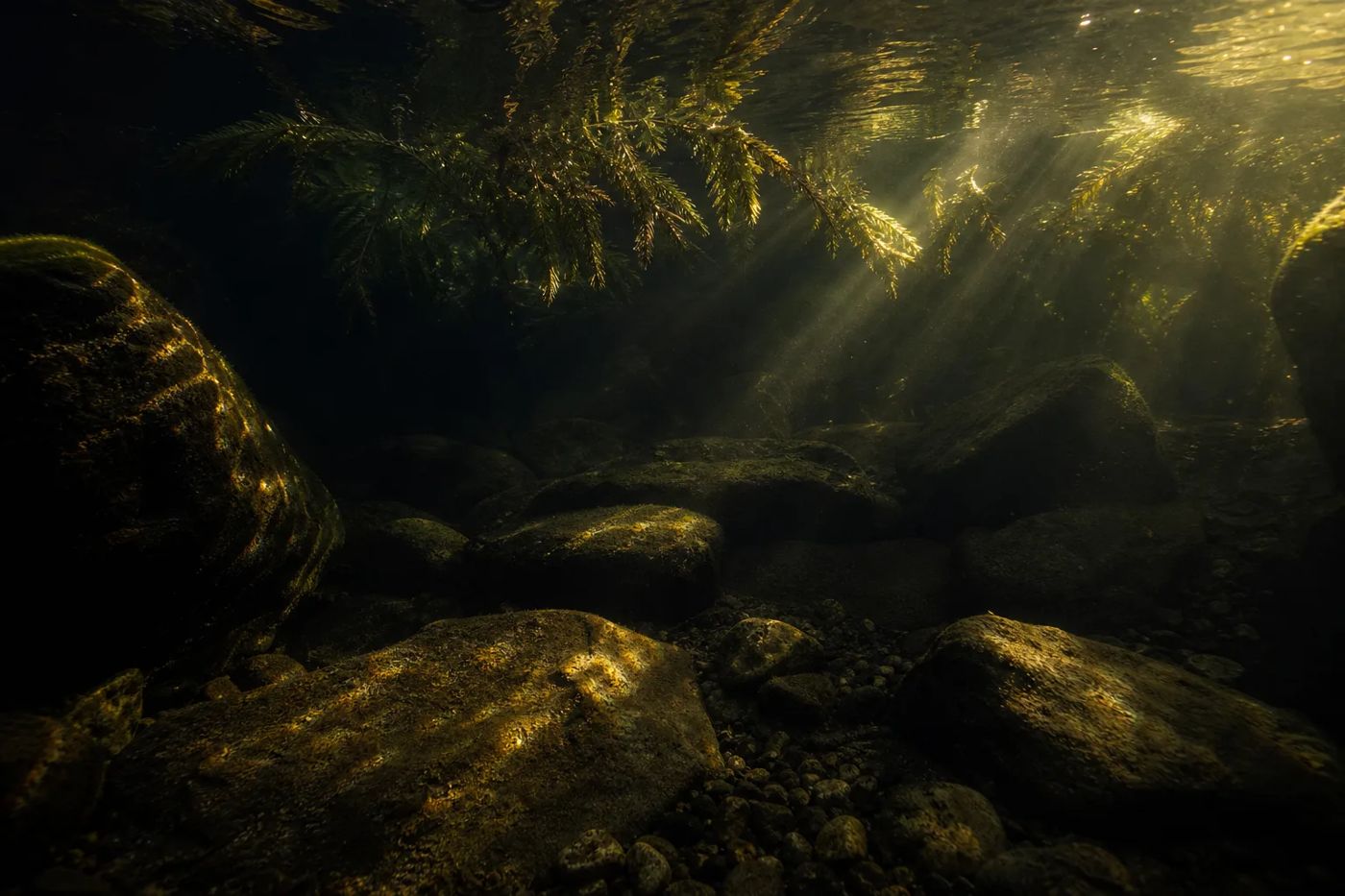
The Gulf sturgeon’s core present-day range stretches from Lake Pontchartrain and the Pearl River system in Louisiana and Mississippi east to Florida’s Suwannee River. It takes in Alabama’s Gulf coast and rivers that cross state boundaries. Protecting this fish means looking after whole catchments, not just one stretch of shoreline.
The federal 2022 status review recognises seven reproducing river populations: Pearl, Pascagoula, Escambia, Yellow, Choctawhatchee, Apalachicola and Suwannee. NOAA’s current overview groups Yellow with Blackwater and also records use of the Mobile and Ochlockonee rivers. A fish’s presence in a river, however, does not necessarily mean it reproduces there.
A life divided between river and sea
Spring brings adults into the rivers. They remain in freshwater holding areas through summer, move towards estuaries in autumn and feed in coastal waters through winter. Gulf sturgeon are anadromous: they reproduce in fresh water but spend part of their lives in estuaries and the sea. Spawning can occur in spring or autumn.
Their diet includes bottom-dwelling worms, crustaceans and molluscs. Larger fish generally fast during their freshwater residence. Young fish use freshwater and estuarine habitats before joining the offshore migration. River habitat and coastal feeding grounds each serve an essential role; one cannot replace the other.
FWC describes large Gulf sturgeon around 1.8 to 2.4 metres long, although agency accounts differ on maximum size. NOAA gives an average lifespan of 20 to 25 years, with some reaching 50. The federal review puts female maturity at approximately 12 years. These figures describe the fish’s biology, rather than farm-harvest ages.
How to recognise it
Five rows of hard plates, called scutes, run along the body. Beneath the snout sit four sensory barbels; at the other end, the tail’s upper lobe extends beyond the lower. The back can be olive-brown or bluish-black, with paler sides and a white belly.
That combination identifies a sturgeon, but distinguishing the Gulf form from Atlantic sturgeon is much harder. FWC describes visual separation as very difficult and DNA analysis as the most reliable method when the capture location is unknown. The wider sturgeon species guide explains the family.
Why it is protected
The threatened listing was published on 30 September 1991, after severe declines associated with historical fishing and habitat degradation. The 2022 five-year review recommended retaining that status. NOAA Fisheries and the US Fish and Wildlife Service share management, working with state agencies in Florida, Alabama, Mississippi and Louisiana.
Critical habitat was designated on 19 March 2003 across 14 riverine, estuarine and marine areas. This designation is not a blanket closure to people or boats. According to USFWS, it requires federal agencies to consult on actions they authorise, fund or undertake that may affect designated critical habitat.
The IUCN assessment is separate from US law. In the North American Sturgeon and Paddlefish Society’s reproduction of the 2022 Red List update, the Gulf subspecies has its own Endangered listing, rather than simply taking Atlantic sturgeon’s assessment.
CITES Appendix II coverage comes through the Atlantic sturgeon species listing, while the caviar identification table gives the Gulf form its own code, DES. That code identifies the fish; it does not permit harvest. Appendix II does not override the US prohibition on commercial or recreational harvest.
Threats and the work of recovery
A dam can cut off spawning grounds and change flows downstream. Dredging can injure fish, disturb feeding areas and bury spawning surfaces under sediment. Pollution and incidental capture in fisheries add further pressure.
Recovery work pairs habitat protection with population monitoring. USGS describes tagging, recapture studies, acoustic tracking and egg-collecting mats: tools for finding spawning grounds and understanding survival, movements and recruitment, the arrival of young fish into a population.
Leaping fish and boating safety
Gulf sturgeon leap clear of the water, particularly around summer holding areas. They are not attacking boats, but collisions can be serious. FWC documents one fatality and five injuries in three reported Suwannee River strikes in 2015. Those figures describe historical incidents, not a current annual injury total.
Gulf sturgeon leap clear of the water, particularly around summer holding areas.
In areas where sturgeon jump, FWC’s advice is simple: slow down, wear a life jacket and keep passengers off the bow. Watch from a safe distance, and give the fish and other river users room.
Sources
- NOAA Fisheries. Gulf Sturgeon. Species account. Federal status, range, identification, migration, lifespan and threats.
- US Fish and Wildlife Service and National Marine Fisheries Service. Gulf Sturgeon 5-Year Review. Signed review, June 2022; accompanying agency page updated April 2025. Listing history, reproducing populations, maturity reference and recovery assessment.
- World Sturgeon Conservation Society. IUCN SSG summary report. Published 13 November 2025, reporting the joint workshop of 22 October 2025. Taxonomic positions and recognition of A. desotoi.
- CITES. Conservation of and trade in sturgeons and paddlefish. Resolution Conf. 12.7 (Rev. CoP17), amended 2016. Annex 2 supplies DES and uses the spelling Acipenser oxyrhynchus desotoi.
- North American Sturgeon and Paddlefish Society. IUCN Assessment 2022. 2022 assessment-results reproduction. Separate Gulf subspecies entry and Endangered category.
- Florida Fish and Wildlife Conservation Commission. Gulf Sturgeon. Undated species profile. Feeding, habitat pressures and federal and Florida protection.
- Florida Fish and Wildlife Conservation Commission. Sturgeon. Undated guidance; historical collision records include 2006 to 2015. Identification limitations, size descriptions, jumping behaviour and boating advice.
- US Fish and Wildlife Service and National Marine Fisheries Service. Endangered and Threatened Wildlife and Plants; Designation of Critical Habitat for the Gulf Sturgeon; Final Rule. 68 FR 13370, 19 March 2003. Official publication record.
- NOAA Fisheries. Gulf Sturgeon: Management. Management account. Critical habitat, federal consultation and joint management.
- US Geological Survey. Gulf Sturgeon Ecological Investigations. Research programme account. Tagging, telemetry, egg sampling and population monitoring.
Last checked: November 2026