
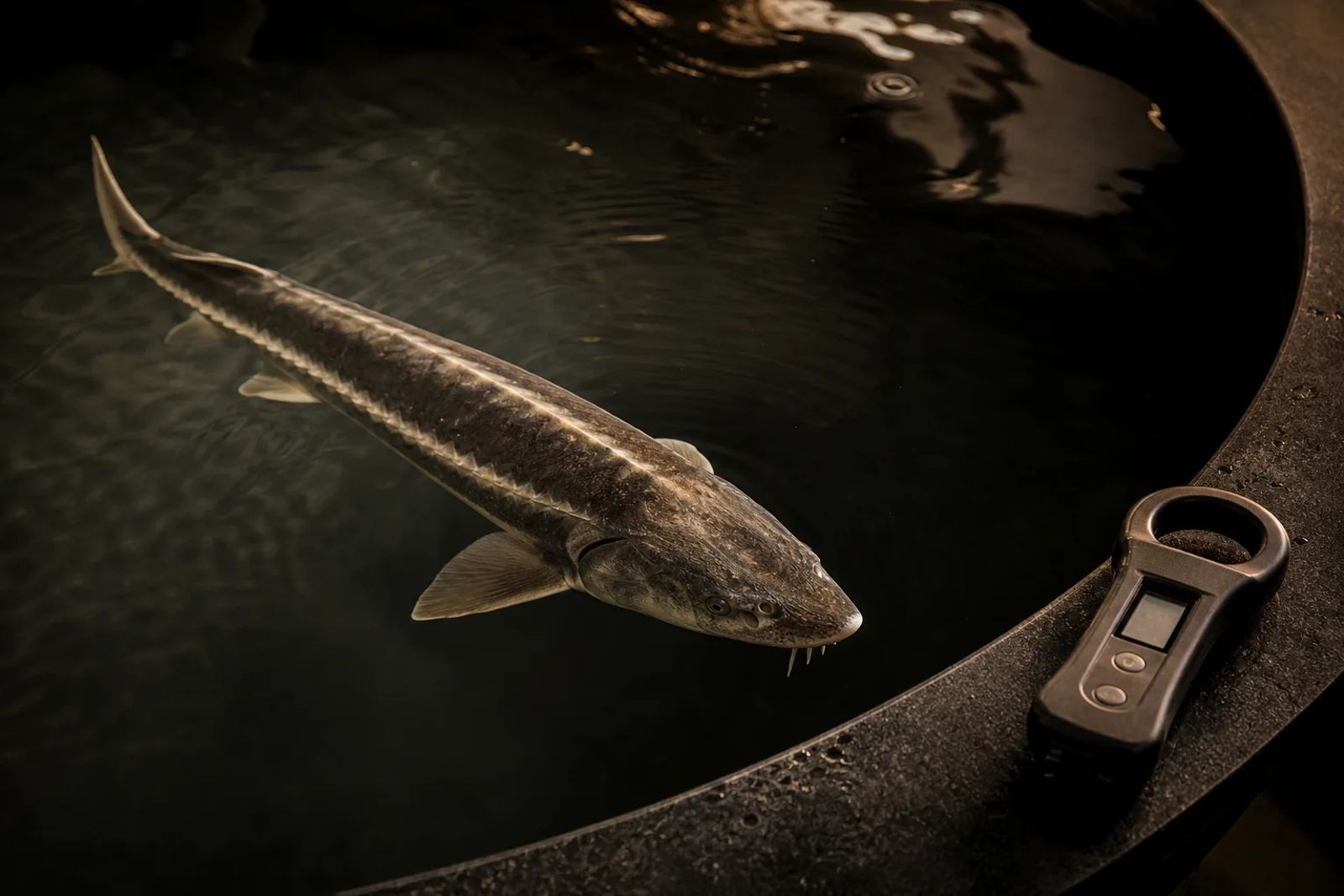
A small glass tag, with no battery, can carry a sturgeon’s identity in farm records. A reader retrieves its code; the records reveal the fish’s examinations, growth and health. At harvest, that history reaches a critical handover: a separate processing record must connect the fish to the caviar batch before traceability can lead back to an individual animal.
Why one fish needs one identity
A tank number identifies a group. It cannot tell staff which female they examined last time.
Individual identification lets a farm compare successive sexing results, maturity assessments and measurements without confusing fish that look alike. That history helps staff decide which animals to examine again, retain for breeding or assess for harvest.
The tag supplies the identity, not the diagnosis. Sex and egg readiness come from examinations described in sexing methods, with each observation attached to the correct animal. Identification is one working part of sturgeon farming, not a substitute for husbandry or veterinary judgement.
How farms track individual fish
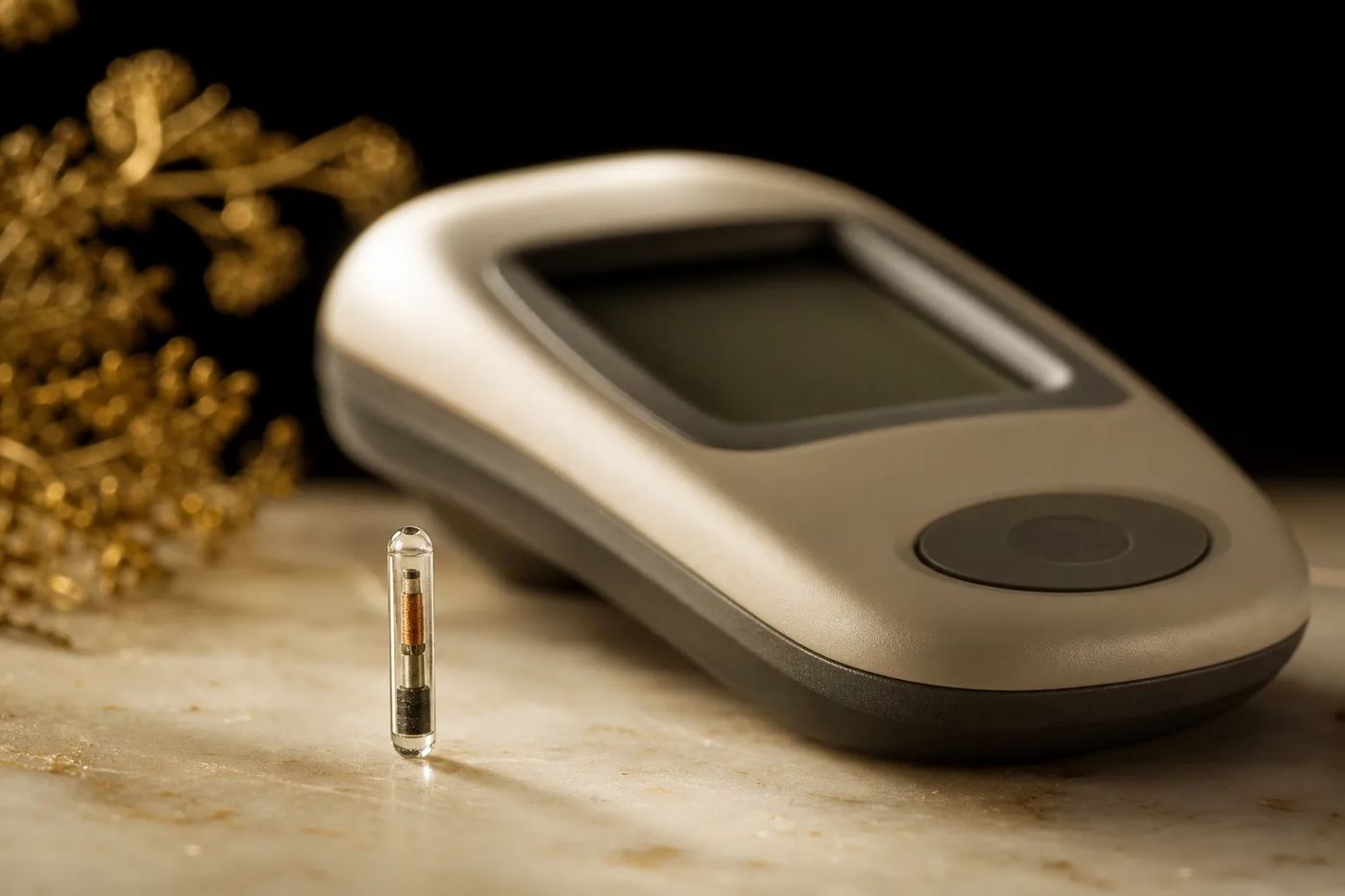
A PIT tag, a passive integrated transponder, is a small electronic identifier commonly enclosed in glass. A compatible reader energises the batteryless tag and receives its identification code. That code opens the door to a record; it does not contain the fish’s complete medical or reproductive history.
Published sturgeon work describes implantation into body musculature or the body cavity. The right placement depends on the fish, tag and purpose, so operators need an appropriate protocol. FAO’s hatchery manual describes PIT identification for breeding fish and coded wire tags for fry.
Other documented sturgeon marks include external tags and visible implant elastomer marks. Some identify groups; others require different detection methods. They cannot simply replace a readable individual electronic code. Tags can also be lost. In a controlled study published in 2022, juvenile white sturgeon carrying PIT tags alone retained 26 of 27 tags at day 28, with no further losses through day 101. Those figures describe that experimental group, rather than lifetime retention on caviar farms.
An unreadable tag calls for an identity check, never an invented history.
Tagging means handling a fish and penetrating tissue. EU Regulation (EC) No 865/2006, Article 67, requires marking covered specimens with regard for humane care, wellbeing and natural behaviour. A trained operator and an appropriate protocol therefore matter.
Turn a scan into a useful history
Scan first, record second. Before entering an examination, scan the fish and confirm that the displayed identifier matches the open record. Tank position and appearance are poor substitutes for that check.
FAO documents individual genetic passports for breeding sturgeon containing the PIT number, origin, measurements, genetic results and a photograph. That provides a useful foundation. For day to day farm management, the following recommended record brings the fish’s history together; it is not a universally prescribed form:
- Identity: tag code, tag type, implantation date and location, and replacement history.
- Origin and age: supplier, hatch date or documented cohort, species and parentage where known.
- Examinations: dated sexing method, result and uncertainty, plus maturity stage, the recorded stage of reproductive development.
- Growth and location: dated length, weight and transfers between holding units.
- Health: observations, diagnoses, treatments and relevant withdrawal restrictions before food harvest.
- Outcome: harvest date, roe weight and the processing batch receiving it.
Keep the connections intact when circumstances change. A treatment covering a whole tank should appear in each fish’s history through a reference to the group treatment record. A replacement tag should remain linked to the previous identifier. An unreadable tag calls for an identity check, never an invented history.
Linking the fish to the tin
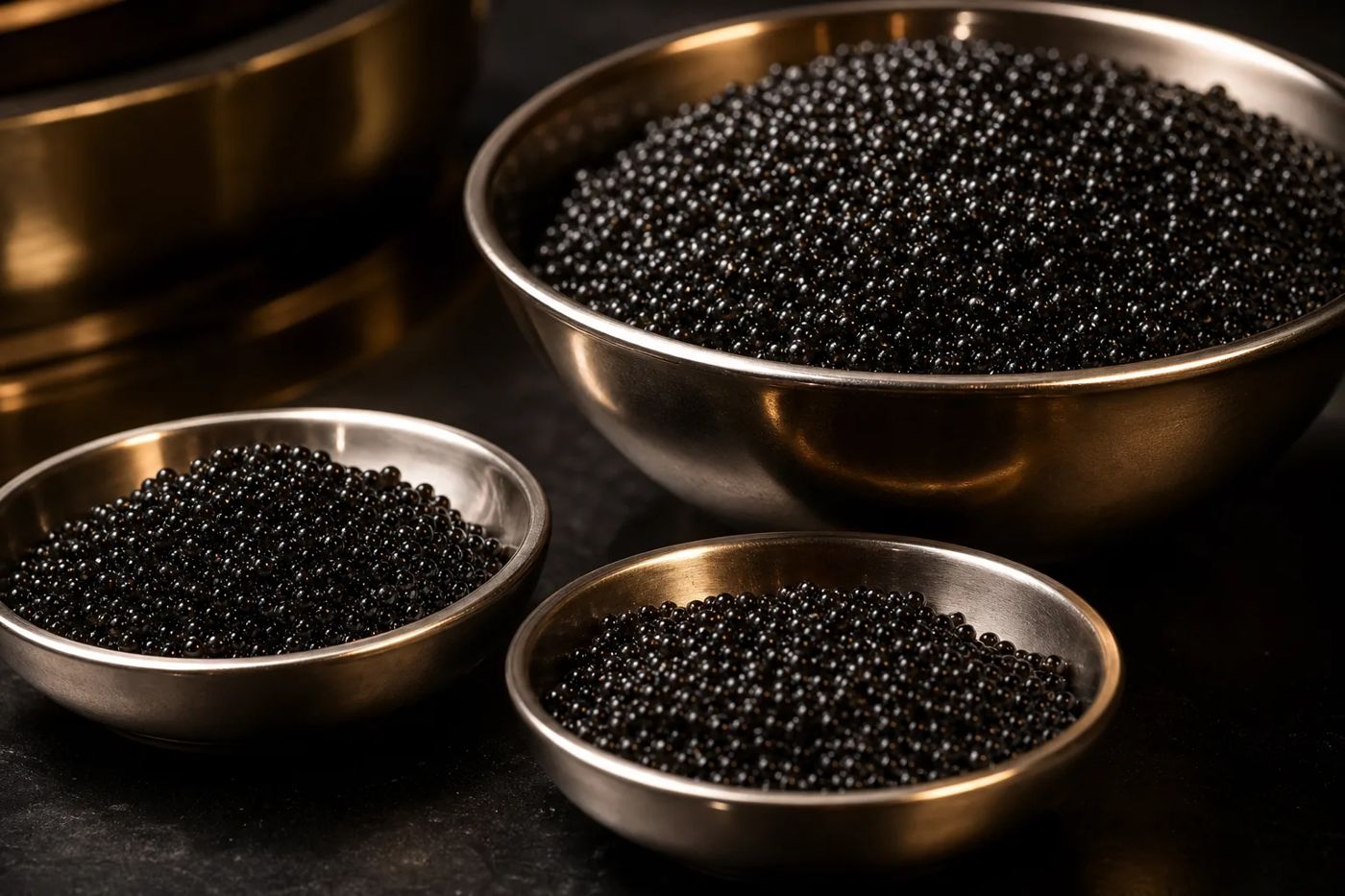
The decisive handover happens at harvest and processing. To preserve individual traceability, a robust audit trail should connect the contributing fish, the roe received, the processing batch and the containers filled. This recommendation does not imply that every farm provides consumer access to individual records.
A lot number is not a fish number. CITES Resolution Conf. 12.7 (Rev. CoP17), Annex 1, defines the lot identification number by reference to the processing or repackaging plant’s caviar tracking system. It does not define it as a fish tag number, so a lot number alone cannot establish that a tin contains roe from only one female.
A lot can encompass multiple fish. Retaining the finer detail requires farm and processor records identifying the contributors. Repacking introduces another handover: records should connect the new container to the incoming caviar. CITES guidelines allow either a lot identifier or a CITES document number in the relevant field on repacked containers.
The label supports traceability but does not independently prove its contents. See the CITES code for the label’s separate fields and quality control for checks beyond paperwork.
What the rules require
CITES recommendations concern wildlife trade and identification; food law addresses traceability through the supply chain. These are distinct regulatory layers, and the provisions below do not impose a general requirement to implant every farmed sturgeon.
EU
Article 18 of Regulation (EC) No 178/2002 requires traceability of food, food-producing animals and relevant substances, including identification of suppliers and business customers. Separately, Regulation (EC) No 865/2006, Article 66(6) and (7), requires caviar container marking and adequate quantity records at licensed processing and repackaging plants. These duties do not automatically establish traceability to an individual fish.
United Kingdom
Great Britain applies assimilated versions of the relevant EU-derived legislation, as amended; Northern Ireland must be considered separately under its applicable EU framework.
The UK’s published general food law guidance describes Article 18 supplier and business-customer records. For a UK caviar operation, check the applicable Article 66 text and its registration conditions rather than assuming a farm tag meets those legal duties.
United States
For international caviar trade, 50 CFR 23.71 requires container labels and corresponding documentation, subject to its exceptions. Its definition of a lot is a batch processed at one time, not an individual fish. FDA’s existing supplier and recipient recordkeeping requirements under 21 CFR Part 1, Subpart J, remain applicable to businesses within their scope.
The additional Food Traceability Rule sits in Subpart S. FDA’s list includes finfish categories but does not expressly name caviar or roe, leaving coverage of salted sturgeon roe unclear from the wording alone. A product’s origin in fish is therefore insufficient grounds for assigning those extra duties.
FDA states that it will not enforce the rule before 20 July 2028, following a Congressional directive. Its published page describes extension of the original 20 January 2026 compliance date as proposed. Deferring enforcement is different from finalising an amendment to the compliance date.
Sources
-
FAO, Chebanov, M.S. and Galich, E.V. Sturgeon hatchery manual. FAO Fisheries and Aquaculture Technical Paper No. 558, reprinted 2013. Chapters 11 and 13 describe individual certification and tagging. Full manual.
-
US National Library of Medicine, PubMed Central. Research Tools to Investigate Movements, Migrations, and Life History of Sturgeons (Acipenseridae), with an Emphasis on Marine-Oriented Populations. Peer-reviewed research review, 2013. Used for PIT operation, implantation categories and alternative marks, not as evidence of adoption by every farm. Archived paper.
-
Animal Biotelemetry. A subdermal tagging technique for juvenile sturgeon using a new self-powered acoustic tag. Original experimental research, 2022. The separately reported PIT-only control group supplies the retention result used here. Research paper.
-
CITES. Conservation of and trade in sturgeons and paddlefish, Res. Conf. 12.7 (Rev. CoP17), checked after CoP20, Annex 1. Retrieved edition supplies the lot definition and processing and repackaging label provisions. Resolution.
-
European Commission, EUR-Lex. Commission Regulation (EC) No 865/2006, consolidated text dated 27 February 2019. Articles 66(6), 66(7) and 67 cover caviar marking, plant records and humane marking. Consolidated regulation.
-
Food Standards Agency, GOV.UK. General food law. Online guidance, originally published 2018, retrieved November 2026. Section 3.3 explains Article 18 supplier and business-customer traceability. Official guidance.
-
UK legislation service. Commission Regulation (EC) No 865/2006, historical consolidated text dated 25 February 2008. Used only as a historical cross-check, not confirmation of the current Great Britain position. Historical text.
-
US Office of the Federal Register, eCFR. 50 CFR 23.71: How can I trade internationally in sturgeon caviar? Current online text retrieved November 2026. Paragraphs (a), (b) and (c) cover scope, labels, lot identification and documentation. Federal regulation.
-
US Food and Drug Administration. Frequently Asked Questions: FSMA Food Traceability Rule. Online edition retrieved November 2026, particularly TG.3 on existing Subpart J duties. FDA questions and answers.
-
US Food and Drug Administration. Food Traceability List. Online edition retrieved November 2026. Used to inspect the stated finfish categories and the absence of an express caviar or roe entry. FDA list.
-
US Food and Drug Administration. FSMA Final Rule on Requirements for Additional Traceability Records for Certain Foods. Online edition retrieved November 2026. The compliance-date section distinguishes the proposed extension from the Congressional enforcement restriction. FDA rule overview.
This piece was researched from FAO technical guidance, peer-reviewed sturgeon research and official regulatory sources, with unresolved legal checks identified below.
Last checked: November 2026