
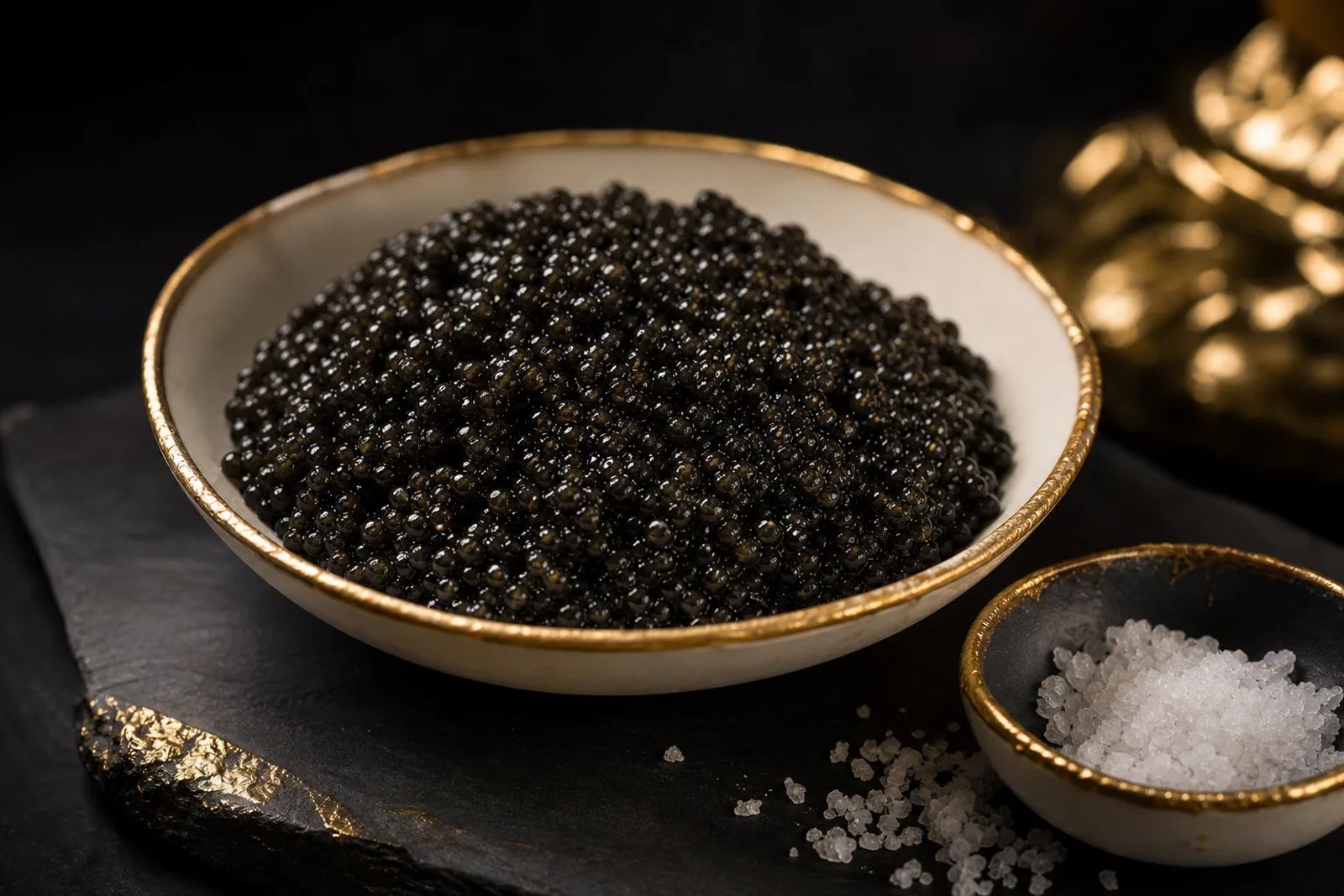
A glossy bead of traditionally prepared unpasteurised caviar has been salted, not cooked. That distinction matters: salt preserves the eggs without cooking heat, while pasteurisation adds a controlled heat treatment that can harden the beads and change their flavour.
Traditionally prepared unpasteurised caviar is therefore raw. Both styles are intended to be eaten without further cooking when correctly produced and handled. Neither is suitable for everyone.
Is caviar raw or cooked after salting?
Salting does not cook caviar. Roe means fish eggs; the Codex Standard for Sturgeon Caviar defines caviar as sturgeon eggs treated with food-grade salt and intended for direct consumption. Salt curing preserves the eggs without applying cooking heat, so unpasteurised caviar remains uncooked. For the wider definition, see what is caviar.
Salt makes some of the water in food less available to microbes, helping to restrict their growth. It does not reliably eliminate all harmful bacteria. Safety rests on the producer's validated process, hygienic handling, storage temperature and time before consumption. Salt in the ingredients is only part of that picture.
Codex specifies 3 to 5 g of salt per 100 g of finished sturgeon caviar. This measures salt, not sodium. It is an international reference standard, rather than a legal requirement everywhere. For the familiar lightly salted description, see malossol explained.
What pasteurisation changes
Pasteurisation applies controlled heat to caviar to control relevant harmful bacteria. It uses a specified temperature and holding time, rather than simply warming the eggs. The process must suit both the product and its container; a household heating instruction cannot replace commercial validation.
The change can be felt in the bead itself: heat can make it firmer. The Codex fish-processing code identifies this hardening, along with changes to taste and flavour, among the effects of heat. How noticeable these changes are depends on the treatment, so pasteurised caviar does not have one fixed texture. Fresh, unpasteurised and pasteurised caviar explores those distinctions in more detail.
Pasteurisation alone does not make caviar shelf stable, or safe to store unopened without refrigeration. Store it at room temperature only when the product's instructions explicitly allow this. A sealed jar or tin does not establish that its contents have been commercially sterilised. If the label says “keep refrigerated”, that instruction applies even when the caviar is pasteurised.

Why ready-to-eat caviar still needs chilling
Ready-to-eat means ready to serve, not sterile. The producer intends the food to be eaten without further cooking. With caviar, the consumer normally opens the container and serves the eggs, without a final treatment designed to kill bacteria.
Listeria can grow at refrigerator temperatures. Chilling limits risk but cannot remove it. Reduced-oxygen chilled fish products also require controls against Clostridium botulinum, including strains that can grow in the cold and produce toxin. Follow the product's storage instructions and use-by date: a sealed container does not turn chilled caviar into pantry food.
Glossy eggs, a pleasant smell and an intact seal cannot establish microbiological safety. Keep hands and utensils clean, prevent contact with raw foods, and follow the instructions for storage and use after opening. The fuller caviar food safety guide separates everyday handling from risks that demand particular care.
Who should take extra care?
Pregnant people, older adults and people with weakened immunity are more vulnerable to serious listeriosis, the illness caused by Listeria. The authorities below often address broader seafood categories rather than caviar specifically. Read the advice within that scope.
United Kingdom
- NHS: Pregnancy guidance says cold smoked and cured fish should be cooked until steaming hot.
- FSA and Food Standards Scotland: Pregnant people and those with weakened immunity should avoid these products when ready to eat. Older people should understand the risk and take steps to reduce it.
The examples focus on foods such as smoked salmon and gravlax, rather than a dedicated assessment of caviar.
United States
- FDA: Pregnancy guidance identifies raw or undercooked seafood and refrigerated smoked seafood as higher-risk choices, with fully cooked seafood the safer alternative.
- US government guidance: Adults aged 65 and over are also identified as a higher-risk group.
A pasteurised label on chilled caviar does not amount to blanket approval under these recommendations.
Glossy eggs, a pleasant smell and an intact seal cannot establish microbiological safety.
European Union
EFSA identifies pregnant people, older people and those with weak immune systems as particularly affected by listeriosis. Its advice stresses hygiene and effective temperature control throughout production and storage, including at home. This is scientific risk assessment and prevention advice, rather than an EU-wide list of caviar products considered suitable during pregnancy.
Australia and New Zealand
FSANZ advises pregnant people, older people and those with weak immunity to choose safer foods and avoid specified chilled ready-to-eat seafood, including sushi, sashimi and smoked seafood. Cooking is not the only consideration: its advice includes some cold cooked seafood too.
If you belong to any of these groups, look beyond the word pasteurised. Ask your doctor or midwife about the specific product and follow your country's guidance. Caviar during pregnancy covers that question separately. Anyone with a fish allergy should seek individual advice from a doctor before eating caviar.
Why caviar is usually added after cooking
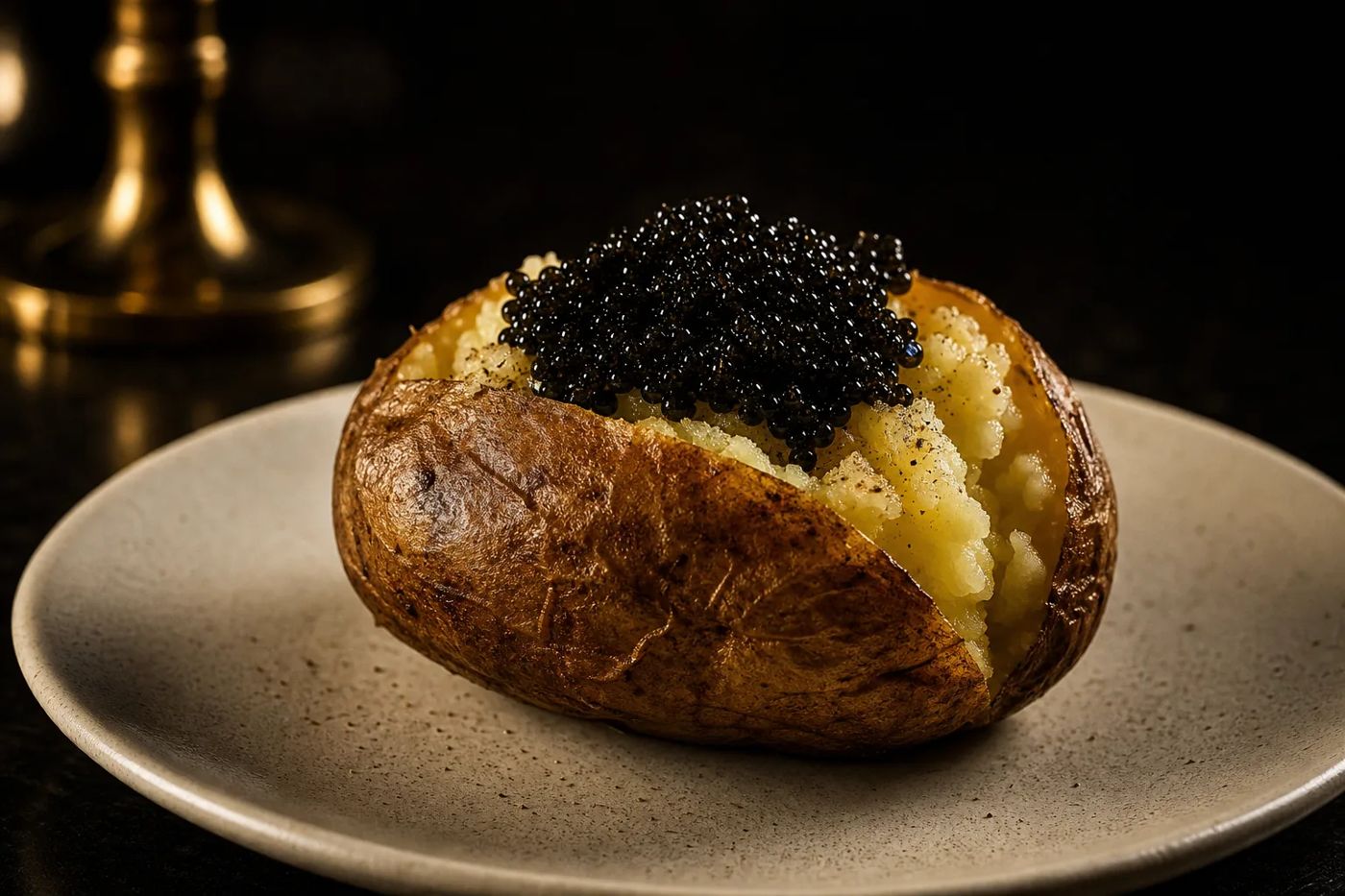
Caviar usually goes on at the finish to preserve its bead texture and flavour. It can be heated, but the usual culinary approach is to add it after a hot dish has finished cooking, rather than simmering or frying the eggs. Finishing a dish this way is not a safety cooking step for someone advised to avoid uncooked or cured seafood. A warm spoonful of sauce does not establish that the roe has reached a validated temperature for long enough to control pathogens.
FAQ
Is the roe on sushi cooked?
Not necessarily. The word sushi tells you nothing about whether its roe has been heat-treated. Ask what the ingredient is and whether it is cured, pasteurised or cooked; colour and appearance cannot answer those questions. Pregnancy advice may also apply to the whole prepared sushi dish, as FSANZ guidance illustrates, rather than just its roe topping.
Sources
-
FAO and WHO, Codex Alimentarius Commission. Standard for Sturgeon Caviar, CXS 291-2010. Retrieved official text identifies amendments in 2013, 2018 and 2024; the Codex register records a further modification in 2026. Sections 2.1 to 2.3 and 6. Canonical document. Text retrieved through FAO's document proxy.
-
FAO and WHO. Code of Practice for Fish and Fishery Products, CXC 52-2003, 2020 publication. Section 20, particularly 20.19, “Pasteurization”. Retrieved publication.
-
US Food and Drug Administration. Fish and Fishery Products Hazards and Controls Guidance, fourth edition, 2011, Chapter 13, “Clostridium botulinum Toxin Formation”, as provided in FDA's current online collection. Chapter 13.
-
US Food and Drug Administration. Fish and Fishery Products Hazards and Controls Guidance, fourth edition, 2011, Chapter 16, “Pathogenic Bacteria Survival Through Cooking or Pasteurization”, as provided in FDA's current online collection. Chapter 16.
-
NHS. Foods to avoid in pregnancy. Online guidance, reviewed 15 June 2026. Pregnancy guidance.
-
Food Standards Agency and Food Standards Scotland. The FSA and FSS remind higher-risk consumers on the risks of listeria associated with eating cold-smoked and cured fish. Online statement, publication date not displayed in the retrieved copy; consulted 2026. Retrieved FSA statement.
-
US Food and Drug Administration and US Department of Agriculture. Food Safety for Pregnant Women, Their Unborn Babies, and Children Under Five. January 2022 edition; consulted 2026. Food safety booklet.
-
FoodSafety.gov. People at Risk: Older Adults. Current online guidance, revision date not established; consulted 2026. Older adults guidance.
-
European Food Safety Authority. Listeria. Current online topic guidance, revision date not displayed in the retrieved text; consulted 2026. EFSA guidance.
-
Food Standards Australia New Zealand. Listeria in food. Current online guidance, revision date not displayed in the retrieved text; consulted 2026. FSANZ guidance.
-
USDA Food Safety and Inspection Service. Do foods containing botulism have a bad odor or taste? Current online answer, revision date not established; consulted 2026. FSIS answer.
This article was researched from retrieved Codex publications and official food-safety guidance, separating caviar-specific processing evidence from broader seafood advice.
Last checked: November 2026