
Six of the 30 caviar samples in a 2013 WWF and TRAFFIC investigation were not sturgeon caviar at all. Three labelled samples had species or hybrid discrepancies. Illegal caviar is not only a story of poached fish. It is also a story of false labels and missing paperwork.
The black market reaches beyond poached wild roe. It includes illegal exports and imports, false species or origin claims, and farmed caviar traded without required documentation. Testing and enforcement records expose these offences. They cannot reveal the trade's total global weight or market share.
What the black market in caviar includes
Poaching a fish and trading its roe are different acts. A fish can be taken illegally before its roe enters commerce. Legally farmed roe can be exported without permits or repacked in breach of licensing requirements. Species substitution and false origin declarations can deceive buyers without any wild fish being killed.
Investigators untangle four questions: which fish supplied the eggs, where it was raised or caught, whether it was wild or captive, and whether its paperwork and handling were lawful. The source code on a label records the specimen's origin category. Falsifying it can hide wild roe behind a captive origin claim.
Species substitution and false origin declarations can deceive buyers without any wild fish being killed.
Identifying the wrong species does not, by itself, prove poaching.
What market testing has found
Laboratory tests can expose the gap between a seller's claim and the material supplied. These investigations offer some of the clearest evidence, but their sample sizes and contents matter: some examined caviar alone; others tested both caviar and meat.
| Study or report | Place | Sample and method | Main finding | Publication |
|---|---|---|---|---|
| Jahrl, WWF and TRAFFIC | Bulgaria, Romania; two purchases in Austria | 30 caviar samples; DNA and label checks | Six were not sturgeon caviar; three labelled samples had species or hybrid discrepancies | 2013 |
| WWF market survey | Bulgaria, Romania, Serbia, Ukraine | 145 samples, including 58 caviar; DNA and isotope analysis | 27 classified as wild, including two caviar samples | 2021 |
| Ludwig and colleagues, Current Biology | Bulgaria, Romania, Serbia, Ukraine | 149 caviar and meat samples; genetic and isotope analyses | 31 classified as illegal wild origin; 17 regulatory violations; 47 cases of consumer deception | 2023 |
The 2013 investigation used mitochondrial DNA, including cytochrome b sequences, to help identify the fish behind the product. Vendors described five samples as wild. DNA identified four as beluga, establishing their species but not whether those fish had lived in the wild.
The 2021 report and 2023 paper draw on related Lower Danube research. They are not independent measurements of the market, and their different published totals should remain separate. The later paper's wild origin finding covers meat as well as caviar.

What seizures establish
TRAFFIC's report for the European Commission on seizures during 2023, published in 2025, recorded 196 EU caviar seizure records involving 250 kg and an additional 1,154 specimens. Kilograms and specimens are separate reporting units; the report supplies no defensible conversion between them.
An earlier TRAFFIC analysis, published in 2011, found 14 caviar seizures implicating Bulgaria or Romania, reported by selected EU Member States for 2000 to 2009. Five seizures linked to Bulgaria totalled 27.5 kg; nine linked to Romania totalled 25 kg.
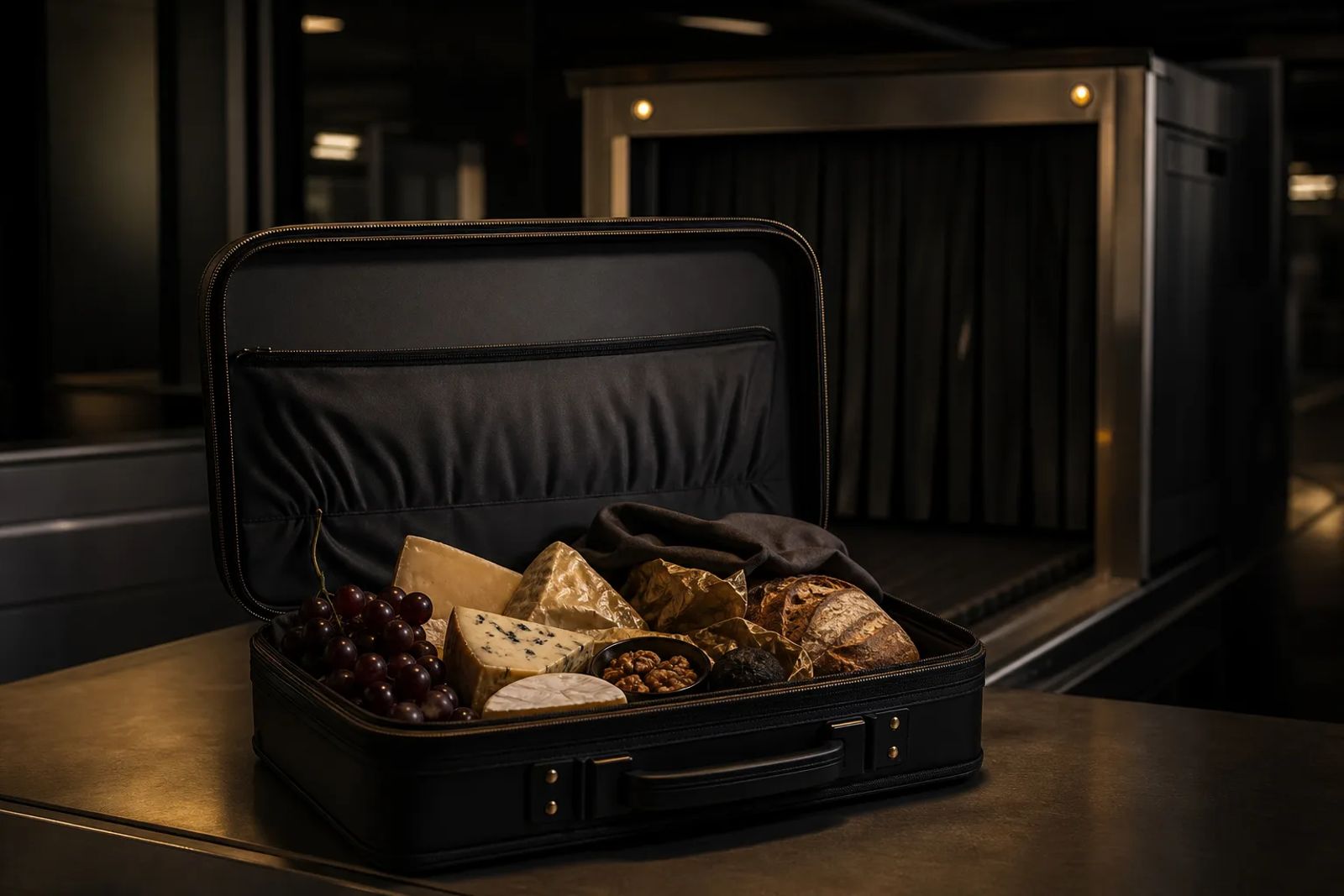
Baggage featured prominently in the World Customs Organization's Illicit Trade Report 2024. All but one reported caviar seizure occurred on import during air transport, with the goods found in baggage during routine controls. That identifies a detected transport method, rather than a route followed by all illegal caviar.
Where the documented routes lead
The evidence connects local sales with international movements, but the strength of geographical identification varies. The Danube surveys found products for sale in Bulgaria, Romania, Serbia and Ukraine; purchase there did not establish origin in that river.
In one German customs investigation, the label and the laboratory pointed to different places. According to TRAFFIC's 2011 report, some 2009 samples labelled as Bulgarian farmed caviar appeared, on isotope analysis, to come from the Caspian.
TRAFFIC and WWF's 2018 global assessment recorded fishermen's accounts of poaching along the Amur and sales through traders to Moscow. It also compiled reports of undocumented caviar moving from China into Russia. Undocumented imports alone do not establish wild harvest.
Other places appear in the assessment in different trading roles. Iran and Kazakhstan feature in historical legal trade data. The UAE is documented as an importing and re-exporting centre. Neither finding establishes trafficking or an illegal transit hub.
The United States is a documented destination for smuggling. The US Fish and Wildlife Service's 2001 enforcement report describes an investigation following caviar from Russia through Georgia to New York. It also describes the forensic detection of American paddlefish roe sold as Russian caviar.
Why the trade persists
“Wild” and “local” were selling arguments in the 2013 WWF and TRAFFIC survey. Sellers invoked those origins while taking precautions against detection. Their pitches show how they marketed the roe, rather than measuring demand or establishing that the offered eggs were poached.
Enforcement gaps leave another opening. In the 2011 report, Bulgaria and Romania reported no caviar seizures themselves, although other EU states recorded seizures linked to both countries. The authors also identified a gap in trade records: after Bulgaria and Romania joined the EU in 2007, their trade with other member states no longer appeared in CITES records. Shipment amounts are therefore unknown.

How authorities respond
Labelling and facility registration
Labels start the trail. Checked in November 2026, CITES Resolution Conf. 12.7 remains at revision CoP17. Annex 1 sets out the universal caviar labelling system for wild and farmed product, recommending non-reusable labels on primary containers for domestic and international trade.
The resolution also recommends registering processing and repackaging facilities. CITES parties implement trade controls through their own legislation, so national rules determine offences and penalties. The resolution itself is not identical domestic criminal law everywhere.
Rules by jurisdiction
In the EU, Regulation (EC) No 338/97 supplies the wildlife trade framework. Article 66(6) of Regulation (EC) No 865/2006 sets the caviar marking requirements. Licensed processing and repackaging plants must retain records for inspection. These controls cover domestic caviar sales as well as consignments crossing the EU's external border.
Unregistered repacking is a compliance issue in its own right, distinct from poaching. The processing register lists facilities, not every legitimate retailer. A missing shop or brand name alone does not establish an offence.
The Commission's revised EU Action Plan against Wildlife Trafficking, adopted in November 2022 for the period to 2027, brings together prevention, stronger legal frameworks, enforcement and international cooperation. It sets policy rather than providing a separate caviar import permit.
Great Britain applies its own CITES implementing rules, including assimilated legislation as amended. Northern Ireland continues to apply the EU Wildlife Trade Regulations. APHA issues permits for both, but movements between Great Britain and Northern Ireland remain subject to CITES controls rather than being treated as ordinary domestic movements.
In the United States, 50 CFR 23.71 governs international trade in caviar from sturgeons and paddlefish. It requires prescribed labels and CITES documentation, subject to applicable exemptions. These are border trade provisions; they do not require an international permit for every domestic sale.
Forensic testing
Alongside these legal controls, forensic testing supplies an independent check. The USFWS investigation above used DNA. The Danube research combined genetic identification with isotope analysis, which examines chemical signatures associated with diet and environment. These documented uses do not amount to evidence that every country routinely screens caviar using DNA.
A CITES label carries traceability information, not proof of what the container holds. Inspectors need to connect labels with permits, facility records and, where warranted, laboratory results. Caviar forensics explains what each type of test can establish.
What remains unknown
There is no established current global percentage of illegal caviar in these sources. Targeted purchases do not randomly sample all sales. Seizure totals reflect inspections, reporting and enforcement effort. Legal trade databases capture declared transactions, leaving undetected crime outside the record.
Nor can the offence categories simply be added together. One product may carry the wrong species name, false provenance and missing documentation, appearing in several categories at once.
Repeated investigations demonstrate continuing offences. Their worldwide volume, distribution between routes and proportion escaping detection remain unresolved. The offences are visible; the full market is not.
Where to go next
- Caviar Fraud and Poaching: the wider guide to evidence, offences and enforcement.
- How to Spot Fake, Mislabelled or Repacked Caviar: practical checks, with appearance kept separate from authentication.
- Famous Caviar Smuggling Cases: documented investigations and their outcomes.
Sources
-
WWF Austria and TRAFFIC. Jutta Jahrl, Illegal caviar trade in Bulgaria and Romania, 2013 edition. The report provides the 30-sample survey, laboratory methods, findings and observations about demand and enforcement. Report PDF.
-
WWF. Evidence for trafficking of critically endangered sturgeon in the Lower Danube region, 2021 edition. Regional market survey, sampling table, genetic and isotope methods, and conclusions. Report PDF.
-
Ludwig, A., Jahrl, J., Congiu, L., Gessner, J., Friedrich, T., Lieckfeldt, D., Peng, Z. and Boner, M. Poaching and illegal trade of Danube sturgeons, Current Biology, 2023. University of Padua author record and abstract, reporting the 149-sample genetic-isotope investigation. Institutional record.
-
TRAFFIC, compiled for the European Commission. Kathy Rock and Jon Garcia, An Overview of Seizures of CITES-Listed Wildlife in the European Union: January to December 2023, June 2025 edition. Case study 2 supplies the caviar seizure totals. Report PDF.
-
TRAFFIC. Katalin Kecse-Nagy, Trade in Sturgeon Caviar in Bulgaria and Romania 1998-2008, November 2011 edition. Full report documents seizures, the German isotope investigation and reporting gaps. Report PDF.
-
World Customs Organization. Illicit Trade Report 2024, 2024 reporting edition. Environmental crime chapter, findings concerning caviar transport and detection. Report PDF.
-
TRAFFIC and WWF. Harris, L. and Shiraishi, H., Understanding the global caviar market: Results of a rapid assessment of trade in sturgeon caviar, 2018 edition. Russian field research, compiled incidents and CITES legal trade analysis. Report PDF.
-
US Fish and Wildlife Service, Office of Law Enforcement. Annual Report FY 2001, 2001 reporting edition. Caviar investigations and forensic identification. Report PDF.
-
CITES. Resolution Conf. 12.7 (Rev. CoP17): Conservation of and trade in sturgeons and paddlefish, revision adopted in 2016; current revision checked against the post-CoP20 index. Paragraph 2 and Annex 1 cover registration and labelling. Resolution PDF; current resolutions index.
-
European Commission. EU Wildlife Trade Reference Guide, Annex XIV, “Caviar labelling”, online edition, undated. Explains Article 66(6), domestic coverage, licensing and records. Annex XIV.
-
European Commission. Revision of the EU action plan against wildlife trafficking, COM(2022) 581 final, 9 November 2022. Policy priorities and implementation period. Commission communication.
-
APHA and Defra. Check if you need a CITES permit to import or export endangered species, updated 23 June 2026. UK permitting responsibilities and movements. Official guidance.
-
European Commission. EU Wildlife Trade Reference Guide, Annex XIX, online edition, undated. Distinguishes Great Britain and Northern Ireland and explains movements between them. Annex XIX.
-
United Kingdom. The Control of Trade in Endangered Species (Amendment and Revocation) Regulations 2026, SI 2026/627, as made. Official legislative record identifies the assimilated wildlife trade legislation being amended. Official legislative record.
-
United States, Code of Federal Regulations. 50 CFR 23.71: How can I trade internationally in sturgeon caviar?, current online reproduction retrieved November 2026, Legal Information Institute. Scope, labelling, documents and facility registration. Regulatory text.
The piece was researched through published market investigations, official enforcement reports, CITES documents and jurisdiction-specific regulatory sources, keeping tested findings separate from seller claims and recorded legal trade.
Last checked: November 2026