
In the nineteenth century, eastern America's caviar trade drew heavily on wild Atlantic sturgeon. By the early twentieth century, that trade had helped drive severe depletion. Today, North Carolina produces farmed Russian sturgeon roe, from an imported species rather than a native river fish. Florida has a separate, documented history of beluga aquaculture.
American birth alone does not give a beluga farm permission to harvest or trade its products. That requires federal authorisation for the particular facility and the activities it intends to undertake.
United States fact box: eastern scope
| Scope | United States, focusing on Florida, North Carolina and the East. |
| Documented farming | Russian sturgeon in North Carolina; beluga historically documented in Florida. 1,2,3 |
| Main farming areas | Smyrna and the Lenoir area, North Carolina; Bascom, Florida. Sources 1, 2, 3. |
| Registered caviar operations | CITES distinguishes processing and repackaging plants through P and R code endings. 4 |
| Trade regime | Endangered Species Act; CITES under 50 CFR part 23; FDA seafood controls under 21 CFR part 123. Sources 5, 6. |
| Native wild stocks | Atlantic: endangered or threatened by population; shortnose: endangered; Gulf: threatened. Sources 7, 8, 9. |
| Role | Farmed roe production, processing and repacking, alongside a domestic market. Sources 1, 2, 4. |
North Carolina offers a clear example of eastern caviar made from an imported species, rather than a native river fish. North Carolina Sea Grant records Russian sturgeon production at Marshallberg Farm in Smyrna; its research partnership reporting also identifies LaPaz at Lenoir.
North Carolina: Russian sturgeon in recirculating systems
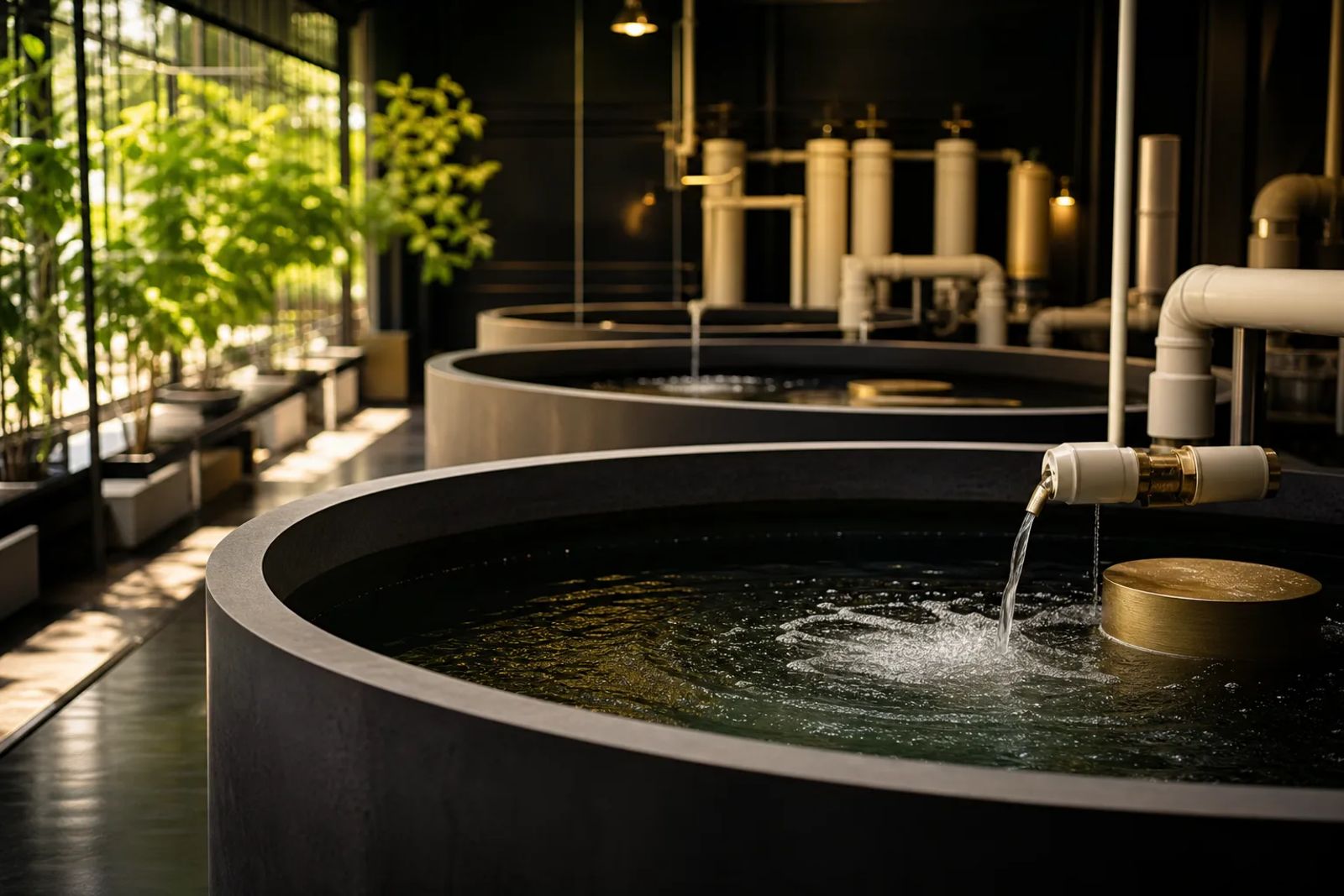
NC State Extension describes sturgeon production at two North Carolina locations using recirculating aquaculture systems, usually shortened to RAS. These systems treat and reuse water. The farm's own account identifies both its coastal operation and its western operation near Lenoir as Russian sturgeon farms.
“Russian” names the species, Acipenser gueldenstaedtii, not the country where the roe originated. Osetra is a trade name, not a substitute for that scientific identification. For the detailed farm account, see Marshallberg Farm; the regional picture begins with knowing which fish is raised, and where.
Florida: Bascom is not Miami
The historical federal record places Sturgeon AquaFarms in Bascom, in the Florida Panhandle, not at the Miami addresses associated with caviar businesses. USFWS's notice of 26 June 2017 documented aquacultured beluga at that facility.
The permission described in that notice was precise. According to USFWS, the exemption granted to Sturgeon AquaFarms on 15 June 2016 authorised harvesting, interstate commerce and export of beluga meat only, not caviar or live fish.
Miami appears in a different record. The CITES register identifies Optimus Inc., doing business as Marky's Caviar, at a Miami address for processing/repackaging. That entry neither establishes ownership of the Bascom farm nor transfers an exemption between companies. The house profile follows those company and facility distinctions in detail.
How a US farm may legally raise beluga
A US beluga exemption belongs to an individual facility, with defined conditions and activities. It is not a general licence for American aquaculture.
Beluga, listed by CITES as Huso huso, has been federally threatened since 21 October 2004. Its Endangered Species Act special rule, Section 17.44(y), was adopted on 4 March 2005.
Under paragraph (y)(5), USFWS considers exemptions for aquaculture facilities outside the species' Caspian and Black Sea littoral states. The conditions include state-certified controls against escapes and pathogens, no reliance on wild broodstock, and a formal conservation agreement with at least one littoral state.
An exemption may authorise harvesting in a US facility and specified trade in meat or caviar. It does not exempt trade in live beluga. Biennial compliance reports and continuing conservation cooperation matter, and permission can be revoked.
The import suspensions imposed in 2005 on beluga products originating in the Caspian and Black Sea basins are a separate matter from domestic production. Importing fish before those suspensions does not authorise every later commercial activity. The US beluga ban explained sets out the distinction.
Native sturgeons are not the farmed supply
The East's protected native sturgeons are not a legal source of commercial caviar in this region. Their names belong to the story of its rivers, but not to the farmed supply described here.
Catches often failed to distinguish Atlantic from shortnose sturgeon, leaving no clean species inventory of the old trade.
Atlantic sturgeon, Acipenser oxyrinchus, received federal listings in 2012. The Gulf of Maine distinct population segment is threatened; the New York Bight, Chesapeake Bay, Carolina and South Atlantic segments are endangered. A distinct population segment is a population treated separately for ESA protection.
Shortnose sturgeon, Acipenser brevirostrum, was listed as endangered on 11 March 1967 under the ESA's predecessor legislation and remains endangered. Gulf sturgeon, listed as Acipenser oxyrinchus desotoi, has been federally threatened since 1991. NOAA and USFWS share responsibility for its recovery.
State controls reinforce those federal protections. North Carolina lists Atlantic and shortnose sturgeon as unlawful to possess, while Florida protects Gulf sturgeon under state law.
The historical record needs careful reading, too. Catches often failed to distinguish Atlantic from shortnose sturgeon, leaving no clean species inventory of the old trade. The Delaware and Hudson history traces that eastern caviar boom.
State permission and biosecurity
Florida's sturgeon controls address both containment and fish health. Commercial culture requires an annual FDACS Aquaculture Certificate of Registration and compliance with mandatory best management practices.
The FDACS best management practices manual, incorporated into Rule 5L-3.004, has a dedicated sturgeon chapter. It requires escape barriers, reporting of escapes within 24 hours, and retention of relevant wildlife and import documents.
Imports of live sturgeon into Florida require an official veterinary inspection certificate, with health documentation submitted in advance for FDACS approval. These are controls on moving fish safely. Permission to harvest protected animals or process food remains a separate requirement.
In North Carolina, the agriculture department issues aquaculture licences. Species outside its approved list also require written permission from the Wildlife Resources Commission before propagation and production. Check the species authorisation alongside the facility conditions: an aquaculture licence does not approve every non-native sturgeon.
NC State Extension records sturgeon production in recirculating systems at two North Carolina locations. Exporters, distributors and repackers may handle caviar without raising fish themselves, so their business addresses do not add farms to the map.
Federal trade rules and the plant register
Federal responsibilities run in parallel. USFWS administers CITES wildlife trade and the beluga special rule; NOAA protects listed native sturgeons within its jurisdiction; FDA's seafood HACCP rules govern relevant processing and importing. HACCP means hazard analysis and critical control point, a system for identifying and controlling food hazards. Wildlife permission does not replace compliance with food law.
The public US CITES register records caviar operations, distinguishing processing from repackaging through P and R code endings. Registration covers the listed operation, not every retailer or brand in its supply chain. It is not a farm inventory and establishes neither ownership nor ESA permission for a particular product.
Reading origin and checking overseas entry
Start with the country of origin, not the repacker's address. For US-origin caviar, the CITES marking identifies origin separately from processing or repackaging details. A Miami repacking address does not make the roe Florida-grown. Read origin and handling information as distinct parts of a traceability record, rather than independent verification of the contents.
Commercial exports require wildlife and food approvals. For travellers, US rules allow a conditional personal effects exemption of 125 g of sturgeon or paddlefish caviar per traveller, excluding beluga.
Destination rules need their own check. NOAA's export guidance points to separate EU and Great Britain approval lists. Northern Ireland must be checked under its own applicable arrangements, rather than assumed to follow Great Britain's route.
According to NOAA, establishment approval depends on the destination market. Before shipment, check the product, destination and dispatching establishment against current requirements. US caviar rules explains the wider federal framework.
What this region's caviar is known for
Provenance and production method give eastern American caviar its clearest documented identity, rather than a verified regional flavour. North Carolina's example is Russian sturgeon raised in controlled recirculating systems. Florida's is a long federal record of beluga aquaculture, accompanied by unusually specific permissions. Regional origin alone cannot establish the taste or texture of the caviar in a particular tin.
Sturgeon Aquafarms describes its Russian sturgeon Osetra, from Acipenser gueldenstaedtii, as firm, with golden to dark roe and a nut-like flavour. This is the producer's description, not an independent tasting of a verified current batch.
Sources
- NC State University and North Carolina Sea Grant. Sturgeon, updated 16 September 2026; A Center for Growing Seafood, Testing Ideas, undated web edition; and ‘StriperHub’ to Boost the East Coast Seafood Industry, 30 January 2020. Institutional reporting on North Carolina production, species and locations. Extension account, Marshallberg reporting and Smyrna and Lenoir locations.
- Marshallberg Farm. Marshallberg Farm Aquaculture Facilities, undated producer web edition retrieved November 2026. Facilities account.
- US Fish and Wildlife Service. Threatened Species; Exemption From Threatened Species Permits for a Qualifying Beluga Sturgeon Aquaculture Facility, Federal Register 82 FR 28875, 26 June 2017. Official notice.
- CITES Secretariat. United States of America: Register of caviar exporters, public register, indexed edition retrieved November 2026. Register.
- Electronic Code of Federal Regulations. 50 CFR 17.44, Species-specific rules: fishes, paragraph (y), current web edition retrieved November 2026. Beluga special rule.
- US Food and Drug Administration. Lists of Foreign Processors of Fish and Fishery Products Approved by their Governments, current web edition retrieved November 2026, explaining requirements under 21 CFR part 123. FDA guidance.
- NOAA Fisheries. Atlantic Sturgeon, current species account retrieved November 2026, including population status, historical fisheries and regulatory history. Species account.
- NOAA Fisheries. Shortnose Sturgeon, updated 1 October 2026. Species account.
- NOAA Fisheries. Gulf Sturgeon, current species account retrieved November 2026. Species account.
- Florida Department of Agriculture and Consumer Services. Aquaculture Certificate of Registration, current web edition; Aquaculture Best Management Practices Manual, revision November 2023, incorporated into Rule 5L-3.004, Florida Administrative Code, chapter IX. Certification guidance and manual.
- North Carolina Department of Agriculture and Consumer Services. Marketing: Aquaculture, current web edition retrieved November 2026, licensing and non-approved species guidance. Aquaculture guidance.
- North Carolina Department of Environmental Quality, Division of Marine Fisheries. Recreational Size and Bag Limits, current web edition retrieved November 2026. Possession restrictions.
- Florida Fish and Wildlife Conservation Commission. Sturgeon, undated web edition retrieved November 2026. Describes Gulf sturgeon protection under Florida law. State account.
- US Fish and Wildlife Service. Service Suspends Trade in Threatened Beluga Sturgeon, 28 October 2005. Official announcement.
- Sturgeon Aquafarms. Home and Our Story, undated producer web editions retrieved November 2026. Company overview and company history.
- NOAA Fisheries and UK Government. Foreign Approved Lists and Importing or moving fish to the UK, current web editions retrieved November 2026. NOAA destination lists and UK guidance.
- US Fish and Wildlife Service, Office of Law Enforcement. Notice to Wildlife Import/Export Community: CITES labelling of sturgeon caviar, 13 March 2008. Labelling bulletin.
Last checked: November 2026