
In 2021, the US Department of Justice reported a guilty plea by an Indiana commercial fisher who falsified reports to show Kentucky origin for paddlefish harvested from closed Ohio waters.
That distinction runs through the Mississippi basin’s hackleback and paddlefish fisheries. State harvest rules and federal wildlife-trade law govern separate steps: catching the fish, selling its roe and exporting it. Permission to catch a fish does not establish permission to sell its roe or export it. For shovelnose sturgeon, resemblance to the protected pallid sturgeon adds another boundary to the harvest map.
One connected basin, many fisheries
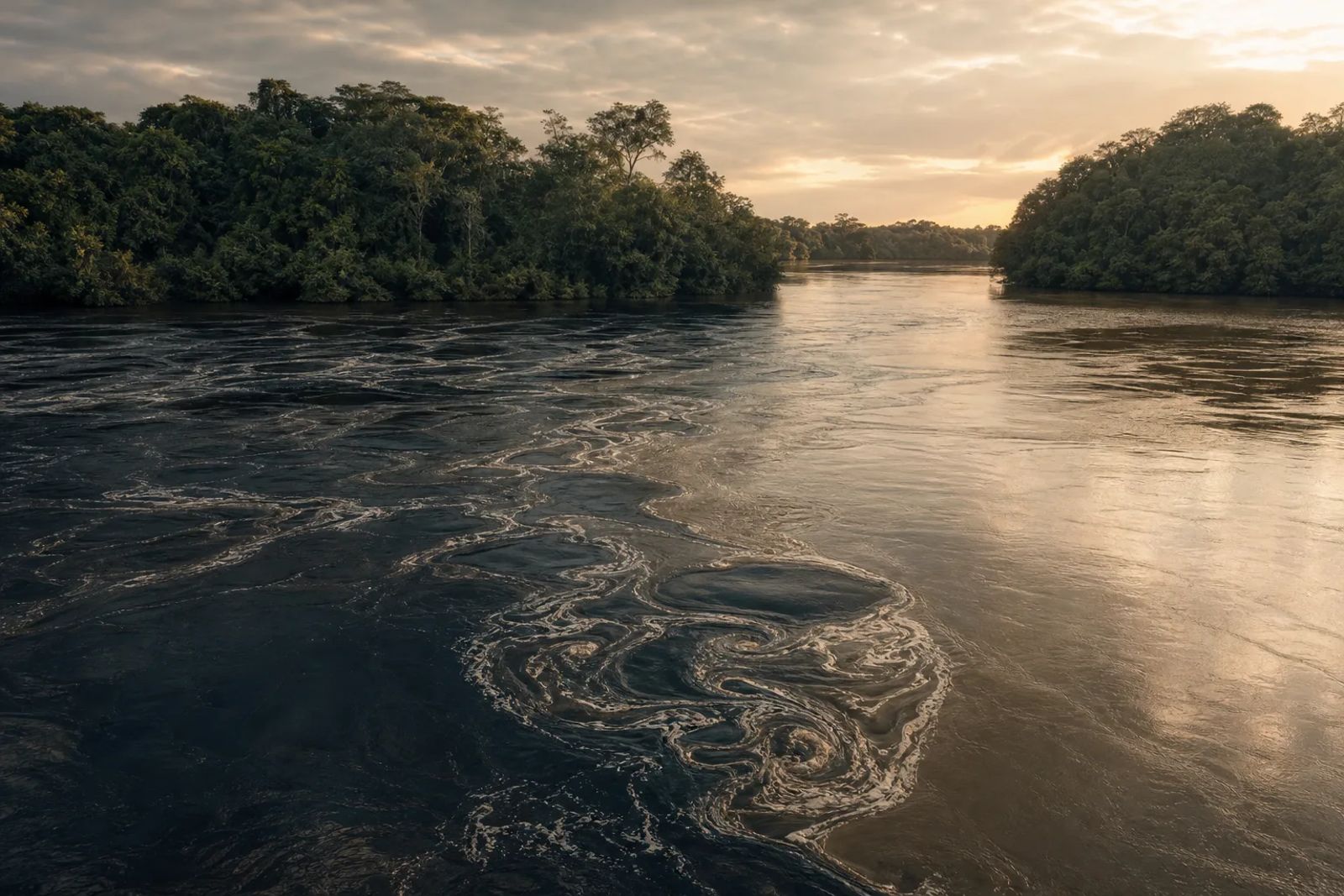
The Mississippi and its tributaries connect this producing region: the Missouri, Ohio, Illinois, Wabash, Tennessee and Arkansas rivers. But connected water does not mean shared permission. Opposite banks can have different commercial rules; an impoundment can have different rules from the river below it.
MICRA, the Mississippi Interstate Cooperative Resource Association, coordinates work between management agencies. Its commercial paddlefish workgroup approaches the Mississippi and Ohio fisheries as an inter-agency management problem, not a single open harvest area.
For the wider picture, see North America. For a commercial lot, get specific: record the actual waterbody, state, species and harvest date. “Mississippi basin” and the processor’s address cannot supply that detail.
The two fish behind the roe
Hackleback is the trade name for shovelnose sturgeon, Scaphirhynchus platorynchus. This bottom-feeding river fish takes aquatic invertebrates and is associated with flowing channels and sand or gravel substrates. Its close resemblance to pallid sturgeon creates a conservation and enforcement problem that a trade name cannot resolve. The shovelnose species profile covers identification, biology and roe characteristics separately from the fishery permissions discussed here.
American paddlefish, Polyodon spathula, belongs to the paddlefish family, not the sturgeon family. It filters small organisms from the water through its gill rakers. Despite that conspicuous paddle-shaped snout, it is not a bottom-digging counterpart to shovelnose. Its roe needs a separate species identity throughout processing and trade. The paddlefish species profile explores the fish and its roe.
Commercial harvest: the state-by-state position
A state’s commercial fishery permissions do not open every water within its borders. The species and the particular waterbody matter. This evidence summary is not a complete list of currently open waters.
| State | Commercial roe-harvest position | Legal or agency source | Checked |
|---|---|---|---|
| Illinois | Both species in specified rivers; roe permit required. | 17 Ill. Adm. Code 830.13 | Nov 2026 |
| Indiana | Both species require roe licensing. | DNR commercial rules | Nov 2026 |
| Kentucky | Both species; shovelnose restricted to Ohio basin. | 301 KAR 1:155 | Nov 2026 |
| Iowa | According to Iowa DNR, shovelnose qualify; paddlefish do not. | DNR commercial-fishing page | Nov 2026 |
| Wisconsin | Shovelnose require a sturgeon harvest permit; no commercial paddlefish. | DNR commercial reporting instructions | Nov 2026 |
| Missouri | 3 CSR 10-10.725 allows limited commercial shovelnose harvest above Melvin Price Locks and Dam only. | MDC restriction notice | Nov 2026 |
| Arkansas | AGFC regulates paddlefish and sturgeon harvest under Code 30.19. | AGFC Code 30.19, 2025 edition | Nov 2026 |
| Tennessee | Paddlefish require permits; shovelnose harvest prohibited. | TWRA commercial-fishing page; MICRA 2023 | Nov 2026 |
| Mississippi | Paddlefish closed; lower Mississippi shovelnose barred federally. | MDWFP notice; federal lookalike rule | Nov 2026 |
| Louisiana | LDWF’s 2023 guide prohibits commercial harvest of both species. | LDWF commercial guide, 2023 edition | Nov 2026 |
Where harvest is authorised, controls can include a commercial fishing licence, a separate roe-harvester or buyer permit, restricted waters, seasonal closures, length limits and harvest reports. Illinois requires identification safeguards while fish are on the water, alongside records from roe dealers. Together, these controls connect processed eggs to a legally harvested fish, rather than simply to the business that packs them.
For exact seasons, reporting deadlines and measurement conventions, use the fisheries rules guide. Before harvesting or accepting a consignment, check the operative state instrument for that particular water. A general fishing guide, an old export approval or a neighbouring state’s licence cannot replace it.
Recreational fisheries have their own arrangements. North Dakota’s current regulations identify a permitted caviar-processing site associated with its recreational paddlefish fishery. Montana describes tagged recreational fisheries with harvest reporting. Neither grants general permission for commercial netting, and recreational possession does not itself confer a right to sell roe.
Why pallid sturgeon change the harvest map
A resemblance between two fish has reshaped commercial harvest across specified river reaches. Since October 2010, 50 CFR 17.44(aa) has protected shovelnose sturgeon and shovelnose-pallid hybrids in those areas to help conserve endangered pallid sturgeon.
The rule prohibited commercial take of these fish or their roe there. Its exception covers incidental capture during otherwise lawful commercial fishing: the fish must be released immediately on discovery, at the capture point, with all roe intact. As of November 2026, section 17.44(aa) retains these restrictions.
Covered waters include the Missouri River; the Mississippi downstream of Melvin Price Locks and Dam; the Platte below the Elkhorn confluence; the Kansas below Bowersock Dam; the Yellowstone below the Bighorn confluence; and Louisiana’s Atchafalaya River. The boundary follows those listed reaches, not every waterbody in the states concerned.
A resemblance between two fish has reshaped commercial harvest across specified river reaches.
A September 2025 proposal sought to remove this treatment, but the current federal text retains the restrictions. State rules also apply. The protected lookalikes article explains the identification and conservation issues behind the rule.
From fish to roe, including farmed paddlefish
In a wild roe fishery, catching the female and processing the eggs are separate regulated activities.
Illinois requires roe to remain identifiable with the fish during the on-water stage, with specified exceptions for intact paddlefish ovaries and retained carcasses. That identification anchors traceability to the fish itself. Remove identifying material too early and both the species check and the evidence of legal harvest can be compromised.
Farmed paddlefish follow a separately documented production route. Kentucky State University describes reservoir ranching: hatchery-produced juveniles are stocked into impoundments, feed on naturally available organisms and are harvested later. Big Fish Farms says it ranches paddlefish in Ohio and Kentucky. That account comes from the producer; it does not independently verify every production site. Separately from paddlefish ranching, Kentucky State University also documents shovelnose research, including reproductive techniques.
Export requires a separate conservation decision
Both species fall under CITES Appendix II, which regulates international trade rather than authorising domestic harvest. USFWS must establish legal acquisition and make the required non-detriment finding: a scientific conclusion that export will not harm the species’ survival in the wild. State permission alone cannot supply that finding.
MICRA’s workgroup report describes how export concerns affected Tennessee paddlefish and why coordinated stock assessment was needed. A domestic fishery can remain open while particular exports are not approved; this history does not establish export authorisation for a different harvest year or waterbody.
For aquaculture exports, USFWS application 3-200-80 requires facility information and documentation of broodstock or other acquisitions. Farmed origin means a documented production history. Holding wild fish before processing does not make them farmed.
The public CITES United States register lists caviar operators and plant codes, with exporter and processing/repackaging fields. Its scope is national trade, rather than a census of Mississippi basin fishers or farms.
For traceability, request species and origin information alongside the processor’s registration, batch records and export documents. Keep harvest location separate from processor location. A CITES label does not independently verify that the contents match the declaration.
Naming paddlefish roe for different markets
FDA’s nonbinding CPG 540.150 advises that unqualified caviar is salted sturgeon roe. For other fish roe, it advises naming the fish in close proximity and in the same type size as the word caviar, as in paddlefish caviar. It also advises permitted colour additives and prominent colour declarations.
For EU and UK consignments, check customs classification and the consumer-facing food name separately. A tariff description does not settle whether a retail label is misleading. Destination rules also apply in Switzerland, UAE, China, Japan, Russia and Australia. The conditional CITES exemption for 125 g of personal caviar does not cover commercial consignments.
Illegal origin can survive into processed roe
Processing does not erase where a fish was caught. A separate 2022 Mississippi case concerned roe taken from closed Moon Lake waters and represented as legally harvested elsewhere.
Like the Indiana case, it illustrates Lacey Act enforcement against interstate trade in illegally sourced wildlife, rather than a general ban on the legitimate roe industry. For processors and importers, the practical task is to reconcile harvest reports, waterbody permissions and transaction records, investigating discrepancies before combining lots. The sturgeon poaching article examines the wider enforcement problem.
Sources
-
MICRA. A Summary Report of Cooperative Inter-agency Management Activities and Recommendations for Commercial Paddlefish Fisheries in the Mississippi and Ohio Rivers. Paddlefish Commercial Harvest States Workgroup, January 2023. Report.
-
Missouri Department of Conservation. Shovelnose Sturgeon. Undated field-guide entry, version retrieved November 2026. Species account.
-
Indiana Department of Natural Resources. Animal Information Series: Paddlefish. Undated hosted edition, retrieved November 2026. Species account.
-
Illinois General Assembly. Illinois Administrative Code, Title 17, Section 830.13: Special Regulations for the Commercial Harvest of Roe-Bearing Species. Online text retrieved November 2026. Regulation.
-
Indiana Department of Natural Resources. Commercial Fishing Rules. Undated hosted compilation, retrieved November 2026. Rules.
-
Kentucky Legislative Research Commission. 301 KAR 1:155: Commercial fishing requirements. Online text retrieved November 2026. Regulation.
-
Iowa Department of Natural Resources. Commercial Fishing and Fish Iowa: Shovelnose sturgeon. Undated online versions retrieved November 2026. Commercial fishing; species account.
-
Wisconsin Department of Natural Resources. Commercial Fishing Report, Form 3600-029A, instructions. Hosted edition retrieved November 2026. Reporting form.
-
Missouri Department of Conservation. Commercial Shovelnose Fishing Restricted. Undated online notice, retrieved November 2026. Restriction notice.
-
Arkansas Game and Fish Commission. Code Book, as of 1 July 2025, section 30.19. Code book.
-
Tennessee Wildlife Resources Agency. Commercial Fishing. Agency guidance on commercial fishing and roe permits. Agency page.
-
Mississippi Department of Wildlife, Fisheries, and Parks. Freshwater Commercial Fishing. Undated online version retrieved November 2026. Agency guidance.
-
Louisiana Department of Wildlife and Fisheries. 2023 Louisiana Commercial Fishing Regulations. 2023 edition. Guide.
-
US Government Publishing Office. Code of Federal Regulations, Title 50, Volume 2, 2025 edition, section 17.44(aa). Federal text.
-
US Fish and Wildlife Service. Endangered and Threatened Wildlife and Plants; Regulations for Eleven Species Treated as Listed Due to Similarity of Appearance. Proposed rule, 90 FR 46371, 26 September 2025. Proposed rule.
-
North Dakota Game and Fish Department. 2026 to 2028 Fishing Regulations. Online edition retrieved November 2026. Regulations.
-
Montana Fish, Wildlife & Parks. Paddlefish Regulations. 2026 online guidance. Regulations.
-
Kentucky State University. Division of Aquaculture Research Areas. Undated online version retrieved November 2026, sections on reservoir ranching and biotechnology. Research account.
-
Big Fish Farms. Producer statement on paddlefish ranching in Ohio and Kentucky.
-
US Fish and Wildlife Service. 3-200-80: Export of Fertilized Live Eggs/Caviar/Meat from Aqua-Cultured Paddlefish/Sturgeon (CITES). Online application guidance retrieved November 2026. Permit guidance.
-
CITES Secretariat. United States of America: Register of caviar exporters. Register.
-
US Food and Drug Administration. CPG Sec. 540.150: Caviar, Use of Term, Labeling. October 1989 guidance, online version retrieved November 2026. Guidance.
-
US Department of Justice. Indiana Man Pleads Guilty to Lacey Act Violations. 25 May 2021, page updated 6 February 2025. Case account.
-
US Department of Justice. Kentucky Man Sentenced to Prison for Illegal Harvest of Paddlefish. 19 September 2022. Case account.
-
US Fish and Wildlife Service. United States CITES implementation report, 2013 to 2015. Reporting-period edition, sections on permit coordination and non-detriment findings. Report.
Last checked: November 2026