
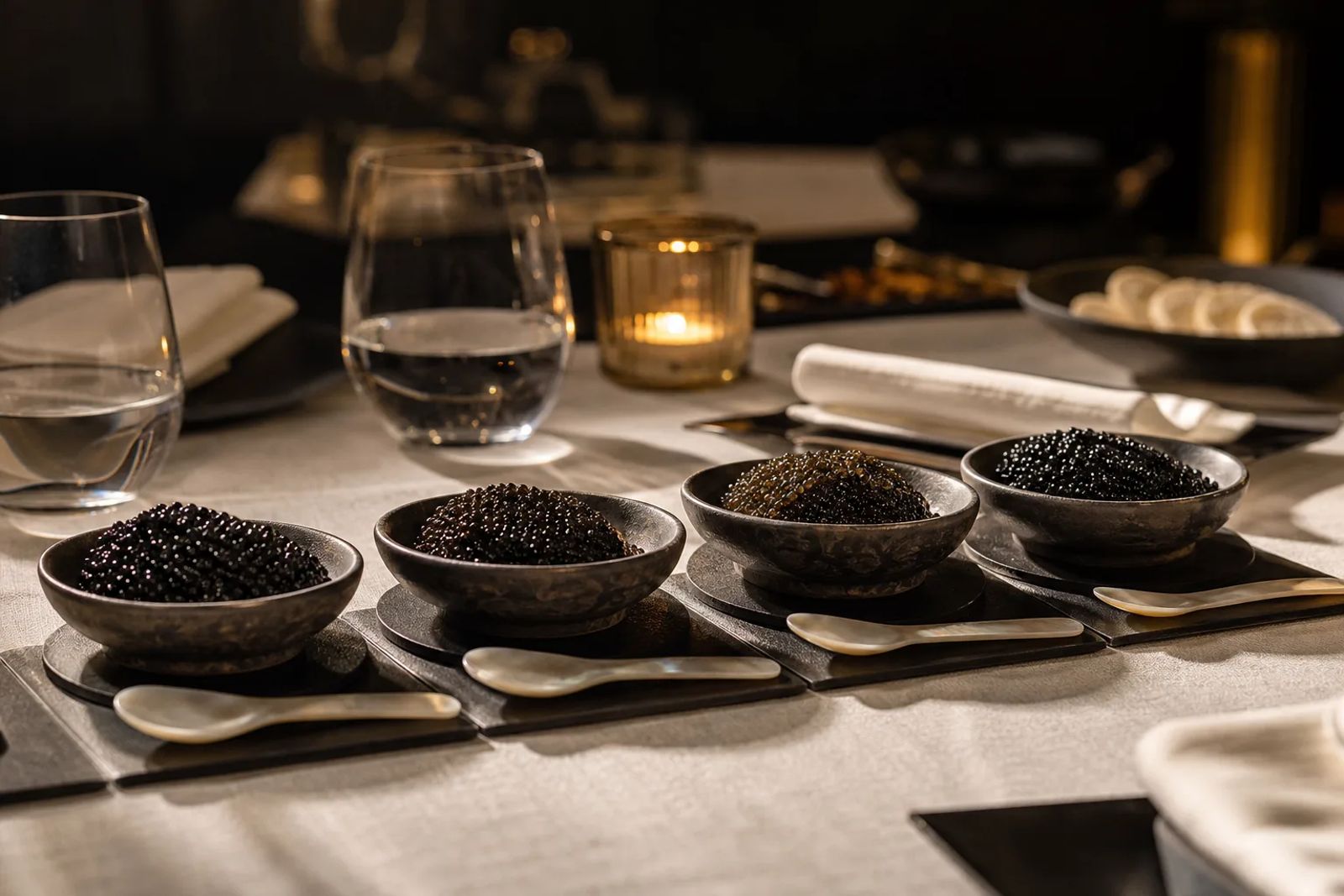
Four caviars, a tasting led by the producer's own expert and a visit through Kaviari's Manufacture: that is the experience described in its published masterclass. It offers a close look at one supplier's world. Your choice starts with a practical question: do you want to describe caviar, serve it, understand a farm or assess products for work?
Choose a short guided tasting to explore caviar, professional sensory training to assess it consistently, or university study of fish farming to understand production. Then examine the teaching, the samples and the relationship between education and sales.
Choosing between caviar courses and tastings
Start with what you want to do afterwards: describe a caviar, serve it confidently, understand a farm or assess products for work. The caviar education hub helps you build a learning path. A grand course title tells you little about depth.
Consumer tastings
For a first tasting, seek a restaurant or bar session that compares clearly identified samples and leaves room for questions. Ask whether you will taste each caviar alone before accompaniments. Look for a host who explains differences, rather than simply declaring a favourite.
Producer and retailer masterclasses can offer direct knowledge of their own selection and handling. Treat these as supplier-led sessions, not independent surveys. Ask whether the tutor also discusses alternatives outside the company's range, so you know how wide a view the session offers.
Check the tutor's connections before booking. Employment by a supplier, donated samples and referral benefits can all shape recommendations; an independent-sounding description is no substitute for disclosure.
Farm visits and cookery sessions
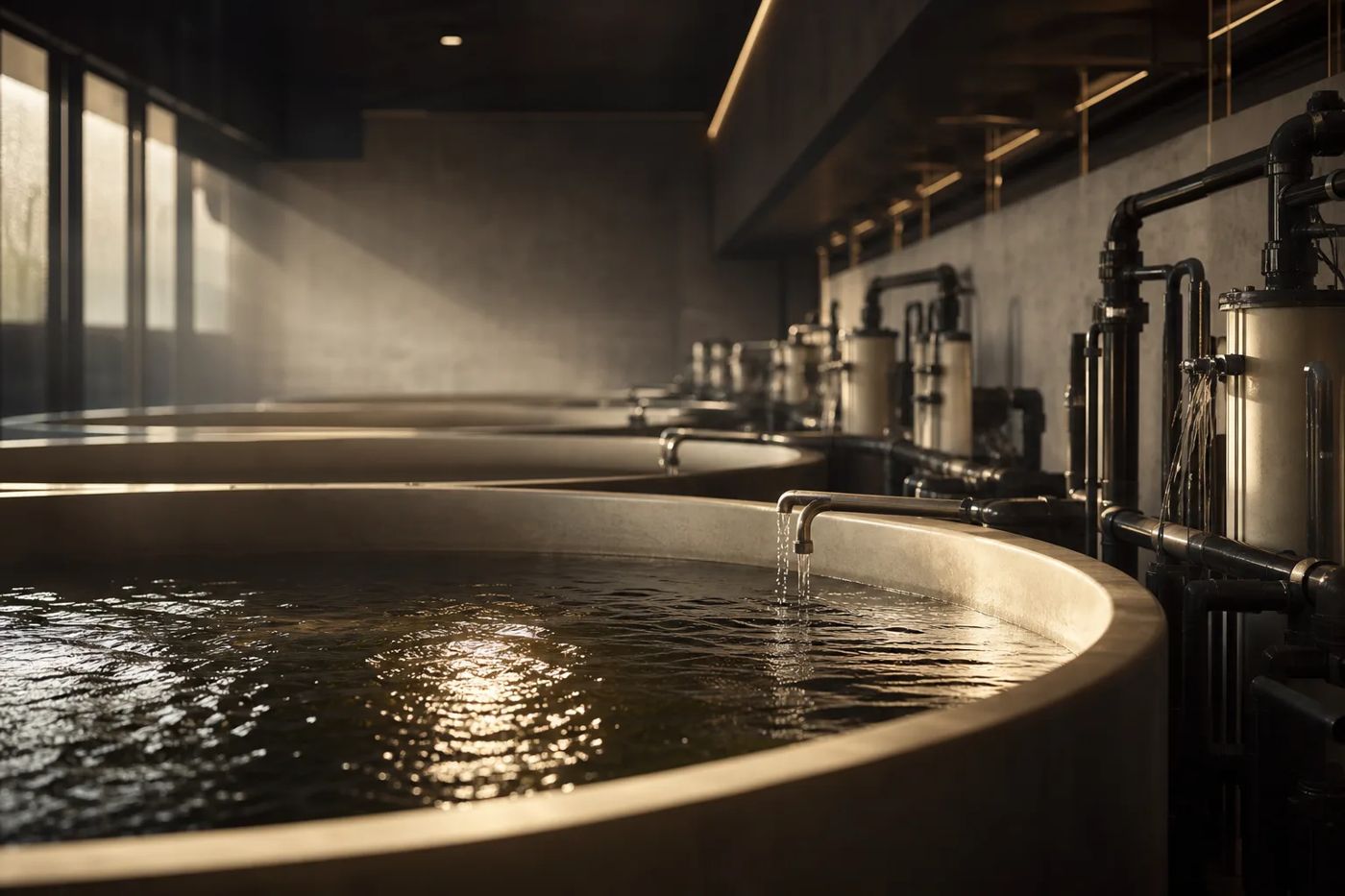
A farm visit should bring you closer to the fish. Choose one when your questions concern rearing, water systems and the route from fish to roe, meaning fish eggs. Check the actual itinerary: a tasting room visit may include neither fish-rearing nor processing areas.
The farm visit guide helps you assess what is included. For cookery school sessions, make a different distinction: will you practise service and preparation yourself, or watch a demonstration? These are different learning outcomes.
The Institute of Culinary Education has published a masterclass listing featuring a Calvisius-led introduction and tasting of three varieties. The school's listing scheduled the event for 20 May 2026 at its New York campus.
Professional sensory training
Professional tasting needs a repeatable method, not simply more samples. Look for shared vocabulary, controlled comparisons and feedback on your observations. A strong course separates describing a caviar from liking it, then checks whether your assessments become more consistent.
ISO 8586:2023 covers selecting and training sensory assessors; ISO 13299:2016 addresses establishing sensory profiles. These are useful methodological benchmarks, rather than caviar qualifications. If a provider invokes ISO, ask which standard it uses and which procedures the course follows.
Claims of professional recognition deserve a specific answer: which employers or institutions recognise the course, and how can you verify that? The syllabus, assessment and evidence of recognition matter more than impressive certificate wording.
The guide to professional tasting and scoring explores assessment in depth. For career planning, becoming a caviar sommelier or buyer separates training choices from the wider experience a role requires.
University and vocational aquaculture training
For fish production, look to university study or vocational aquaculture training. Check the species covered and the practical work involved. Do not assume the qualification covers caviar processing or tasting unless those subjects appear explicitly in its syllabus.
The University of Stirling's MSc Sustainable Aquaculture describes on-campus teaching, fieldwork and study including nutrition, reproduction, genetics and health management. The University of St Andrews offers online Sustainable Aquaculture study through modular, postgraduate certificate, diploma and MSc routes. Both offer broader aquaculture education, rather than advertised caviar-tasting qualifications.
What a good course should teach
A useful introductory course connects what is in the tin with what is on the spoon. Use the following topics to check its syllabus, allowing for the limits of a single sitting. A specialist session should make its scope clear, including what it leaves for further study.
Identity and traceability. Start with species names and the original labels behind the samples. A tutor should explain trade names and distinguish the country where the roe originated from the country where it was repacked. A brand's address does not establish the fish's origin.
CITES and conservation. CITES is the Convention on International Trade in Endangered Species of Wild Fauna and Flora. Teaching should explain its traceability framework without treating a CITES label as proof of a tin's contents or international recommendations as identical domestic law everywhere.
Conservation deserves the same precision. Farming fish for food and restoring wild populations are different activities. Research summarised by the US Geological Survey identifies risks from captive sturgeon culture, including disease transmission and genetic effects of releases. Calling roe farmed does not, by itself, settle a conservation claim.
Tasting, storage and service. Look for structured observations of appearance, aroma, flavour, texture and finish, with time to record your own response before the group discusses it. Handling lessons should follow documented storage instructions, distinguish storage from serving conditions and leave you with a clear reference to take home.
A useful introductory course connects what is in the tin with what is on the spoon.
When a tasting compares species, ask what else changes between samples. Processing, maturation and serving conditions can also affect the comparison. A friendly tasting need not become a laboratory exercise, but its explanations should account for more than the fish alone.
Questions to ask before you book
Get the syllabus and sample details in writing, particularly when the description dwells on surroundings or pairings. These questions reveal what sits behind an attractive event description and whether it serves your learning goal.
- Who teaches, and what is their relevant experience? Request a named tutor and a background relevant to the subject, rather than relying on an impressive title.
- Who organises and supplies the session? Check ownership, sponsorship and supplier relationships. Ask whether purchases or product promotion form part of the event.
- Which caviars will be tasted, and how are they identified? Request species, origin, access to label information and the substitution policy.
- How many learners attend? Check that everyone can question the tutor, see the materials and receive individual feedback. Group size alone does not tell you this.
- What does each person actually do? Confirm tasting, label reading, hands-on preparation or demonstration, and ask for the sample quantity per participant.
- What adjustments are available? Discuss fish allergy, other ingredients, alcohol-free participation, accessibility and language with the organiser before booking.
- Is learning assessed? For a certificate, establish who issues it, what you must demonstrate and whether it records attendance or assessed competence.
Online or in person?
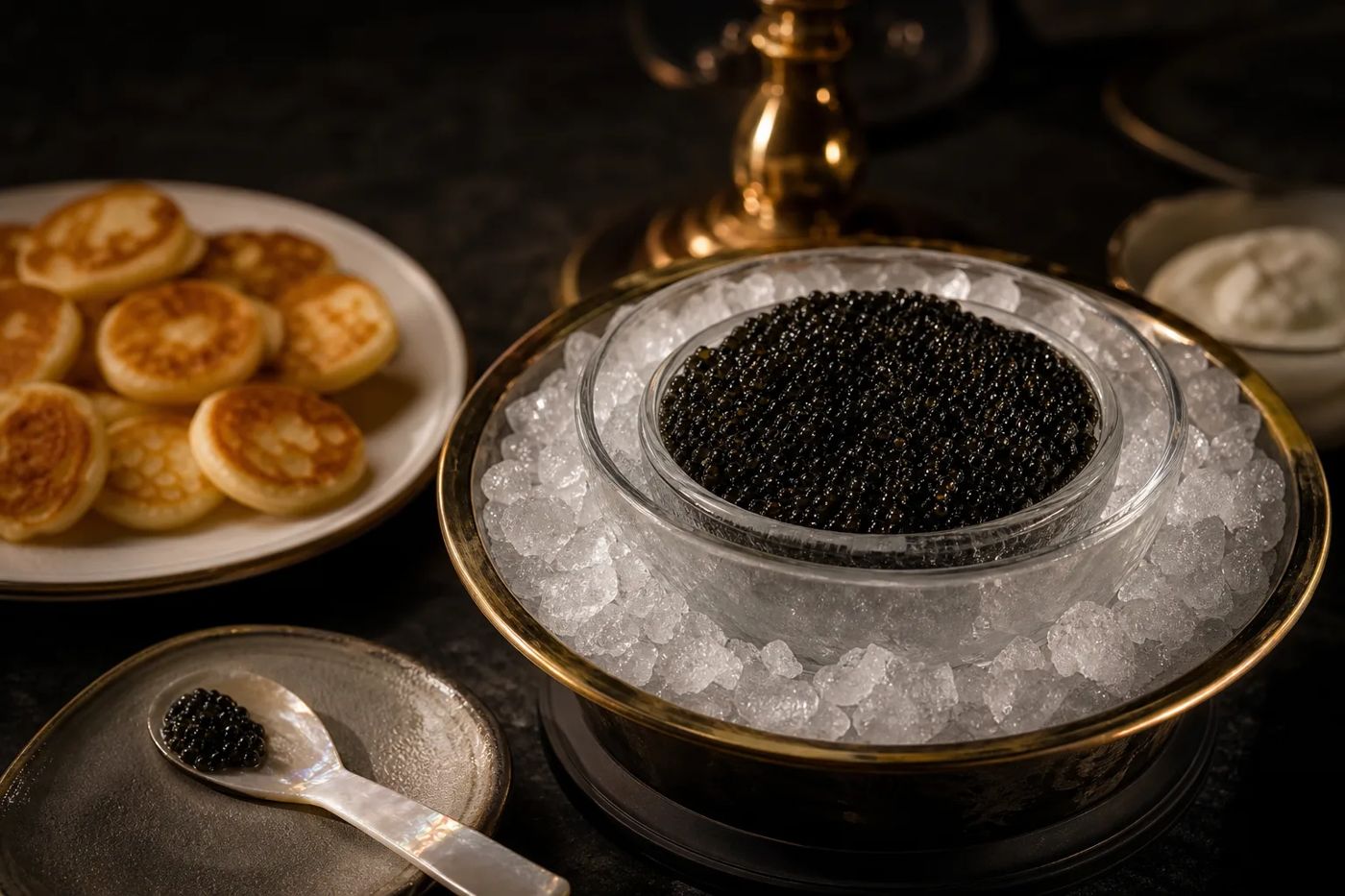
Choose in-person teaching for guided tasting and service practice with immediate feedback. Everyone works with the supplied samples, so a question about texture or aroma can be explored together, rather than through descriptions of a separate product over a screen.
Online study suits theory, guided reading and discussion, especially when travel would interrupt your work. St Andrews' published programme combines video lectures, tutorials, reading, online discussion and self-assessment. Judge that format by its teaching design: online learning can involve much more than recorded content.
An online tasting needs clear delivery and teaching arrangements. Ask whether samples are supplied, which destinations are supported and what happens after a delivery delay. Get written storage instructions and confirm how live questions work. Watching a tasting video alone cannot give you feedback on your observations.
Already have a suitable tutor? The guide to hosting a caviar tasting helps you plan sample comparisons at home. Organising that tasting is a separate practical task from choosing a course, and requires no formal certificate.
How to judge the claims
Good teaching makes its evidence visible. Ask the tutor to distinguish documented facts, the company's account of its own practices and personal tasting preferences. A label, a published study or a clearly stated comparison method should let you follow the explanation.
For claims such as sustainable or ethical, ask what is measured, who measures it and over what period. Water management, fish welfare and wild-stock recovery are different subjects. Evidence about one should support a conclusion about that subject, rather than stand in for all three.
Colour and flavour also call for careful interpretation. If a tutor says either proves species or origin, ask what verification supports the claim. In a blind comparison, establish what was concealed, what varied between samples and what the exercise can reasonably demonstrate.
The final question is the simplest: what will you be able to do afterwards that you cannot do now? Choose the clearest answer over the grandest course name. Skills you can demonstrate. Notes you can use. Limits stated honestly. That is the stronger learning proposition.
Sources
- Kaviari. Caviar Masterclass. Provider description of four caviars, a guided tasting and a Manufacture visit.
- Institute of Culinary Education. Masterclass: Caviar Tasting with Calvisius Caviar. Event listing for 20 May 2026 at the New York campus, describing an introduction and tasting of three varieties led by Calvisius. Event listing.
- International Organization for Standardization. ISO 8586:2023, Sensory analysis: Selection and training of sensory assessors. Second edition, April 2023. Official catalogue abstract and publication record. Standard record.
- International Organization for Standardization. ISO 13299:2016, Sensory analysis: Methodology: General guidance for establishing a sensory profile. Second edition, March 2016; reviewed and confirmed in 2026. Official catalogue abstract and publication record. Standard record.
- University of Stirling. MSc Sustainable Aquaculture. Programme description covering campus teaching, aquaculture subjects and fieldwork. Programme page.
- University of St Andrews. Sustainable Aquaculture, MSc, PGDip, PGCert, Modular: online. Programme description covering online study, award routes and teaching methods. Programme page.
- CITES. Resolution Conf. 12.7, Conservation of and trade in sturgeons and paddlefish. Revision CoP17, 2016, particularly paragraph 7 and Annex 1. Resolution.
- CITES. Resolutions of the Conference of the Parties in effect after the 20th meeting. Index of resolutions in effect after CoP20. Resolutions index.
- White, S. L., and colleagues; US Geological Survey publication record. Decades of global sturgeon conservation efforts are threatened by an expanding captive culture industry. Fisheries, 2022; USGS record dated 8 December 2022. Review of conservation risks associated with captive culture. Publication record and abstract.
Last checked: November 2026