
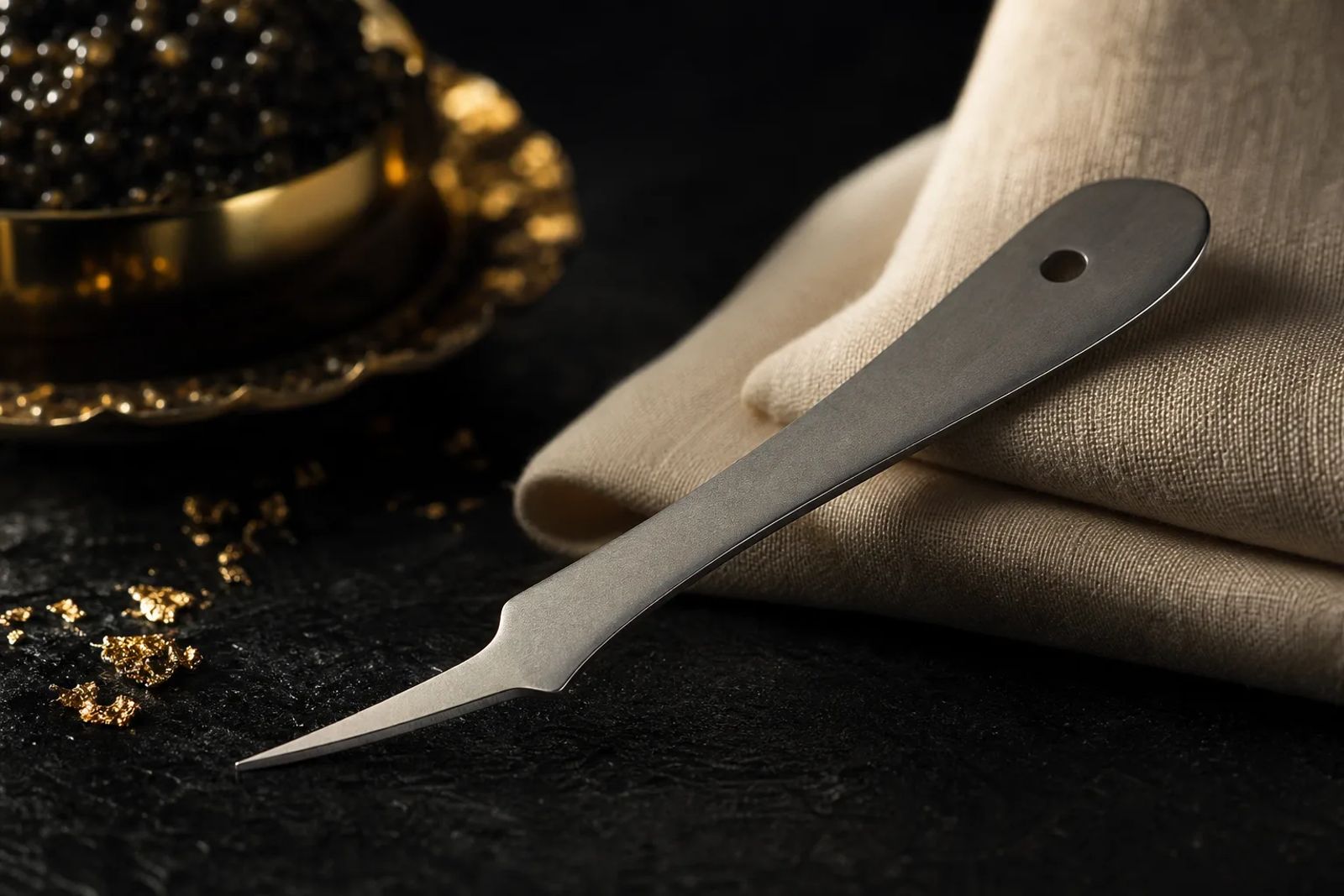
A blunt butter knife can be the right tool for opening a caviar tin. Some suppliers explicitly approve one, or a spoon handle, for their vacuum-sealed packs. The decisive detail is the closure, not the caviar inside. A purpose-made opener is an alternative, but even a handsome caviar key must fit the lid it is meant to lift.
Match the opener to the closure
Look at the container before reaching for a tool. Opening guides distinguish press-fit or slip lids, vacuum-sealed retail tins and jars, and ring-pull closures. Each calls for its own approach, so start with the supplier's instructions for the pack in front of you.
A traditional slip-lid or original tin has a lid that fits over the base, sometimes with a rubber band around the join. Supplier guidance treats these banded tins, including larger catering formats, separately from small vacuum packs.
A vacuum-sealed retail tin needs its seal released before the lid will lift. A screw-top jar opens by turning its lid; a ring-pull pack has its own opening tab. Neither automatically calls for a caviar key.
How caviar tin openers work
A caviar key levers; it does not cut. Its working end slips beneath the lid edge, where a controlled twist creates enough separation to release a compatible closure.
Fit and control matter more than a matching set, whether the opener is plain or decorative.
Documented designs range from flat keys to thicker, shaped metal openers. What matters is the edge that engages the lid, not the decorative outline. Choose an opener whose fit the supplier demonstrates, rather than one that simply looks the part.
Some suppliers also recommend a church-key bottle opener for compatible lids. The action is the same: levering beneath the edge, not puncturing the top. An ordinary cutting tin opener does a different job.
For frequent use, a dedicated key gives you a tool to keep clean and ready. For an occasional tin, an approved blunt utensil is sufficient. Fit and control matter more than a matching set, whether the opener is plain or decorative.
With a compatible vacuum tin, release the seal gently at the rim, then lift the lid clear without dragging it across the roe. See how to open a caviar tin for the full method and checks for each closure.
No caviar key? Check the approved alternatives
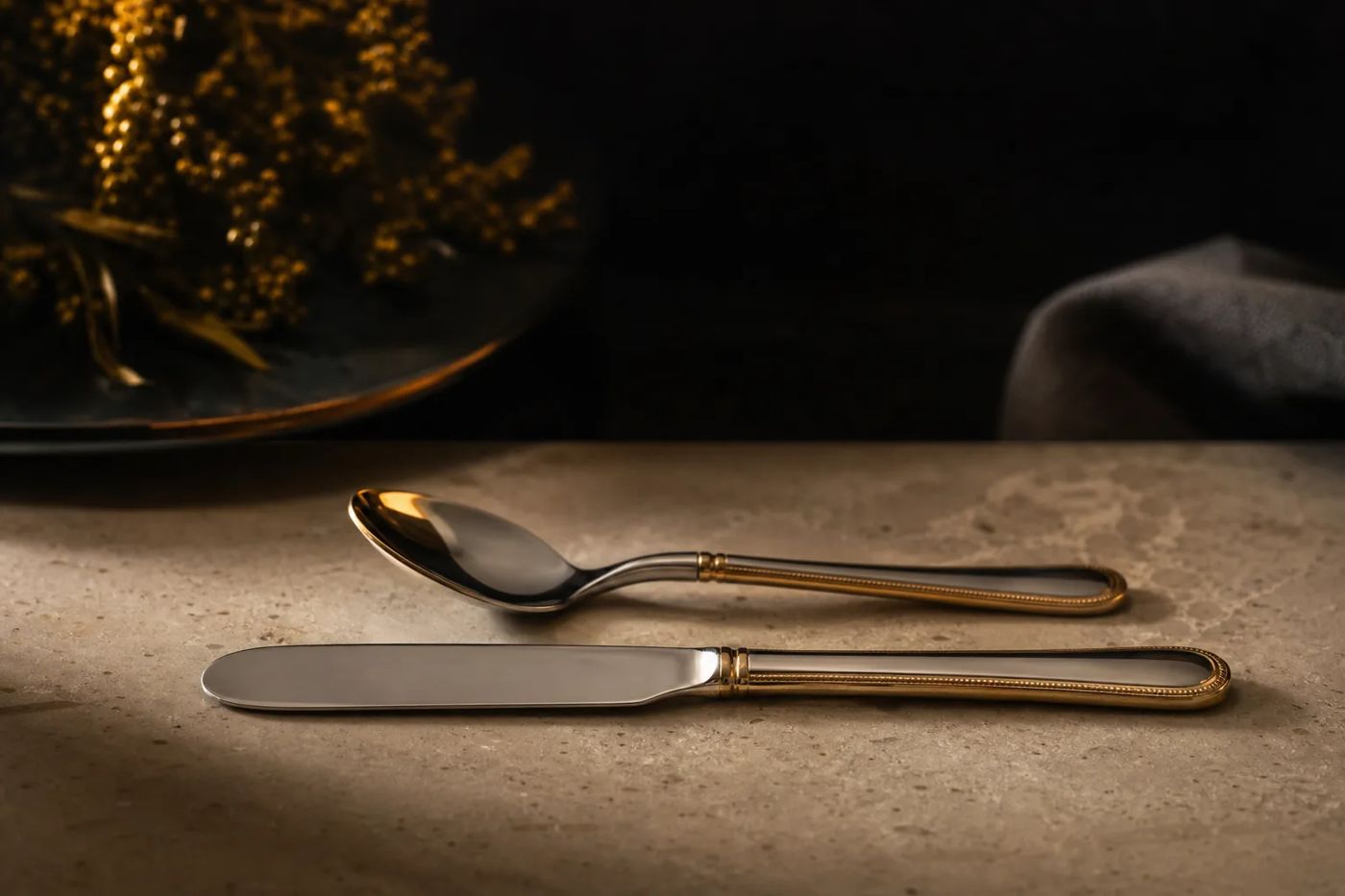
A blunt butter knife or spoon handle is explicitly accepted in supplier instructions for some vacuum-sealed tins. Check that permission applies to your pack: the shape and fit of the utensil still matter.
Choose a clean utensil with a blunt, flat end that matches the recommended tool. Leave the pointed chef's knife alone. Supplier guidance specifically warns that a sharp blade can slip, injure fingers or damage the lid.
Confirm the alternative before serving, rather than improvising over an open dish. If the supplier cannot identify a suitable substitute, keep the tin closed until you have the correct tool and instructions. That check belongs before the lid comes off, not halfway through opening it.
When to stop and check
A bending lid is a signal to stop, not pull harder. Bent lids are a documented consequence of forceful opening, and supplier guidance warns against aggressive prying. Check both the tool and the closure before trying again.
The roe needs protection, too. Eggs at the rim or immediately beneath the lid can be crushed or scraped if the tool goes too far inside. One supplier specifically warns against scraping the top layer or twisting the released lid against the eggs. Use the opener to release the lid, not to scoop or serve the caviar.
A sharp point can also slip towards the hand holding the tin. Follow the supplier's instructions on working direction. If you cannot control the tool securely, stop.
Materials and care
A secure grip and a suitable working end matter more than decoration. Choose an opener that fits the tin, feels controllable and has a surface that is straightforward to clean. Its material does not need to match the serving spoon.
Stainless steel is a documented material for purpose-made caviar openers. Other metal designs are also sold, but a silver-coloured finish alone does not tell you what the tool is made from or how to clean it.
Follow the maker's care instructions, including any restrictions on dishwasher use. After opening, wash the working end, rinse away detergent and dry the tool before putting it away. Do not return a food-soiled key to a pocket or keyring. A dedicated opener still needs cleaning after the task it was made for.
Clean hands, clean tools, ready to open
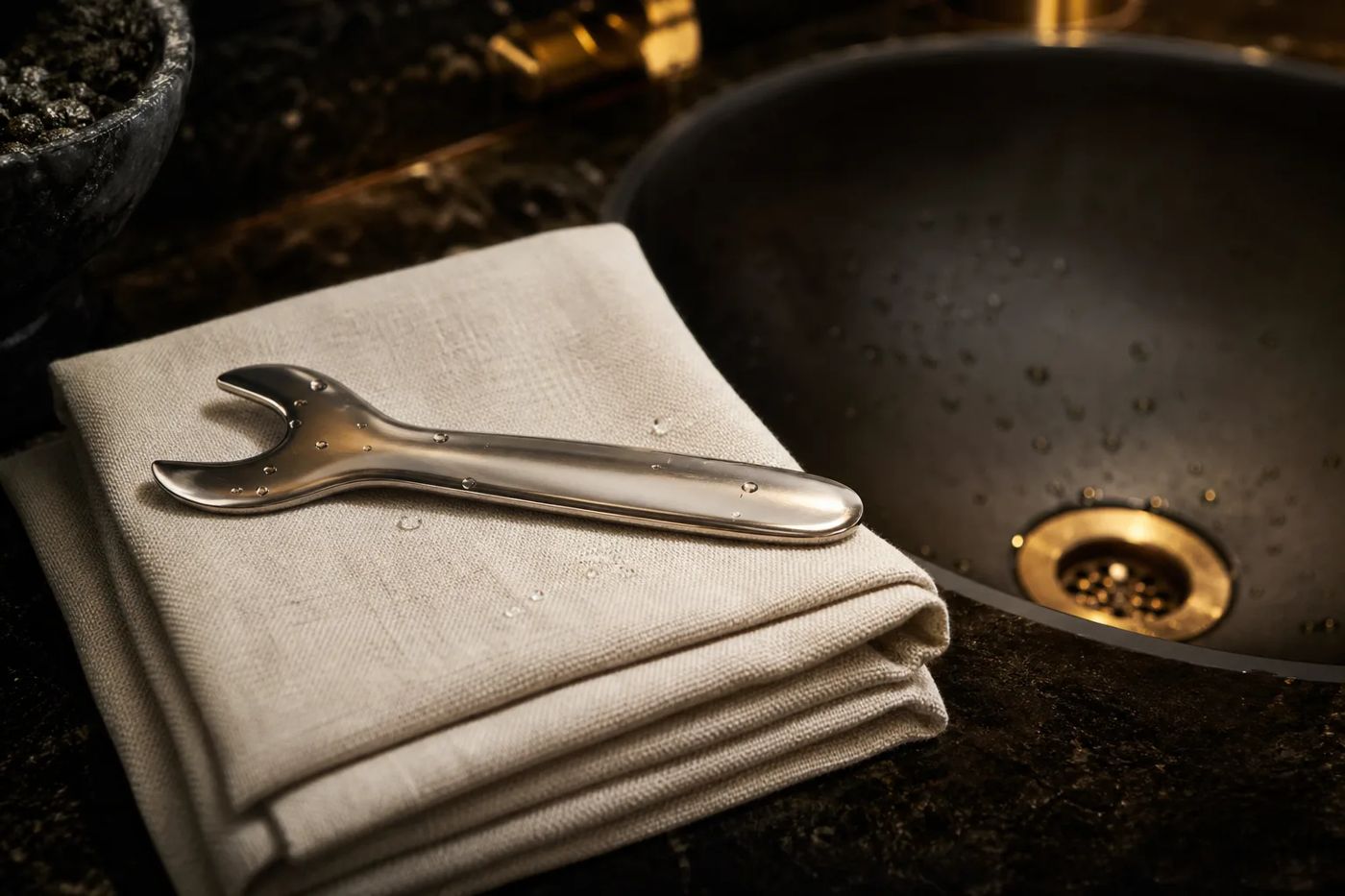
Wash your hands before handling the tin, and use a clean opener on a clean work surface. The Food Standards Agency's household guidance for England, Wales and Northern Ireland advises washing hands before preparing ready-to-eat food and washing utensils thoroughly between tasks. This is ordinary food hygiene, not a special caviar ritual.
Take particular care with a utensil that has just touched raw meat or fish. Clean it thoroughly before bringing it near ready-to-eat caviar. A quick wipe is not the thorough cleaning needed to avoid transferring contamination.
Have the tool ready before taking the caviar out for service, so the opening method is settled before you begin. For handling after opening, use serving hygiene guidance; for the wider equipment selection, return to caviar accessories.
Sources
- Imperia Caviar. How to open a tin of caviar. Undated web edition, retrieved November 2026. Supplier instructions approving a spoon handle or butter knife and describing the opening direction. Source.
- Caviar Star. Ways to Open Caviar Jars/Tins. Published 1 May 2025, web edition retrieved November 2026. Supplier guidance distinguishing vacuum packs from rubber-banded slip tins, with documented tool alternatives. Source.
- Caviar Lover. How to Open a Caviar Tin Without Damaging It. Undated web edition, retrieved November 2026. Supplier guidance on bent lids, damage to roe, sharp-tool risks and ring-pull closures. Source.
- Sterling Caviar. Experience Caviar. Undated web edition, retrieved November 2026. The supplier's opening section distinguishes turning jar lids from tins opened with a key.
- Petrossian. Silver Color Caviar Opener. Undated web edition, retrieved November 2026. Manufacturer description of a shaped metal opener used beneath the rim.
- Regiis Ova. Caviar Tin Opener. Undated web edition, retrieved November 2026. Manufacturer declaration that its opener is stainless steel.
- Food Standards Agency. Why is cleaning important. Published 18 December 2017, web edition retrieved November 2026. Household guidance covering handwashing, clean utensils and separation of raw and ready-to-eat food preparation. Source.
- Food Standards Scotland. Cleaning. Undated web edition, retrieved November 2026. Household guidance on washing hands and thoroughly cleaning utensils after contact with raw meat, fish or poultry. Source.
- Imperia Caviar. Caviar Essentials. Undated web edition, retrieved November 2026. The tin opener FAQ distinguishes vacuum lid keys from cutting can openers.
This piece was researched by comparing suppliers' published opening instructions and documented tool designs with official household hygiene guidance; no hands-on tool testing was supplied.
Last checked: November 2026