
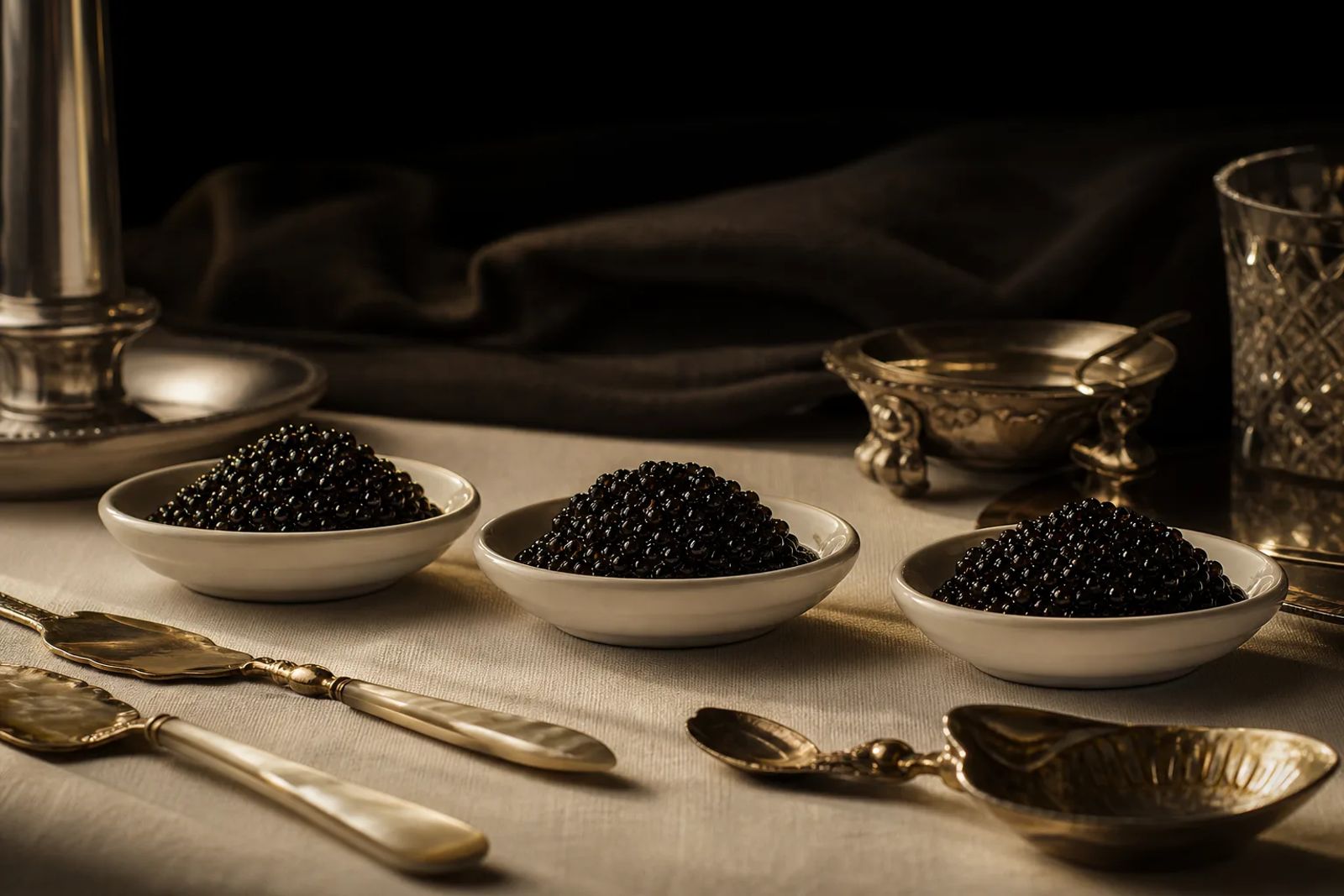
Roasted hazelnut, spicy and creamy notes, with a firm texture: that is how N25 describes its Kaluga hybrid. The Caviar Co. describes its own as earthy, rich in umami and marked by a noticeable pop. Both identify Kaluga and Amur sturgeon as the parents. The descriptions promise distinctive mouthfuls. But how much of that character comes from the cross?
Hybrid caviar can taste different from caviar produced by either parent species. A consistent, genetically determined “hybrid flavour” has yet to be reliably established. As Rocchetti and colleagues found, species and processing both contribute to differences between caviars.
What would establish a hybrid flavour?
The decisive comparison would put a hybrid alongside both parent species, with farming and processing conditions matched and tasters unaware of sample identity. Ideally, it would cover several fish, batches and farms, rather than three differently labelled tins.
That approach separates two questions: can tasters distinguish these caviars, and did hybridisation cause the difference? A tasting can answer the first; answering the second requires those controls. The hybrid caviar hub explores the wider category. Here, the focus is flavour rather than breeding performance.
What the research actually compares
Storage, rather than parentage, was the comparison in Xu and colleagues’ 2022 Food Chemistry study. The researchers examined caviar from a female Kaluga crossed with a male Amur sturgeon, comparing freshly prepared caviar with material stored for 30 days at −3°C (26.6°F). Both came from Qiandao Lake Sturgeon Technology Co., Ltd., according to the researchers.
Their methods combined analysis of airborne aroma compounds with olfactometry, in which assessors smell compounds as they emerge from a separating instrument, plus microbial and lipid profiling. The study linked aroma changes with microbial communities and phospholipids, fats that form part of cell membranes.
Rocchetti and colleagues’ 2025 Food Chemistry paper examined eight commercial caviars from six sturgeon species through broad chemical profiling, sensory assessment and texture analysis. Species and processing both contributed to product differences, while crunchiness and colour stood out as sensory distinctions.
None of the studies presented here directly compares hybrid caviar with caviar from either parent species: Xu examines storage, while Rocchetti includes no hybrids. Evidence for a genetic flavour difference therefore remains thin.
| Study or source | Comparison | Method | Finding and scope |
|---|---|---|---|
| Xu et al., 2022 | Fresh and stored hybrid caviar | Aroma chemistry, olfactometry, microbial and lipid profiling | Storage-related associations; neither parent included |
| Rocchetti et al., 2025 | Eight caviars, six species, different treatments | Metabolomics, sensory analysis, texture testing | Species and processing mattered; no hybrids |
There is also a gap between what an instrument detects and what a diner perceives. Laboratory analysis can separate samples without showing that diners can distinguish them; finding a compound does not establish its contribution to the whole mouthful. For the distinction between aroma, taste and mouthfeel, see the science of caviar flavour.
What producers and expert panels describe
Producer descriptions offer a useful tasting vocabulary, rather than results from a shared comparative panel. Test the words against the caviar in front of you: how does the bead feel as it releases its contents? Write down what you perceive before deciding which producer terms fit. A useful note records a particular sample rather than assigning one flavour component to each parent. For the cross itself, see the Kaluga hybrid article.
Even experts disagree about what makes caviar excellent. Barbara Rasco’s research report records assessments of commercial caviars by judges including chefs, caviar industry members and Culinary Institute of America faculty. They differed over which sensory traits indicated high quality. A single quality score can conceal that disagreement.
Egg size, membranes and the impression of flavour
The bead’s firmness, the membrane’s resistance and the lingering contents are separate sensations. Record them separately. “Creamy” may describe mouthfeel rather than a dairy-like aroma; the flavour profiles guide helps keep those meanings distinct.
Rasco’s report found relationships between instrumental texture measurements and sensory properties, including breakability, firmness and dissolvability. Its dietary work also found that control eggs had significantly tougher, thicker skins than eggs from fish receiving an experimental antioxidant diet. Membrane behaviour, then, need not be explained by species alone.
The bead’s firmness, the membrane’s resistance and the lingering contents are separate sensations.
Egg size deserves the same precision. When a supplier describes large, firm eggs, that describes its selection. Extending the claim to a whole category requires comparative measurements.
What else must be controlled?
Start with the fish’s history and follow it through to the finished roe. A useful comparison needs records of farm water, feed, fish age and egg maturity, purging, salting, maturation and handling. Some concern life before harvest; others concern processing afterwards. Matching a brand or country alone leaves those conditions unresolved.
Purging means holding fish in suitable clean water before harvest to reduce unwanted odours. Research on fish flesh offers a reason to investigate water and feed, though it does not directly address caviar. Egiddi and colleagues’ 2026 exploratory study examined water and feeding effects in four groups of three juvenile male Russian sturgeon, using chemical and sensory analysis of fillets.
Keep fish age and the maturation period of salted roe in separate entries: one describes the living fish, the other the processed eggs. For the farming variables, see how farms shape caviar flavour.
Why blind tasting matters
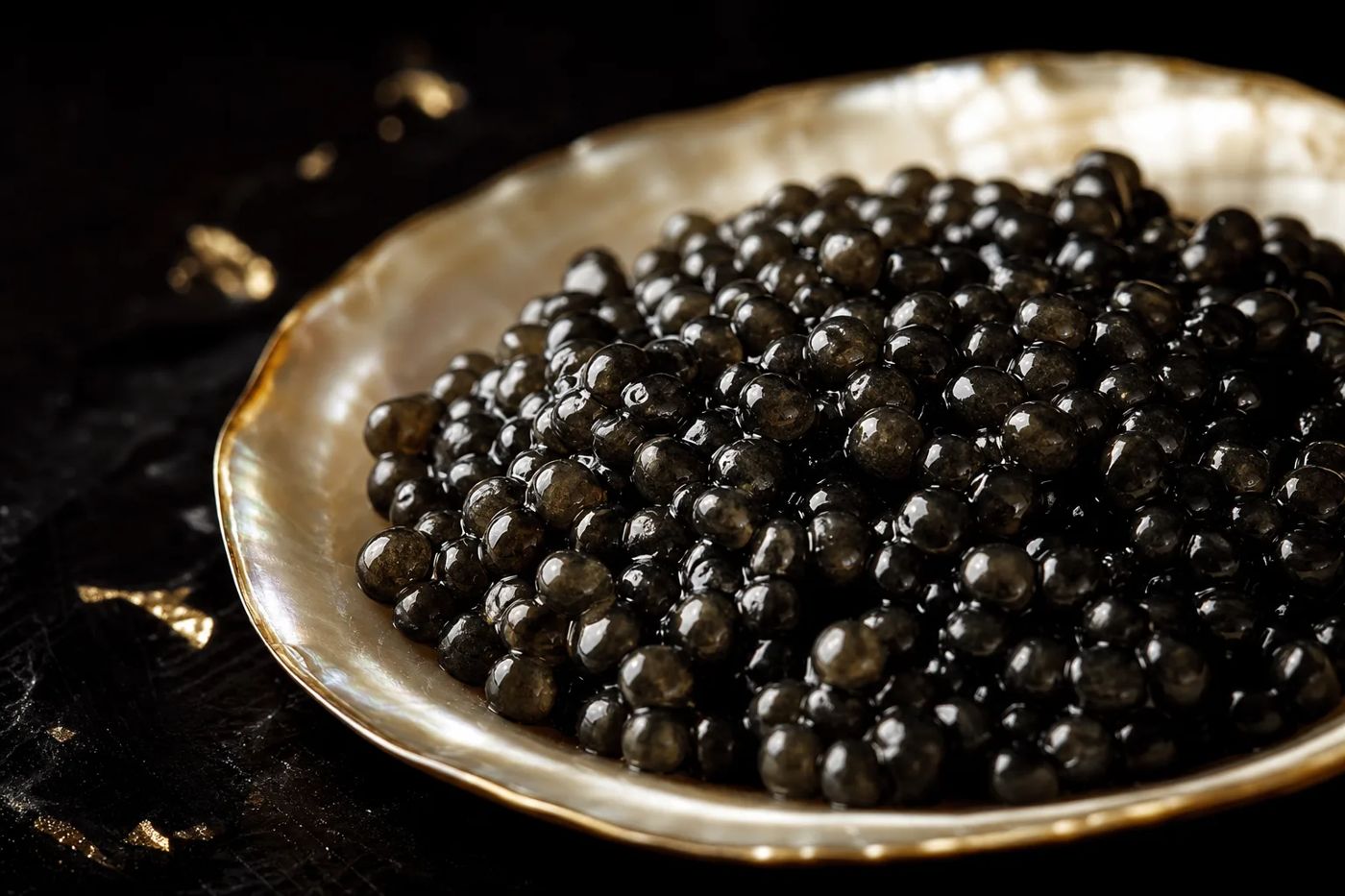
Taste before seeing the samples’ identities. Concealing the product name lets you discover what you notice before being told what to expect. Colour and bead size remain visible, and a home comparison cannot isolate genetics, but it can give you a clearer record of your own response.
Information does not necessarily change enjoyment. Rodrigues da Silva and colleagues’ 2026 study involved 222 Danish consumers evaluating three non-hybrid caviars under blinded or informed conditions. Production information did not significantly alter overall liking; sample type did. The study did not test expectations about hybrid parentage.
How to make a fair comparison
Build a clear record of what you taste, with description, intensity and preference kept separate. The fuller professional tasting and scoring guide provides that framework. The steps below are for a small personal comparison rather than a validated scientific protocol.
Ask for a hybrid and both parent-species caviars with the closest available production histories. Seek comparable ingredients, declared salt content, processing style and maturation. Record unknowns. If one parent is unavailable, describe the exercise as a comparison of the available products rather than the full cross.
Have someone conceal the identities and serve equal small portions in identical dishes. Use the same clean serving tools, keep serving conditions consistent and follow each producer’s handling instructions.
Taste the roe plain first, leaving accompaniments and drinks out of that initial comparison.
Before discussing the samples, record saltiness, aroma, membrane resistance, the release of the contents and the finish. Record preference separately. Repeat in a different order if practical.
Once the identities are revealed, keep the conclusion as precise as the notes. “Hybrids are better” reaches beyond what the comparison can show. A useful conclusion stays personal and specific: “I preferred this hybrid sample”.
Sources
-
Xu, X., and colleagues; Ocean University of China and collaborating institutions. Effects of microbial diversity and phospholipids on flavor profile of caviar from hybrid sturgeon (Huso dauricus × Acipenser schrencki). Food Chemistry, volume 377, article 131969, 2022. Publisher record and article preview.
-
Rocchetti, G., and colleagues; Università Cattolica del Sacro Cuore. The contribution of sturgeon species and processing conditions on caviar texture, metabolomic profile and sensory traits. Food Chemistry, volume 463, article 141516, 2025; first available online in 2024. Publisher record and article preview.
-
Rasco, B.; Western Regional Aquaculture Center research programme. Optimizing Quality and Shelf-Life of Sturgeon Caviar: Termination Report. Reporting period 2002 to 2006, with extensions through 2008. Research report.
-
N25 Caviar Australia. N25 Kaluga Hybrid Caviar. Undated company tasting description.
-
The Caviar Co. Kaluga Hybrid Caviar. Undated company tasting description.
-
Egiddi, M., and colleagues; Journal of Agriculture and Food Research. Feeding during off-flavour purging in recirculating aquaculture systems? An exploratory characterisation of waterborne and feedborne odour-active compounds in Russian sturgeon (Acipenser gueldenstaedtii). Volume 26, article 102615, 2026. Author manuscript in the Fraunhofer repository.
-
Rodrigues da Silva, M., and colleagues; Friedrich-Alexander-Universität Erlangen-Nürnberg, University of Copenhagen and collaborating institutions. Consumer perception of farmed caviar: Does production information matter? Food and Humanity, volume 6, article 101146, 2026. Article in the Fraunhofer repository.
Last checked: November 2026