
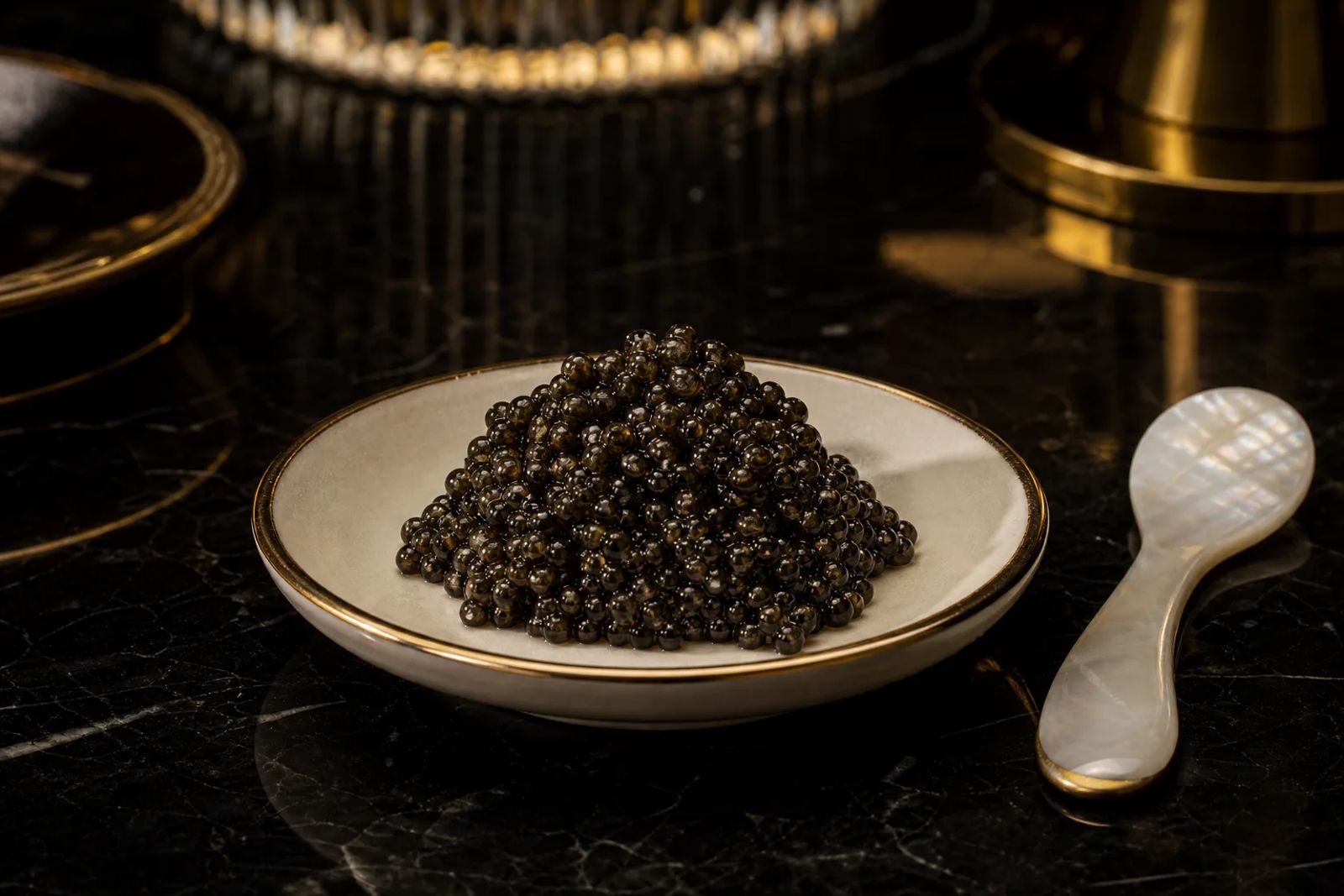
A 15 g spoonful of caviar can supply about 3 micrograms of vitamin B12 for roughly 40 kcal, according to a broad food composition entry. Small serving, concentrated nutrition. Caviar also supplies protein, selenium and marine omega-3 fats. Its nutritional value is clear; evidence that eating it delivers special, lasting health benefits is much thinner.
Is caviar healthy? Start with the evidence
Caviar contains valuable nutrients. Whether eating it improves health is a different question, and one that a nutrient list cannot answer on its own.
Three kinds of evidence matter here: analysis of what the food contains, research into what those nutrients do, and studies measuring health outcomes in people who eat caviar. Laboratory work answers the first question; nutrient research informs the second. The third requires direct evidence from people eating the food.
The evidence cited here includes no human trials or prospective cohort studies testing ordinary caviar consumption against disease outcomes. That is a limit of the cited evidence, rather than a claim that no such research exists.
One human trial did test a processed caviar extract. Published in 2024, it randomised 45 adults across three groups for eight weeks and assessed skin measurements. Participants received an enzyme-treated supplement, not a serving of salted roe, so its reported improvements cannot establish the same effects from eating caviar.
What a small serving actually supplies
Think in spoonfuls, not just figures per 100 g. A practical reference serving is 15 g, about half an ounce: the standard used on this site, rather than a regulatory serving size or recommended daily intake. Multiply any per 100 g figure by 0.15 to calculate that portion.
The USDA-derived entry reproduced by the Federal University of São Paulo gives 264 kcal, 24.6 g protein and 20 µg B12 per 100 g; USDA SR27 gives 65.5 µg selenium. For a 15 g serving, that works out at about 40 kcal, 3.7 g protein, 3 micrograms of B12 and 9.8 micrograms of selenium.
The entry is called “Fish, caviar, black and red, granular”. It covers a broad category, not a species-specific analysis of sturgeon caviar, so these figures illustrate a serving rather than describe every product. The full breakdown is in caviar nutrition.
Laboratory studies of sturgeon caviar confirm protein and lipids, including EPA and DHA, the main long-chain marine omega-3 fatty acids. Fatty-acid profiles vary between samples. For meaningful comparisons, figures need a clear basis, such as grams per 100 g of food rather than percentages of total fat.
Why fish research is not caviar research
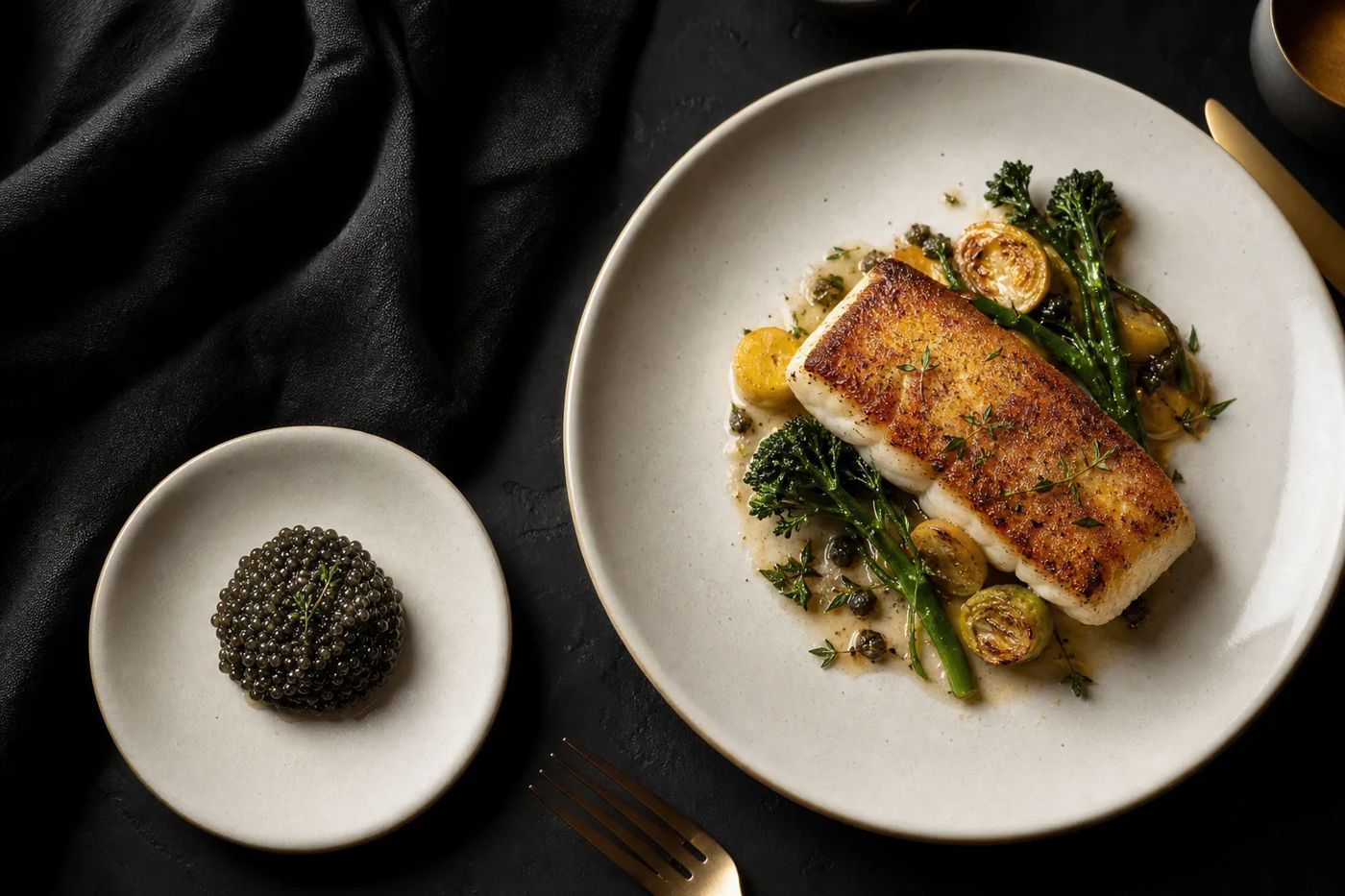
An occasional spoonful of roe is a very different food habit from regularly eating fish. Studies of fish examine different foods, portions and eating patterns.
The ATTICA prospective cohort, for example, followed 2,020 adults in Greece. Researchers assessed seafood intake with a food-frequency questionnaire and followed cardiovascular outcomes over time. The study reported associations between seafood intake and cardiovascular risk, not an effect of caviar. Observational research can adjust for measured lifestyle differences, but cannot remove every influence of the wider diet or establish cause and effect.
The NHS in England advises at least two portions of fish weekly, including one of oily fish, with an adult portion around 140 g. The 15 g reference serving of caviar is roughly one ninth of that weight. Salted roe is not nutritionally interchangeable with a fish meal.
Omega-3 supplement research is another distinct body of evidence: it tests particular preparations and doses, often taken daily. EFSA's assessment of EPA and DHA and normal cardiac function concerns those nutrients. It does not establish a protective effect from caviar as a food.
What common health claims really show
The useful question is simple: does the evidence match the food, dose, population and outcome being advertised? These examples show how to read common claim language; they are not findings from a single experiment.
| Claim | Evidence available | What it shows |
|---|---|---|
| “Provides useful nutrients” | Food composition data | Supports nutrient content statements, calculated for the portion eaten. |
| “Protects your heart” | Fish cohorts and nutrient assessments | Does not establish that eating caviar prevents cardiovascular disease. |
| “Rejuvenates skin” | A small processed-extract trial | Tests a supplement and skin measurements, not eating caviar or slower ageing overall. |
| “Boosts immunity or fertility” | Nutrient functions and mechanistic arguments | A nutrient's normal role does not establish enhanced immunity or fertility from caviar. |
A nutrient can be essential without an extra helping improving its function in someone who already has enough. The same distinction matters with “antioxidant activity”: a laboratory result does not show fewer illnesses or a longer life in people.
A romantic reputation earns no exemption from scrutiny. Is caviar an aphrodisiac examines the sexual-health claim separately; nutrient content alone cannot demonstrate an effect on desire or sexual performance.
What weighs on the other side
Salt is the clearest nutritional counterweight. The same broad database entry contains 1,500 mg sodium per 100 g, equivalent to 3.75 g salt. A 15 g serving therefore supplies 225 mg sodium, or about 0.56 g salt. Salt equivalent is sodium multiplied by 2.5; salt in caviar explains the distinction and how to compare products.
That entry also yields about 88 mg cholesterol in 15 g. Dietary cholesterol and blood cholesterol are different measurements, explored in caviar, cholesterol and heart health. Purines, compounds broken down to uric acid, have also been measured in caviar. They may matter if you are managing gout, a personal consideration alongside the wider caviar and health guidance.
Studies have examined metals in sturgeon roe, but their measurements describe the samples tested. They justify neither “contaminant-free” promises nor a blanket warning about all caviar. Mercury and contaminants in caviar examines the evidence. A small portion changes exposure; reliable sourcing and food controls still matter.
Food safety can outweigh the nutrient benefits
For some people, the first question is safety, not nutrition. Chilled ready-to-eat caviar needs a separate judgement, particularly for those more vulnerable to foodborne illness.
A nutrient can be essential without an extra helping improving its function in someone who already has enough.
The US FDA identifies pregnant people, adults over 65 and people with weakened immune systems as groups at higher risk of serious listeriosis. US pregnancy guidance advises avoiding raw seafood. In England, the NHS advises pregnant people to cook cold smoked or cured fish until steaming hot, although that guidance is not specific to caviar. In the EU, consult the relevant national health or food safety authority, because advice can differ. A 2023 Hong Kong recall of salmon roe for possible Listeria shows that roe is not exempt.
Anyone with a fish allergy should seek individual advice from their doctor or allergy specialist before eating fish roe. Follow your country's advice and the producer's validated storage and handling instructions. A pleasant smell cannot establish safety.
For practical detail, see caviar food safety, especially if you are pregnant or immunocompromised, or serving someone who is.
What health claims rules actually allow
A permitted nutrient claim is not an official seal of overall healthfulness. Food labels and advertising are regulated, and the distinctions below govern commercial claims, not medical recommendations to eat caviar.
European Union: Regulation (EC) No 1924/2006 governs nutrition and health claims. Nutrition claims must meet the permitted claim's conditions. Health claims generally require authorisation and compliance with their conditions of use; broad references to health must be accompanied by a relevant authorised specific health claim.
United Kingdom: Great Britain applies its assimilated and amended version of Regulation (EC) No 1924/2006 and uses the GB nutrition and health claims register. Northern Ireland follows the applicable EU claims framework. A new GB authorisation should therefore not be assumed to apply there.
United States: The FDA distinguishes nutrient content claims, health claims and structure and function claims. Some health claims meet a significant scientific agreement standard; others may rest on an authoritative statement from an eligible scientific body. Qualified health claims rely on less conclusive evidence and qualifying language under FDA enforcement discretion. None permits an ordinary food to be marketed as a treatment or cure.
How to judge the claim in front of you
Start with the product and the portion you expect to eat. If the label gives salt per 100 g, multiply by 0.15 for the salt in the reference portion. Count the accompaniments too: the whole meal matters, not just the roe.
Then look at what was actually studied. Was it caviar, an extracted ingredient, a nutrient supplement or an association with eating fish? Seek a stated dose, a suitable comparison group and an outcome that matters to people. Impressive language about a molecule is no substitute for those details.
Keep the contribution in proportion. A small serving's modest amount of protein still counts, but does not equal a protein-rich main course. A concentrated vitamin source is not a complete diet. The useful judgement is what the food contributes to the way you eat, rather than a blanket label of good or bad.
For personal questions about gout, raised cholesterol, blood pressure, pregnancy or a prescribed diet, speak to your doctor. A pharmacist or midwife can help with questions within their role. Bring the product's nutrition information and your likely portion size, so the advice addresses what you will actually eat.
Sources
-
Federal University of São Paulo, Escola Paulista de Medicina. Tabela de Composição Química dos Alimentos: Peixe, caviar, negro e vermelho, granular, food code 15012. Undated online database entry reproducing USDA composition data, retrieved 2026.
https://tabnut.dis.epm.br/alimento/15012/peixe-caviar-negro-e-vermelho-granular -
Wirth and colleagues, Nahrung, volume 44, pages 233 to 237. Chemical and biochemical composition of caviar from different sturgeon species and origins, 2000. Original research article; abstract retrieved through PubMed.
https://pubmed.ncbi.nlm.nih.gov/10996895/ -
Nutrients. Skin Anti-Aging Efficacy of Enzyme-Treated Supercritical Caviar Extract: A Randomized, Double-Blind, Placebo-Controlled Clinical Trial, volume 16, article 137, 2024. Full text.
https://pmc.ncbi.nlm.nih.gov/articles/PMC10780664/ -
ATTICA study investigators. High fish intake rich in n-3 polyunsaturated fatty acids reduces cardiovascular disease incidence in healthy adults: The ATTICA cohort study (2002-2022), 2023. Original cohort research; abstract retrieved through PubMed.
https://pubmed.ncbi.nlm.nih.gov/37057185/ -
NHS. Fish and shellfish. Current online guidance, retrieved 2026.
https://www.nhs.uk/live-well/eat-well/food-types/fish-and-shellfish-nutrition/ -
European Food Safety Authority. EFSA assesses safety of long-chain omega-3 fatty acids, 2012. Summary of the authority's assessments of intake, safety and claimed effects.
https://www.efsa.europa.eu/en/press/news/120727 -
Kaneko and colleagues, Biological and Pharmaceutical Bulletin. Total Purine and Purine Base Content of Common Foodstuffs for Facilitating Nutritional Therapy for Gout and Hyperuricemia, volume 37, issue 5, pages 709 to 721, 2014. Article and analytical tables.
https://www.jstage.jst.go.jp/article/bpb/37/5/37_b13-00967/_article
https://www.jstage.jst.go.jp/article/bpb/37/5/37_b13-00967/_pdf/-char/en -
Hosseini and colleagues, Environmental Science and Pollution Research International. Metal content in caviar of wild Persian sturgeon from the southern Caspian Sea, volume 20, pages 5839 to 5843, 2013. Original research; abstract retrieved through PubMed.
https://pubmed.ncbi.nlm.nih.gov/23504250/ -
US Food and Drug Administration. Listeria (Listeriosis). Current online foodborne-pathogen guidance, retrieved 2026.
https://www.fda.gov/food/foodborne-pathogens/listeria-listeriosis -
US Department of Health and Human Services, FoodSafety.gov. People at Risk: Pregnant Women. Current online guidance, retrieved 2026.
https://www.foodsafety.gov/people-at-risk/pregnant-women -
Hong Kong Centre for Food Safety. CFS urges public not to consume batch of prepackaged caviar suspected to be contaminated with Listeria monocytogenes, 5 May 2023. Official safety notice.
https://www.cfs.gov.hk/english/press/20230505_10309.html -
European Commission. Nutrition and Health Claims. Current online explanation of Regulation (EC) No 1924/2006, retrieved 2026; regulation text also retrieved through EUR-Lex search.
https://food.ec.europa.eu/food-safety/labelling-and-nutrition/nutrition-and-health-claims_en
https://eur-lex.europa.eu/legal-content/EN/TXT/?uri=celex%3A32006R1924 -
UK Department of Health and Social Care. Nutrition and health claims: guidance to compliance with Regulation (EC) 1924/2006. Current online guidance, retrieved 2026.
https://www.gov.uk/government/publications/nutrition-and-health-claims-guidance-to-compliance-with-regulation-ec-1924-2006-on-nutrition-and-health-claims-made-on-foods/nutrition-and-health-claims-guidance-to-compliance-with-regulation-ec-19242006 -
US Food and Drug Administration. Label Claims for Food & Dietary Supplements and Questions and Answers on Health Claims in Food Labeling. Current online guidance, retrieved 2026.
https://www.fda.gov/food/nutrition-food-labeling-and-critical-foods/label-claims-food-dietary-supplements
https://www.fda.gov/food/nutrition-food-labeling-and-critical-foods/questions-and-answers-health-claims-food-labeling -
US Food and Drug Administration. Fish and Fishery Products Hazards and Controls Guidance, June 2022 edition.
https://www.fda.gov/files/food/published/SeafoodHazardsGuide-CompleteDocument-June2022.pdf
This article was researched using published composition data, targeted searches for human caviar research, original fish-intake research and official health, food-safety and claims guidance.
Last checked: November 2026