
Rova Caviar is a brand of caviar produced through the Acipenser sturgeon farm at Lake Mantasoa in Madagascar. Rova’s February 2025 account lists Siberian, Russian, Persian, ship and stellate sturgeon caviars; the farm also reports keeping beluga.
House at a glance
| Founded | Acipenser project: 2009, according to Madagascar’s investment agency. Rova brand: 26 June 2017, according to the producer. 2,6 |
| Producer and operator | Acipenser Madagascar SA, as named in its legal notice. 1 |
| Ownership | 1,9,10 |
| Headquarters | Published operating address: Ampasipotsy Manjakandriana, Antananarivo 116, Madagascar. 1 |
| Production | Land site near Ambatolaona and lake site at Mantasoa; processing workshop at the land site. 4,5 |
| Role | Farmer and processor supplying Rova, Kasnodar and importer brands, according to the producer. 5,6,7 |
| Roe sourcing | Producer describes roe from its own farm. 5,6,7 |
| Species and origin | Six species reported at the farm, listed below; Madagascar is the documented production country. 2,4 |
| CITES registration | MG-001, Société ACIPENSER S.A., Villa Béryl Ambatomaro, Antananarivo 101; exporter and processing or repackaging fields both marked “Yes” in the indexed record. 9 |
The useful distinction is between a farming business, a consumer brand and the companies that distribute it. Rova belongs in a guide to caviar houses and producers because its story starts with a documented farm, rather than simply with a trading address.
Who is behind Rova Caviar?
Rova’s published history names Alexandre Guerrier, Christophe Dabezies and Delphyne Dabezies as the three founders of the Acipenser venture. It dates the land site to 2009 and the lake site to 2015, separating the establishment of the farm from the later launch of the Rova name.
That account is partly corroborated by the Economic Development Board of Madagascar’s 2024 aquaculture investment guide, which identifies Acipenser at Mantasoa and gives 2009 as the project’s starting year. The company gives 26 June 2017, Madagascar’s national day, as Rova’s birth date.
Legal identity needs more care than the founding story. The farm website names Acipenser Madagascar SA as its publisher, while the CITES register uses Société ACIPENSER S.A.; French company information reproduced by Pappers separately records ROVA CAVIAR trademarks under ADC SELECTION. These records identify different legal functions, not a verified chain of share ownership.
Where the fish are raised
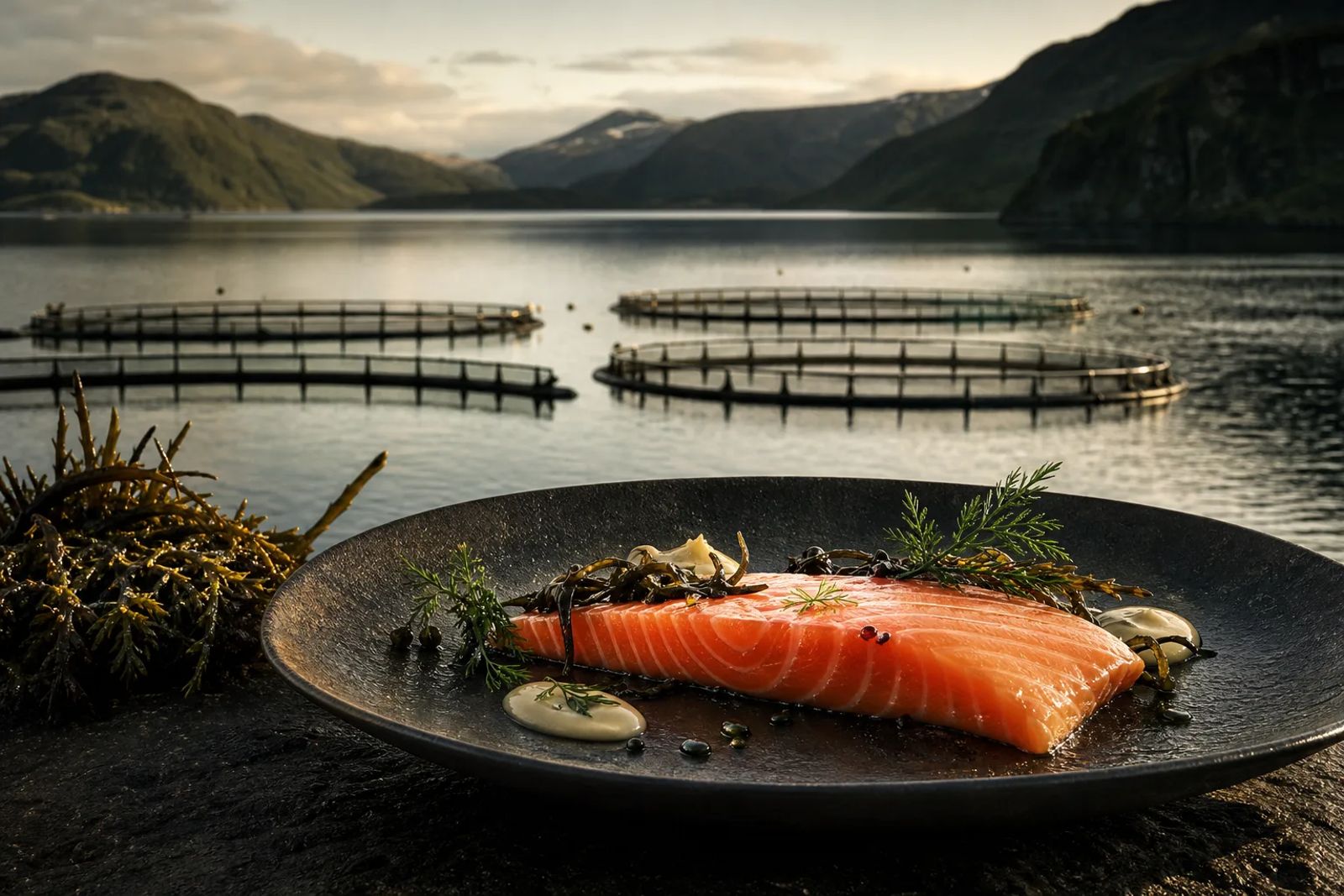
The verified production setting is the Mantasoa area in Madagascar’s central highlands, east of Antananarivo. The producer describes two connected parts of the operation: a land site with ponds, a hatchery, facilities for young fish, a feed mill and a processing workshop, together with farming structures on the lake.
Water for the land site comes from a river fed by Lake Mantasoa upstream, according to Acipenser. The documented arrangement combines land-based rearing with lake cages; it should not be described as a wholly enclosed recirculating system, in which water is treated and repeatedly reused.
An APDRA aquaculture newsletter provides an independent early account following a farm visit in 2016. It reports that Acipenser imported sturgeon eggs from France and Russia and incubated them locally, an important distinction between the origin of the initial breeding material and the country where fish were raised for caviar.
The broader Madagascar caviar story belongs on the country page. Here, the significant point is that Rova’s Malagasy connection is supported by evidence of farming and processing, not inferred from its branding.
Which species produce its caviar?
Acipenser’s farm description maps its named caviars to six species. These are the scientific names used in that description, retaining the CITES name Huso huso for beluga:
- Baeri: Siberian sturgeon, Acipenser baerii.
- Ossetra or Osciètre: Russian sturgeon, Acipenser gueldenstaedtii.
- Persicus: Persian sturgeon, Acipenser persicus.
- Shipova: ship sturgeon, Acipenser nudiventris.
- Sevruga: stellate sturgeon, Acipenser stellatus.
- Beluga: the species listed by CITES as Huso huso.
The distinction between farm stock and an established caviar range matters here. Rova’s February 2025 account lists Baeri, Ossetra, Persicus, Shipova and Sevruga. Acipenser’s distribution page still describes Sevruga and Beluga as future additions, so the producer’s published accounts are inconsistent.
These are the producer’s mappings between its trade names and species, not universal definitions of those names. Acipenser describes its farm stock as six pure sturgeon species.
Does it produce its own roe?
Acipenser describes an integrated operation that raises the fish, makes feed and processes the roe on site. Its published distribution structure presents Rova as a selection from that farm’s caviar, alongside Kasnodar and supply to importers, rather than as a brand assembled from a declared network of external farms.
According to Acipenser, Rova caviar comes from its own farm. For a particular consignment, the farm’s identity, the declared species and the supplier’s lot records are more useful evidence than a general claim of complete control.
What Rova Caviar is known for
Rova’s distinctive feature is a producer-led Malagasy identity combined with several separately named sturgeon species. Rather than treating every tin as interchangeable “Madagascar caviar”, a connoisseur can distinguish Baeri from Russian Ossetra, Persian sturgeon caviar and Shipova using the declared species.
That makes the producer and the brand on the lid different questions: the Acipenser business is not limited to tins carrying the Rova name.
The farm also supplies Kasnodar and a separate white-label channel, meaning caviar distributed under an importer’s own name. That makes the producer and the brand on the lid different questions: the Acipenser business is not limited to tins carrying the Rova name.
Water, environmental and community claims
Rova describes Mantasoa’s water as rain-fed and exceptionally pure, and presents the highland climate as favourable to sturgeon growth. These are producer statements, not a substitute for published water analyses or comparative evidence that the site produces better caviar than another farm.
There is more concrete evidence for an environmental management system. A SOCOTEC certificate issued on 8 March 2024 names ACIPENSER at Route de Mantasoa, Ampasipotsy, and covers sturgeon farming, feed manufacture and caviar and meat processing under ISO 14001:2015; its stated expiry is 10 March 2027, subject to continuing certification conditions.
That certification concerns management of environmental responsibilities, not a guarantee of zero environmental impact or a product-specific welfare claim. Madagascar’s investment agency reported 293 employees at Acipenser in its 2024 aquaculture investment guide.
Export markets and the approval record
A November 2022 report in Rungis Actualités described exports by air to France and other European destinations, as well as Seychelles, Réunion and Mauritius.
For EU access, two separate records matter. The consolidated text of Commission Implementing Regulation (EU) 2021/405 dated 18 February 2026 lists Madagascar in Annex IX without a restrictive remark, while a published reproduction of the EU establishment list dated 23 May 2023 records ACIPENSER, Manjakandriana, as processing plant MAD 219 SV.
Country eligibility does not itself approve an individual establishment, and food approval does not replace wildlife-trade documentation. The historical plant entry is useful corroboration of the processing operation, but an importer must check the live establishment listing, applicable aquaculture controls and consignment certification before relying on an older approval record.
Caviar imports are subject to destination-specific food and wildlife controls. They are therefore not presented here as verified destinations; the separate guide to importing, exporting and re-exporting caviar explains why the destination and route need individual checks.
Reading origin and processing on a label
The CITES register’s Madagascar entry records MG-001 for Société ACIPENSER S.A., with an Antananarivo address rather than the farm’s published operating address. A registration address identifies the registered operation; it is not, by itself, the location where the sturgeon lived or proof of who owns the brand.
Under the CITES labelling system, MG identifies Madagascar in the country of origin field. On a repacked label, origin is distinct from the repacking plant details; implementation must be checked in the relevant jurisdiction. Country of origin versus country of repacking explains the distinction.
The code is a traceability record, not independent proof of the contents of a particular tin. For a producer check, match the registered entity and plant details, then ask the supplier to connect the lot to its records; checking a producer on the CITES register sets out the registration step.
Sources
-
Acipenser Madagascar. Mentions légales. Undated web edition, retrieved November 2026. Company statement identifying the website publisher and operating address. Legal notice.
-
Economic Development Board of Madagascar. Aquaculture investment guide in Madagascar. 2024 edition, especially the Acipenser profile on printed page 19. Investment guide.
-
Rova Caviar. History of Maison Rova. Undated web edition, retrieved November 2026. Producer account of founders, sites and species introductions. Company history.
-
Acipenser Madagascar. The fish farm. Undated web edition, retrieved November 2026. Producer descriptions of water, husbandry and species. Farm description.
-
Acipenser Madagascar. Acipenser Madagascar. Undated homepage, retrieved November 2026. Infrastructure and processing description. Producer overview.
-
Acipenser Madagascar. Rova Caviar. Undated distribution profile, retrieved November 2026. Brand launch date and stated range. Brand profile.
-
Acipenser Madagascar. La distribution. Undated web edition, retrieved November 2026. Rova, Kasnodar and white-label distribution channels. Distribution structure.
-
APDRA Pisciculture Paysanne. La voix des rizipisciculteurs, number 31. May 2016, “Visite de la société Acipenser”, printed page 2. Newsletter.
-
CITES Secretariat. Madagascar: Register of caviar exporters. Public register of caviar exporters and processing or repackaging plants. Madagascar register.
-
Pappers. Société ADC SELECTION, SIREN 852292721. Registry-derived company and trademark information, retrieved November 2026. Company record.
-
SOCOTEC Certification France. Certificate No. SCF000298E: ACIPENSER. ISO 14001:2015, issued 8 March 2024, stated validity to 10 March 2027, subject to conditions. Copy hosted by the producer. Certificate.
-
Rungis International. Rungis Actualités, number 789. November 2022, Madagascar report. Issue PDF.
-
European Union. Commission Implementing Regulation (EU) 2021/405. Consolidated text dated 18 February 2026, Annex IX. EUR-Lex text.
-
Poseidon Aquatic Resource Management. Potentials of EU SFPAs: Final project report and country reports. December 2023, Madagascar country report, Annex 2 reproducing the establishment list published 23 May 2023. Report.
-
European Commission. Health and consumer protection for animal and plant product. Access2Markets web guidance, retrieved November 2026. Import framework.
-
CITES Standing Committee. SC78 Doc. 59. 2025 meeting document, discussion of caviar labelling and code fields under Resolution Conf. 12.7 (Rev. CoP17). Meeting document.
-
European Commission. EU Wildlife Trade Reference Guide: What are the rules regarding marking of specimens? Web edition retrieved November 2026. Marking guidance.
-
European Commission. About SturSNiP. Joint Research Centre project description, undated web edition retrieved November 2026. Research into genetic identification of sturgeon and caviar. Research project.
-
CITES Secretariat. Madagascar: Country profile. Public web edition retrieved November 2026. Country profile.
Last checked: November 2026