
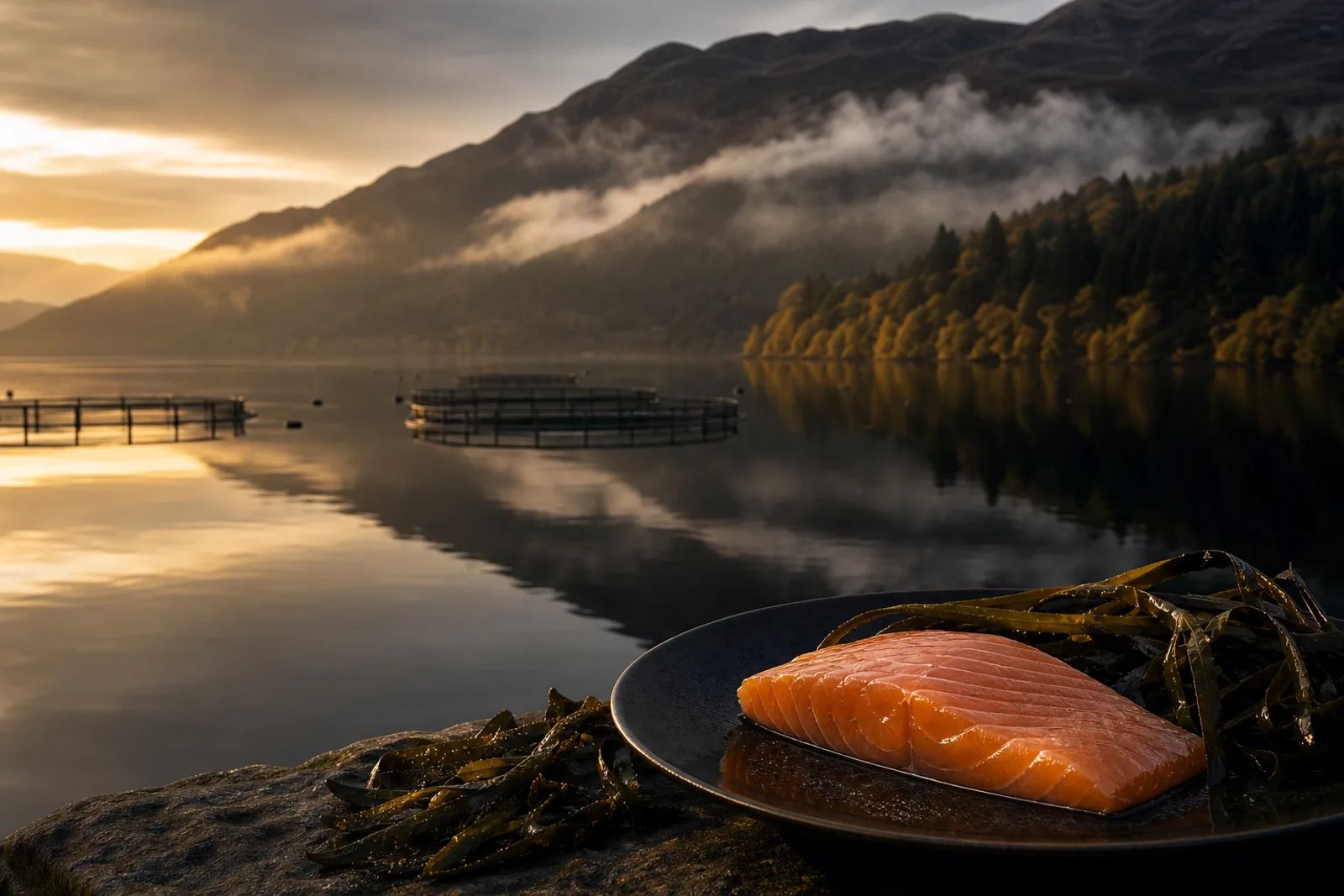
On 26 June 2017, Madagascar's national day, Rova says it produced its first caviar.
Madagascar's documented sturgeon farming area lies far from the usual northern waters of the sturgeon world: in the central highlands around Lake Mantasoa. Here, introduced fish are raised in land-based facilities and lake cages, creating an origin for roe where no native wild sturgeon fishery exists. Getting that caviar abroad takes wildlife-trade documentation, food-market clearance and an unbroken cold chain.
Madagascar at a glance
| Species farmed | The government's 2024 investment guide lists Siberian (Acipenser baerii), Russian (Acipenser gueldenstaedtii), Persian (Acipenser persicus), ship (Acipenser nudiventris) and stellate sturgeon (Acipenser stellatus), plus beluga (Huso huso in CITES; Acipenser huso in the SSG classification). 1 |
| Documented farming area | Lake Mantasoa and nearby land-based facilities around Ambatolaona; about 1,400 metres above sea level, according to the operator. |
| Public CITES register, November 2026 | Two entries: Société ACIPENSER S.A., MG-001; Société Manda S.A. (Poissonnerie), MG-002. Both show “Yes” under the combined “Processing/Repackaging” column; separate counts are unavailable. |
| Regulatory framework, November 2026 | CITES implemented through Law No. 2005-018 and Decree No. 2006-097, alongside destination countries' separate food import requirements. |
| PGI or PDO | Not publicly documented. |
| Native wild stocks | None of the farmed sturgeon species is native to Madagascar. |
| Country's role | Farmed roe origin, processing location and exporter. |
The register lists businesses handling and trading caviar, rather than counting sturgeon farms. Its Antananarivo contact addresses should not be mistaken for the location of the fish.
How sturgeon arrived in Madagascar
Madagascar's caviar story began with introductions, not a local fishing tradition. Sturgeon are northern-hemisphere fish. Acipenser dates its project to 2009 and the arrival of Siberian sturgeon to 2013; its staff page records the first eggs hatching on 1 April 2013.
In its May 2016 newsletter, the aquaculture development organisation APDRA reported visiting the operation, described sturgeon eggs imported from France and Russia, and identified Siberian and Russian sturgeon. It expected the first commercial caviar in 2017, documenting a working farm before later accounts of its launch.
The chronology has three distinct milestones: the project's beginning, the arrival of the fish and the first caviar. Neither the project date nor the first caviar date establishes when sturgeon first entered the country.
Where the fish are raised
The highlands, rather than Madagascar's warm coastline, are the heart of this farming story. The documented production centre lies around Mantasoa, east of Antananarivo.
Acipenser describes a land-based hatchery, growing ponds, feed manufacture and processing facilities supplied by Lake Mantasoa, with larger fish held in cages on the lake. Rova's history places the two sites in the commune of Ambatolaona.
At an elevation of about 1,400 metres, the operator reports seasonal water temperatures of 13 to 25°C (55 to 77°F). These reported conditions help explain why the highlands feature in the farming story.
Acipenser considers that range favourable for growth in its production system, rather than an optimum for every sturgeon. Altitude alone cannot explain the relationship between temperature, husbandry and reproductive development. Explore that relationship in water temperature and maturation.
Which species produce Madagascar caviar?
Four of Acipenser's six farmed species currently yield caviar, according to the producer: Siberian, Russian, Persian and ship sturgeon.
The government's 2024 Aquaculture Investment Guide documents all six species listed in the fact box, giving a clearer picture of the farmed stock than trade names alone. With long-lived fish, however, importing a species, raising females and harvesting their roe are separate milestones. A species on the farm does not necessarily mean its caviar is already in production.
Scientific names in the fact box follow the cited government record and CITES context. For the producer's development and range, see Rova Caviar. A country's production history should not be confused with a brand's catalogue.
Exports: wildlife rules and food clearance
Madagascar exports its own farmed roe, rather than simply repacking imported caviar. The government's 2024 guide names export destinations including France, the United States, Dubai and Japan. Some destinations exempt 125 g per person in labelled personal luggage, subject to national restrictions.
Commercial access has two separate gates: wildlife-trade compliance and food clearance. CITES registration does not confer food-export approval. China and Russia also apply CITES and food rules separately.
The government's 2024 guide names the Ministère de la Pêche et de l'Économie Bleue and assigns sanitary approval, aquatic animal health surveillance and export health certificates to the Autorité Sanitaire Halieutique, the fisheries health authority. CITES identifies Madagascar's Direction Générale de la Gouvernance Environnementale as the sole issuer of CITES permits and certificates.
Check the destination's rules below: country approval does not automatically cover every establishment.
| Destination | Position checked in November 2026 |
|---|---|
| EU | As of 4 November 2026, Annex IX lists Madagascar for wild catch, aquaculture finfish and crustaceans. Establishment approval is also required. |
| Great Britain | GOV.UK requires approved country and establishment status. The product's risk category determines border procedures. |
| Northern Ireland | Applicable EU food import rules apply, rather than Great Britain's separate regime. |
| United States | Caviar wildlife rules under 50 CFR 23.71 apply alongside food-import requirements. Check species-specific restrictions separately. |
| Switzerland | FSVO requires authorised countries and establishments, relevant residue controls and CITES compliance. |
| UAE | MOCCAE operates a CITES import-permit service. UAE guidance requires imported food registration before market circulation. |
| Japan | Commercial food import notification under the Food Sanitation Act is required, alongside applicable CITES documentation. |
| Australia | DAFF biosecurity and EPBC wildlife trade requirements apply. |
Keeping the cold chain intact
A short flight does not guarantee a short journey. Chilled caviar needs continuous temperature control through collection, freight handling, border inspection, onward storage and final delivery.
Acipenser says its French distribution channel has handled exports since 2019, including caviar supplied under importers' own brands. That explains how Malagasy roe can reach a reader through a business based outside Madagascar, although it does not identify the route of any particular tin.
Plan the journey around the producer's validated storage instructions, allowing for foreseeable clearance delays. Ask the supplier how refrigerated handling is maintained and what to do if delivery conditions differ from the instructions. Read the instructions before accepting a delayed consignment, and use the fuller guidance on cold chain and delivery.
Non-native fish, environmental duties and local work
For introduced sturgeon, successful growth is only part of the picture. Keeping fish contained, screening for disease and monitoring the surrounding water are central questions.
NOAA's aquaculture guidance identifies damaged nets, storms and handling as possible escape pathways. FAO's work on introduced species highlights ecological and disease risks. These describe general risks, rather than documented harms caused by this Malagasy operation.
Ask specific questions. How are imported eggs and fish screened? How are cage integrity and escapes monitored? What do water and sediment checks show? A scenic lake supplies none of those answers, and receiving rainwater does not establish protection from contamination.
Acipenser publishes commitments on employee welfare and medical care. These are company statements, rather than an independent assessment of employment quality or community benefit. Its environmental-management certificate concerns a management system, not a guarantee of zero environmental impact.
What Madagascar caviar is known for
For a first taste of what to expect, start with Acipenser's Baeri: amber-brown beads, mineral notes and sometimes a slight fruitiness, in the producer's description. That offers a more useful tasting starting point than the idea of a single national flavour.
Madagascar's documented distinction is its highland farming setting and its development as an African origin of sturgeon roe. Several species are raised here, with differences in production and processing as well as in the fish themselves.
For a first taste of what to expect, start with Acipenser's Baeri: amber-brown beads, mineral notes and sometimes a slight fruitiness, in the producer's description.
For the broader regional context, read Africa. The caviar producing countries guide places Madagascar alongside other origins without ranking them.
Recognising Malagasy origin
Look for the origin of the roe, not just the brand's address. Under the US international trade rules in 50 CFR 23.71, country of origin and repacking information occupy separate label fields.
Malagasy roe may be sold under another brand. The distinction is explained in country of origin and repacking. Use the label for traceability, while remembering that it does not independently verify the contents.
Sources
-
Economic Development Board of Madagascar and fisheries-sector partners. Aquaculture Investment Guide in Madagascar, 2024 edition, especially the sturgeon section and institutional responsibilities. Guide PDF.
-
APDRA Pisciculture Paysanne. La Voix des Rizipisciculteurs, no. 31, May 2016, “Visite de la société Acipenser: production intensive de caviar”, page 2. Newsletter PDF.
-
Acipenser Madagascar. The fish farm, undated company account, version retrieved November 2026. Farm account.
-
Rova Caviar. History of Maison Rova, undated company history, version retrieved November 2026. Company history.
-
Acipenser Madagascar. Our employees, undated company account, version retrieved November 2026. Staff and project account.
-
Acipenser Madagascar. The fish farm, undated company account of farmed species.
-
Acipenser Madagascar. Acipenser Madagascar, distribution and corporate-responsibility sections, undated, version retrieved November 2026. Company overview.
-
CITES Secretariat. Madagascar: Register of caviar exporters, live register entry retrieved November 2026. Country register.
-
CITES Secretariat, hosting Madagascar's national review. National Wildlife Trade Policy Review, undated retrieved PDF, including the account of Law No. 2005-018 and Decree No. 2006-097. National review PDF.
-
European Commission. Commission Implementing Regulation (EU) 2021/405, consolidated version dated 4 November 2026. EUR-Lex regulation.
-
European Commission. Commission Regulation (EC) No. 865/2006, consolidated version dated 18 February 2025, provisions concerning caviar marking and trade. EUR-Lex consolidated text.
-
United States, Code of Federal Regulations. 50 CFR 23.71: How can I trade internationally in sturgeon caviar?, current text retrieved November 2026 through Cornell Legal Information Institute. Regulatory text.
-
UK Government. Importing fishery products or bivalve molluscs, live guidance retrieved November 2026. GOV.UK guidance.
-
Swiss Federal Food Safety and Veterinary Office. Import of foods from third countries, live guidance retrieved November 2026. FSVO guidance.
-
UAE Ministry of Climate Change and Environment. Import of a species listed in CITES Appendices, undated service document. MOCCAE service document.
-
NOAA Fisheries. Fact Sheet: Potential Risks of Aquaculture Escapes, published 7 January 2021, page updated 8 March 2022. NOAA fact sheet.
-
Food and Agriculture Organization of the United Nations. Introduced Species in Fisheries and Aquaculture, brochure, 2003. FAO brochure.
-
Acipenser Madagascar. Commitments, undated company statement, version retrieved November 2026. Company commitments.
-
SOCOTEC Certification France. Acipenser ISO 14001:2015 certificate, no. SCF000298E, issued 8 March 2024, hosted by the operator. Certificate PDF.
-
US Fish and Wildlife Service. Species Status Assessment for Russian, Ship, Persian, and Stellate Sturgeon, October 2020. Assessment PDF.
-
CITES Secretariat. Members of the Standing Committee, live directory retrieved November 2026, Madagascar entry. CITES directory.
Last checked: November 2026