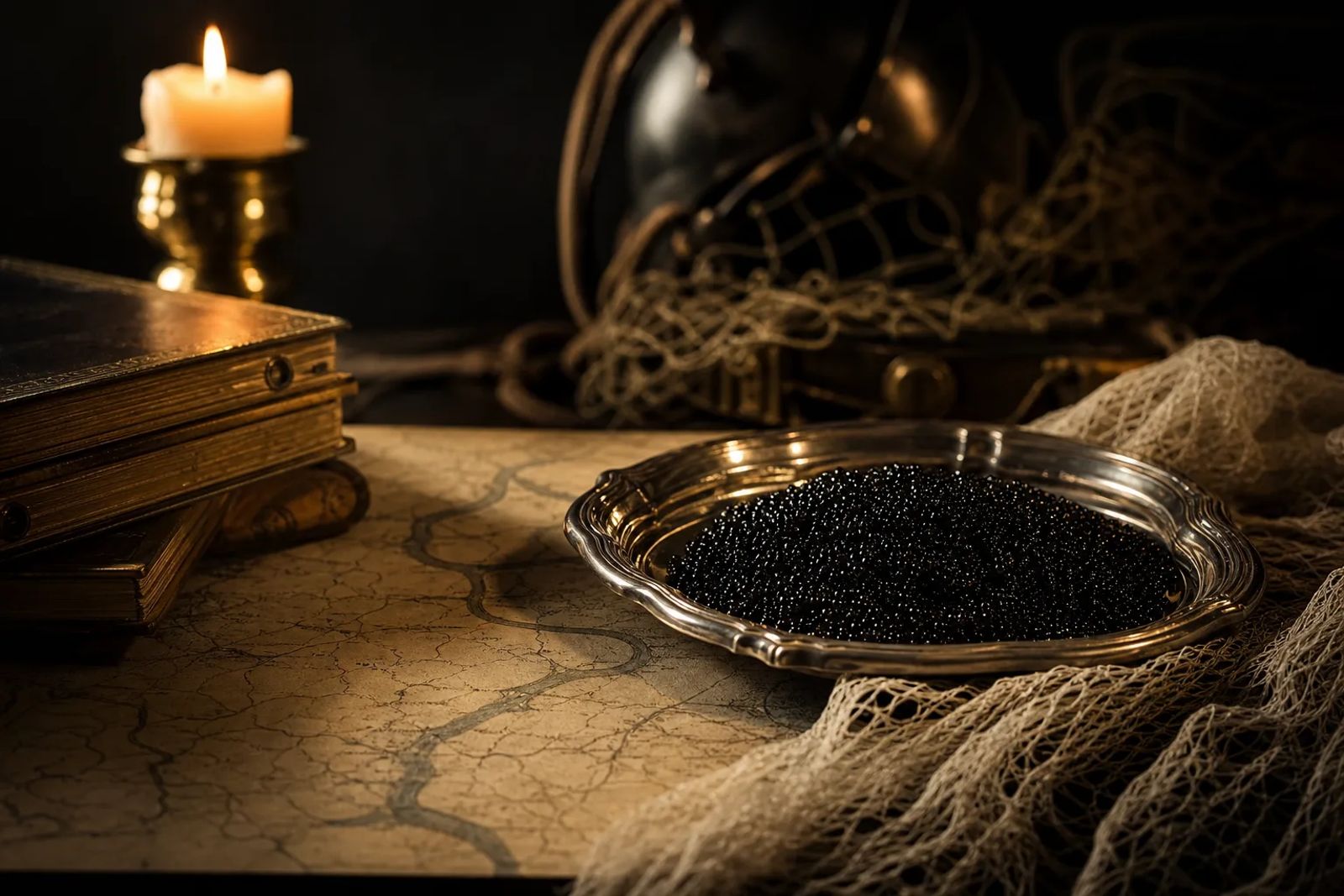
A hatchery release was only the beginning. Some fish spent years at sea before being recaptured as mature adults, as NOAA’s 1990 report records. Behind Soviet caviar lay an enormous biological undertaking: breeding fish, releasing juveniles and waiting for their return.
The state-controlled chain linked fisheries, hatcheries, processing plants and authorised foreign-trade organisations. It produced both granular and pressed caviar, while depending on rivers that industrial development had damaged.
- Astrakhan fisheries were nationalised in 1918, separately from foreign trade.
- Prodintorg is documented as a caviar exporter in 1975 and in distribution in 1987.
- Hatcheries released young fish, but could not restore lost spawning habitat.
From revolution to state control
On 25 March 1918, a local decision nationalised Astrakhan’s fisheries. The Russian archival guide for the region records management passing to workers’ collectives and various co-operative arrangements. The takeover began through such measures, rather than a single decree covering the whole future Soviet Union.
Foreign trade followed a separate legal path. A decree of 22 April 1918 nationalised the authority to conduct business abroad. Control of fishing enterprises and control of exports were distinct interventions, eventually linked within the state system. The monopoly took different organisational forms over Soviet history; no single unchanged body caught, processed and exported every batch.
Old labels describing “Russian” caviar can obscure that geography. Soviet production belonged to a union of republics, not simply the territory of today’s Russian Federation. The broader history of caviar sets this reorganisation against the older fisheries inherited by the new authorities.
How fishing and export fitted together
Soviet Caspian sturgeon grew in the sea and were caught as they returned towards rivers to reproduce. Astrakhan and the lower Volga were a major centre for fishing and processing, with collective fishing enterprises, known as kolkhozes, operating alongside state industry on the Soviet Caspian coast.
A contemporary technical account published by NOAA describes the management system: sea fishing for sturgeon was prohibited, and hatchery fish were released into river deltas. The restriction governed where sturgeon could be caught. River catches remained central to caviar production.
Exports passed through another institutional layer. In April 1975, Canada’s official trade magazine, Canada Commerce, listed V/O Prodintorg as an exporter and importer of foodstuffs, explicitly including soft and pressed caviar. “Soft” was the directory’s English term, rather than a description of every Soviet caviar’s texture.
Prodintorg’s present company history dates its foundation to 1952. A later, independent record gives a glimpse of its work: a United States government gift register lists caviar produced and packed by Soviet Caspian fisheries for V/O Prodintorg in December 1987. Together, the records document its export and distribution role at specific dates, rather than an exclusive mandate reaching back to the revolution.
Dams and the hatchery answer
The same state that needed spawning rivers also needed electricity. At the Volga’s downstream hydroelectric station, commonly called the Volgograd dam, the first generating unit started in December 1958. The complex was formally accepted into operation on 9 September 1961. Hydroelectric development supplied power, while fisheries managers needed accessible spawning grounds and suitable river flows.
Millions of released fish could neither recreate lost spawning habitat nor turn the Caspian into a closed, fully controlled farm.
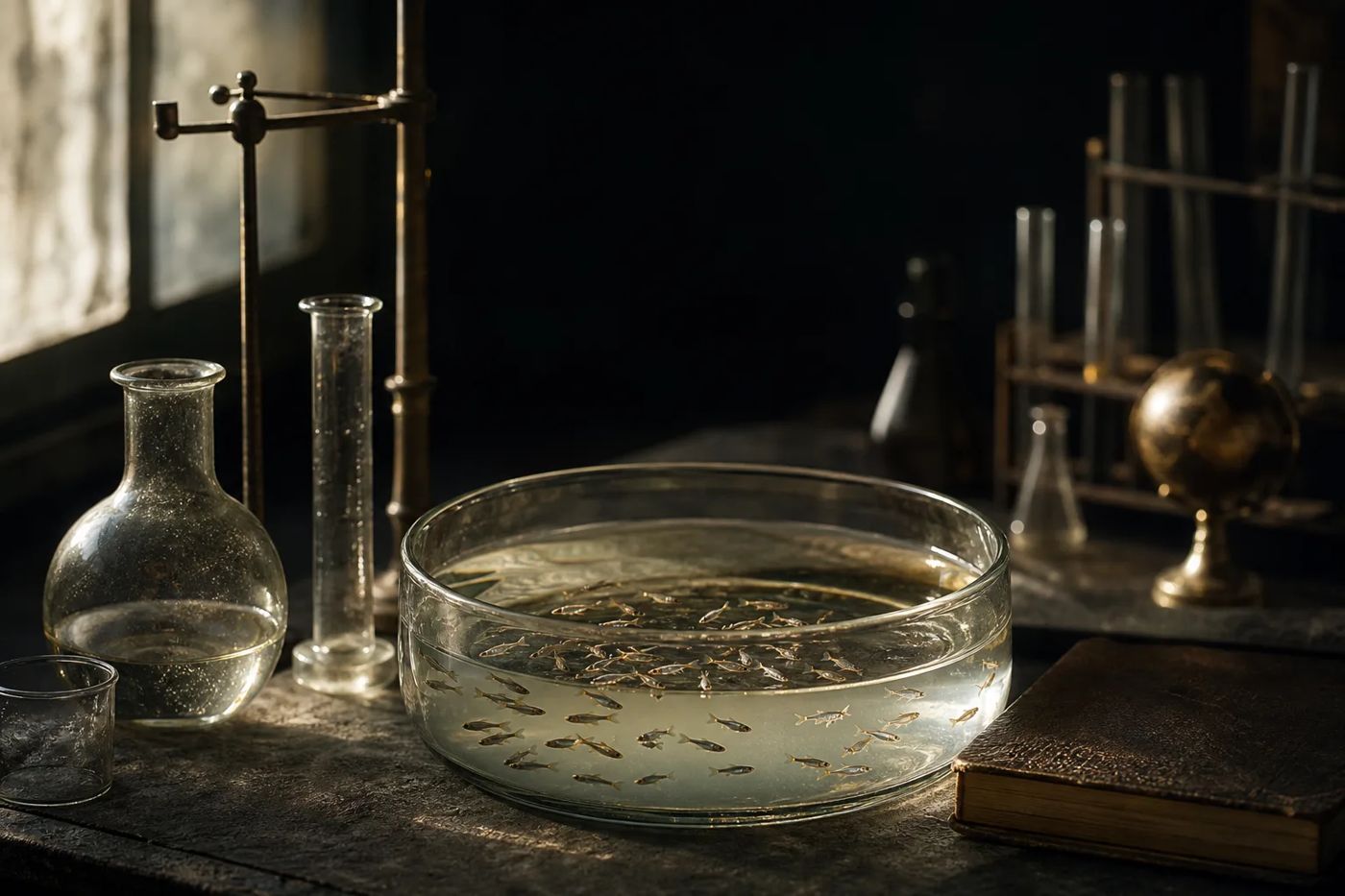
Hatcheries became the compensating machinery. NOAA’s proceedings of a 1989 aquaculture meeting trace experimental Caspian hatcheries on the Volga and Kura to 1937 and 1938, followed by industrial-scale development in the late 1950s. These facilities produced young fish for release. They did not keep every fish in captivity until caviar harvest.
The process began with wild breeding fish. Hormones induced spawning; eggs were fertilised with milt, the male reproductive fluid; juveniles were reared and then released. A 1992 NOAA account, citing a 1979 source, reported annual Soviet production of 70 million to 100 million fingerlings for the Caspian and Azov seas. Only 1 to 3 per cent were estimated to survive to adulthood. Counting those releases as replacement adults would greatly overstate the programme’s achievement.
The wait mattered, too. NOAA’s 1990 report described fish recaptured as mature adults after 10 to 20 years at sea. Hatchery output measured the start of that lengthy biological process, not the next season’s caviar supply.
Hatcheries could sustain recruitment, the addition of young fish to the population. That was a substantial achievement, but one dependent on wild breeding adults and a functioning sea and river environment. Millions of released fish could neither recreate lost spawning habitat nor turn the Caspian into a closed, fully controlled farm.
What Soviet caviar was like
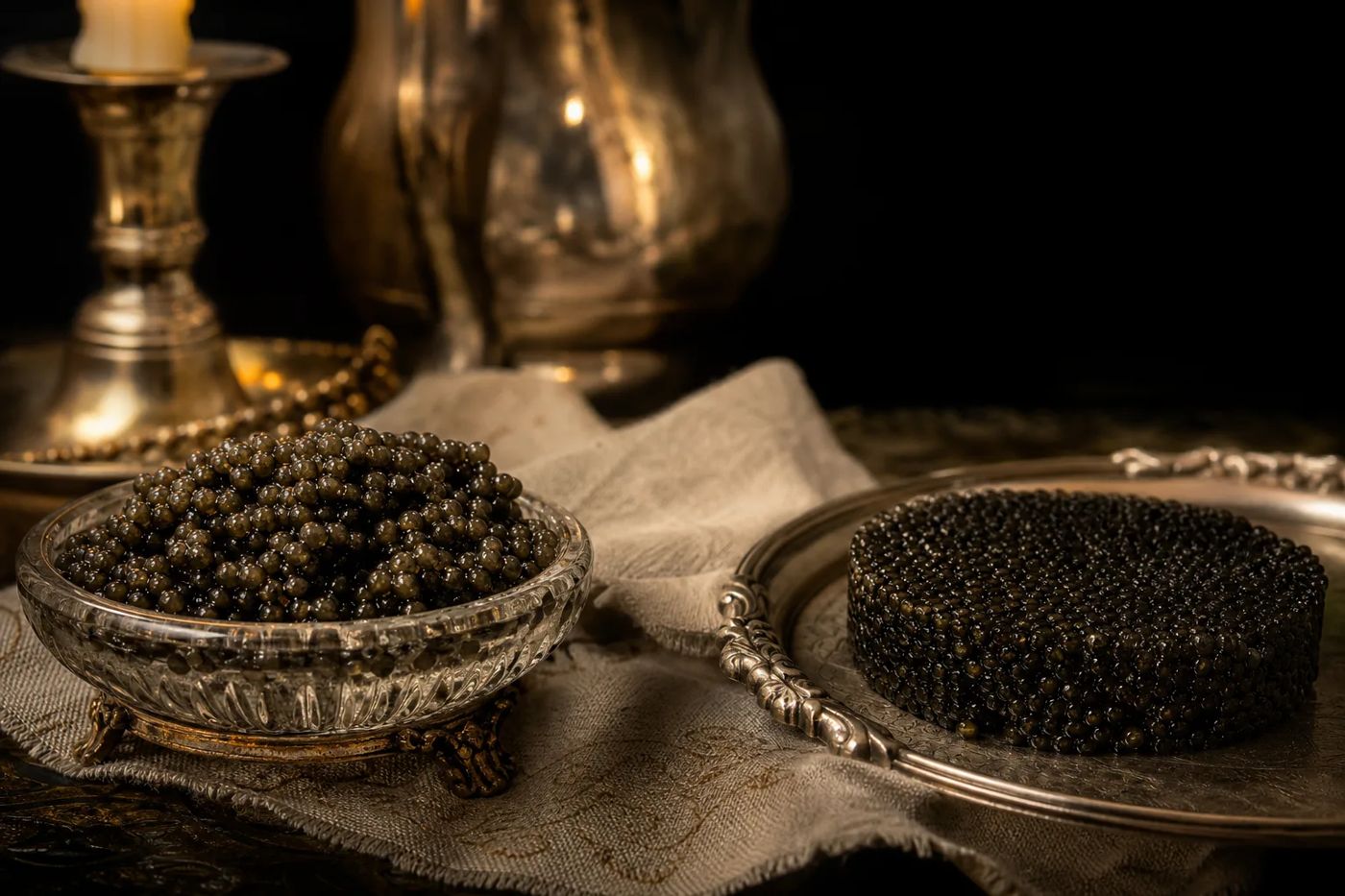
In granular caviar, the eggs remained separate, each bead distinct from the next. Alongside those individual eggs, the export trade directory documents a second form: pressed caviar. Soviet caviar encompassed different forms, textures and flavours, rather than a single uniform delicacy.
The surviving text of GOST 7442-79, the state standard for canned granular sturgeon caviar, sets out a regulated product category. GOST means state standard. This standard came into effect on 1 July 1980 and distinguished three quality grades: highest, first and second. Accounts that reduce Soviet grading to two levels miss that third category. The guide to grade conventions explains why historical grades should not be treated as universal modern rankings.
The standard is precise about what manufacturers were required to make. It cannot supply the taste of every batch. Without a documented contemporary tasting, claims that Soviet caviar was richer or better remain retrospective judgements. The strongest surviving evidence lies in the product forms, official specifications and organisations that handled them.
Exports were not the whole story
Soviet caviar also had a domestic life. GOST 7442-79 expressly covered manufacture for domestic needs as well as export. Historian Jukka Gronow’s archival study of Stalin-era consumption places it within the promotion of cultured Soviet living: caviar belonged to the advertised ideal, even when dependable access to goods was another matter.
Domestic consumption and foreign trade coexisted. A shop display or export advertisement, however, says little about what an ordinary household could reliably obtain. Caviar also travelled through official diplomatic channels, as the 1987 gift register records. That use has its own history in caviar and diplomacy, separate from everyday retail supply.
Iran was a partner, then a separate monopoly
The Soviet Union never controlled the entire Caspian fishery on its own. The February 1921 friendship treaty provided, in Article 14, for the two governments to settle the southern Caspian fisheries question. A commercial arrangement followed in October 1927: Persia and the Soviet Union established a joint fisheries enterprise with a twenty-five-year concession covering catching, processing and exporting. The concession was distinct from the treaty and covered the southern Caspian, not Soviet ownership of the whole sea.
The concession ended in 1953. A contemporary United States fisheries bulletin reports that the contract expired on 31 January and Iran took control on 1 February. Iran’s subsequent national fisheries organisation, Shilat, was a separate state system. The longer Russian and Iranian history follows that relationship while keeping the two countries’ production distinct.
The scale, and the weakness before 1991
Soviet sturgeon production was already falling before the Soviet Union disappeared. FAO’s historical compilation, using Fishstat data, records 29,138 tonnes in 1977 and 20,991 tonnes in 1987. Those are tonnes of fish, not caviar: figures that reveal both the industry’s scale and its substantial decline.
A NOAA technical account offers a product-specific view. It put late 1970s Caspian basin catches at about 26,000 tonnes of sturgeon, yielding about 1,750 tonnes of caviar. This estimate covers the basin over a period, rather than an exact Soviet national total for one year, so it should be kept separate from the FAO figures.
The warning signs were biological as well as statistical. NOAA’s proceedings from the 1989 meeting described dependence on wild breeding fish, loss of natural reproduction and increasing pollution. Read alongside the falling production figures, these records show a managed system already under strain, rather than an intact abundance suddenly destroyed in 1991.
The monopoly left hatchery expertise, industrial organisation and written product standards. It also left an industry dependent on artificial recruitment in damaged waters. The next chapter, the post-Soviet poaching crisis, follows what happened when that administrative framework broke apart.
A short timeline
| Date | What changed |
|---|---|
| 1918 | Astrakhan fisheries nationalised on 25 March; foreign trade on 22 April. |
| 1927 | Soviet-Persian fisheries concession agreed in October. |
| 1953 | Iran took over the joint fisheries company on 1 February. |
| 1958 to 1961 | First generating unit started; Volgograd hydroelectric complex formally accepted into operation. |
| 1975 | Canada Commerce documented Prodintorg’s caviar export role. |
| 1980 | GOST 7442-79 took effect on 1 July. |
| 1987 | FAO recorded Soviet sturgeon production below its 1977 figure. |
Sources
-
Russian archival guides database, 15. Фонды заготовительно-снабженческих учреждений и организаций [Records of procurement and supply institutions and organisations], Astrakhan archival guide, undated online catalogue. The indexed catalogue passage records the fisheries nationalisation decision of 25 March 1918. Catalogue page.
-
Council of People’s Commissars, Russian Soviet Federative Socialist Republic, Декрет о национализации внешней торговли [Decree on the nationalisation of foreign trade], 22 April 1918, historical document catalogue, Electronic Library of Historical Documents. Document record.
-
Canadian Department of Industry, Trade and Commerce, Canada Commerce, April 1975, Soviet foreign-trade organisation directory, entry for V/O Prodintorg. Digitised issue.
-
Prodintorg, company website, undated company introduction, foundation year stated as 1952. This is a company statement, not independent verification of its founding instrument. Company introduction.
-
United States Government, Federal Register, volume 53, number 48, 11 March 1988, page 8007, Department of Defense report of tangible gifts, entry recording receipt on 9 December 1987. Register issue.
-
NOAA, United States Department of Commerce, Marine Farming and Enhancement: Proceedings of the Fifteenth U.S.-Japan Meeting on Aquaculture, NOAA Technical Report NMFS 85, March 1990, section “Soviet propagation efforts”. Technical report.
-
NOAA, United States Department of Commerce, Marine Ranching: Proceedings of the Eighteenth U.S.-Japan Meeting on Aquaculture, NOAA Technical Report NMFS 106, February 1992, sturgeon-culture discussion from the September 1989 meeting. Technical report.
-
System Operator of the Unified Energy System, historical calendar entry on the construction of the Stalingrad, later Volga, hydroelectric station, calendar edition 2016. Historical calendar.
-
USSR State Committee for Standards, GOST 7442-79: Икра зернистая осетровых рыб баночная. Технические условия [Canned granular sturgeon caviar: specifications], approved 1979, effective 1 July 1980, later official reprint consulted. Standard text.
-
Berg Publishers, now Bloomsbury, Jukka Gronow, Caviar with Champagne: Common Luxury and the Ideals of the Good Life in Stalin’s Russia, first edition, 2003. Publisher’s synopsis consulted for the study’s scope and findings on consumption. Publisher’s description.
-
Encyclopaedia Iranica, Houshang Alam, “Fisheries”, volume X, fascicle 1, 1999, online update 2013, historical account of the 1921 treaty, 1927 concession and 1953 reorganisation. Article.
-
United States Fish and Wildlife Service, Commercial Fisheries Review, volume 15, number 3, March 1953, “Government takes control of Iranian-Soviet joint fishery company”. Digitised bulletin.
-
FAO, “Sturgeons (Acipenseriformes)”, historical markets and industry study, 2004, Soviet production discussion using Fishstat data. FAO chapter.
The piece was researched through archival catalogue records, contemporary government publications, technical proceedings, a historical product standard and scholarly reference material, keeping company statements and later interpretations separate.
Last checked: November 2026