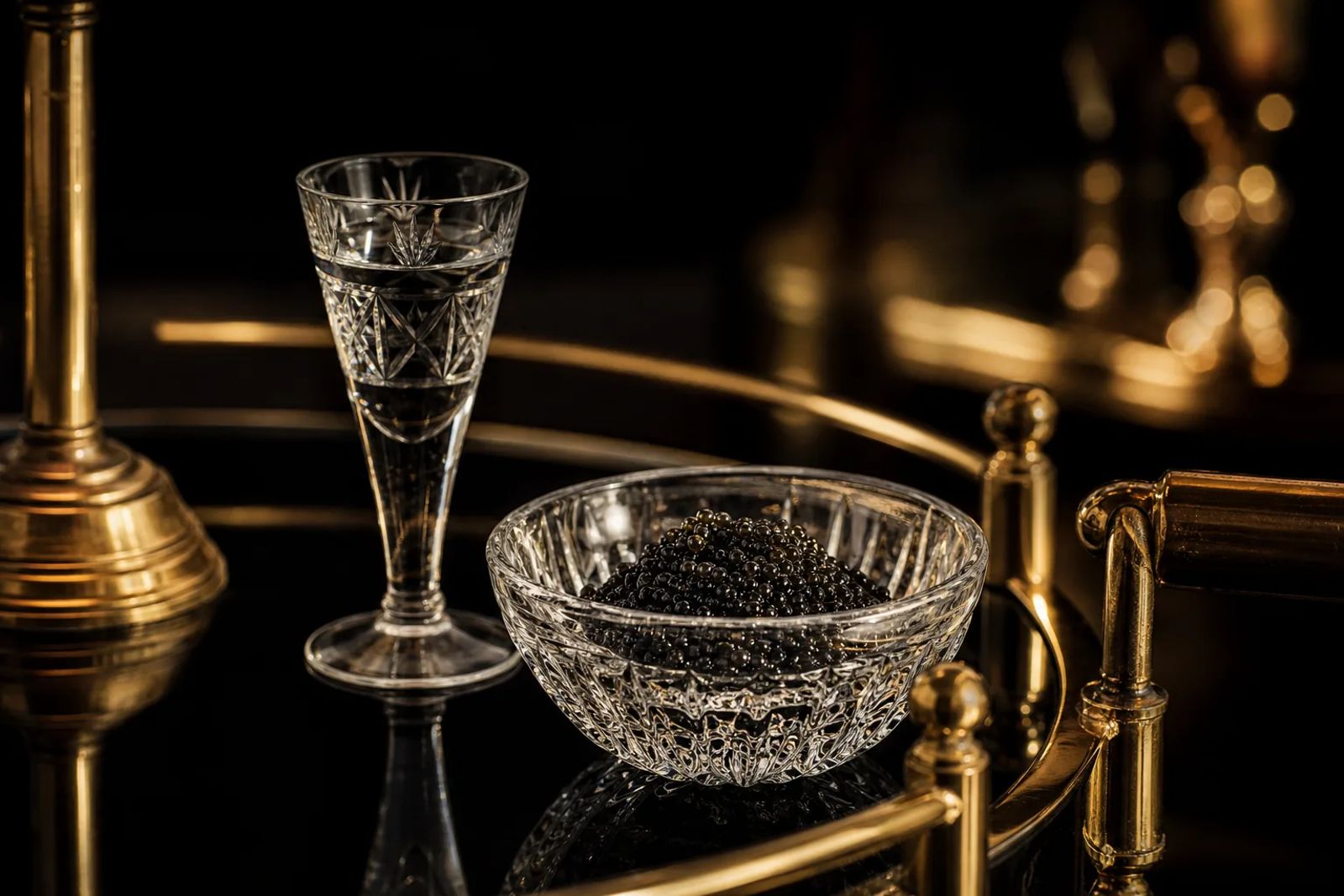
Caviar spooned onto the back of the hand, vodka from a roaming cart: by 17 January 2020, Broadsheet was reporting this announced service at Mimi’s in Sydney, before the caviar bump’s 2022 burst of attention.
The bump itself is simple: a small amount of caviar eaten directly from the back of the hand, usually from the hollow between thumb and forefinger. It became a restaurant and social media talking point. It is an invitation to taste differently, not a requirement for enjoying caviar.
Where did the caviar bump come from?
Hand tasting has a professional history older than the fashion for ordering a named “bump” in a bar or restaurant. Its exact birthplace and inventor remain undocumented.
In a Broadsheet interview published in November 2023, caviar importer Simon Johnson’s ambassador Lisa Downs recalled introducing chefs to hand tasting about ten years earlier. That recollection offers a glimpse of the practice before its public spotlight, rather than a date for its invention. The same article reaches further back, telling of fourteenth-century fish-market buyers receiving samples on their hands. That story is trade lore; the interview supplies no contemporary historical document to establish it.
By 8 June 2022, Eater New York was reporting caviar bumps on Temple Bar’s menu and an off-menu bump served with sake at Tokyo Record Bar. Drawing on The New York Times, the report distinguished the new customer trend from established trade sampling. These dated examples show the practice’s public visibility; they do not establish that everyone discovered it in summer 2022.
Nobody needs to perform a ritual to show that they know how to enjoy caviar.
Charles Spence’s 2022 review of eating with the hands also discussed caviar bumps as an Instagram phenomenon.
Does the hand improve the flavour?
The appeal is directness: caviar, skin, one mouthful.
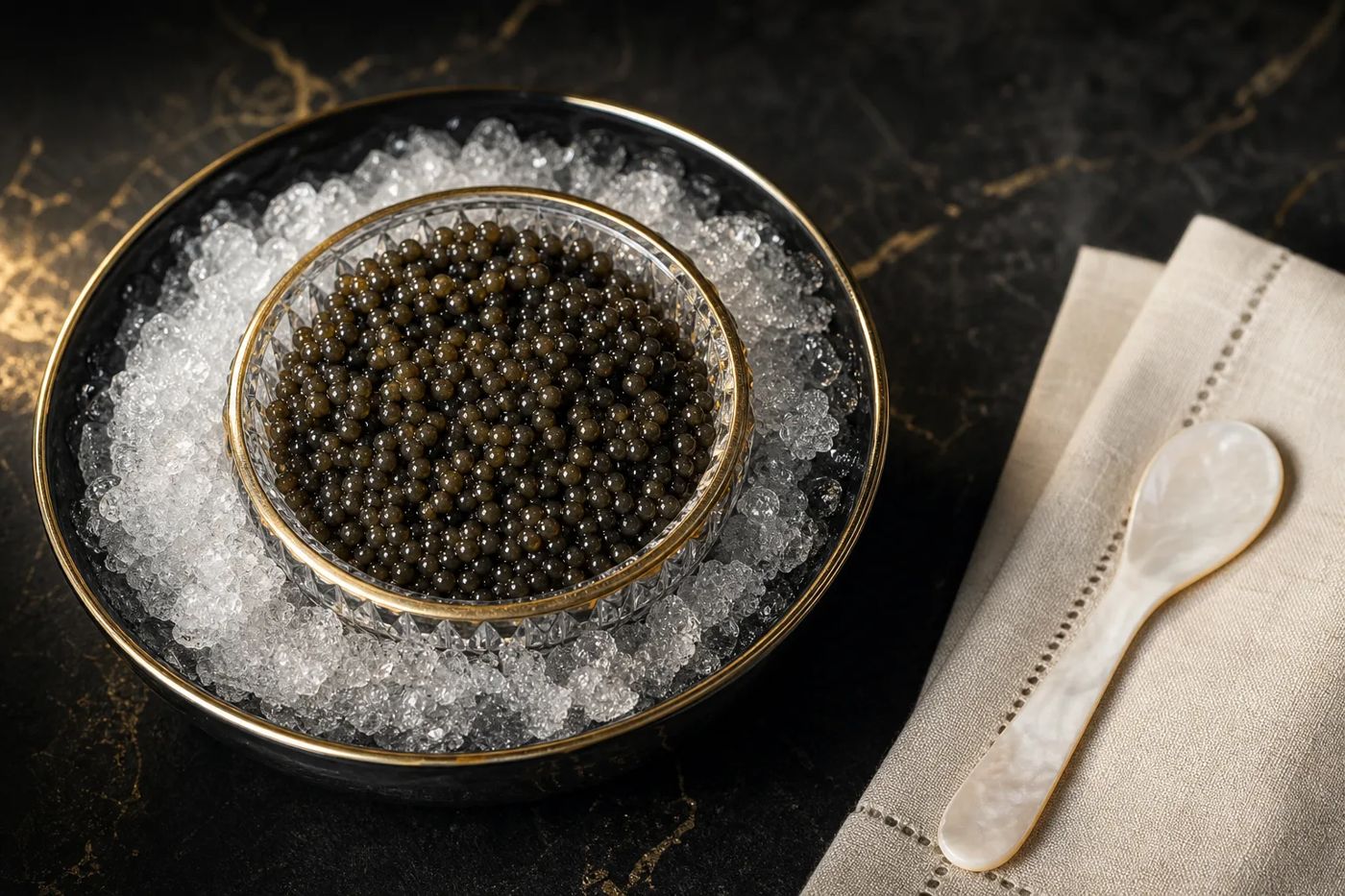
Two explanations recur. The first is that the hand avoids flavour from a spoon. It certainly removes the eating spoon, but that does not mean every spoon would have altered the taste. A clean mother-of-pearl spoon lets you taste the caviar without accompaniments or skin contact. The hand is another way to present the same bite.
The second explanation is that skin warmth may bring out the caviar’s aroma. Downs told Broadsheet that warming caviar makes its flavour more apparent. Supplier Browne Trading’s December 2023 guide similarly reports that some people credit natural hand temperature with a heightened experience. These are professional and commercial opinions, not results from a controlled comparison of identical caviar served on skin and on a spoon. No controlled caviar-specific trial establishing a sensory advantage for the bump appears in the cited sources.
Try a bump for its direct, informal character, rather than expecting skin to improve the roe. If the aim is to assess the caviar itself, the tasting guide sets out how to approach it.
How to do a caviar bump cleanly
Handwashing comes first. The UK Food Standards Agency advises washing with running water and liquid soap, cleaning the backs of the hands and around the thumbs, then rinsing and drying thoroughly. The UK NHS advises washing for around 20 seconds, including before eating or handling food. In the US, the Food and Drug Administration recommends warm water and soap for at least 20 seconds. Food Standards Australia New Zealand and the Food Safety Authority of Ireland also advise washing hands before handling food.
- Get ready. Wash and dry your hands before opening the caviar. Set out a clean serving spoon and somewhere to put it.
- Keep the tin chilled. Follow the producer’s storage instructions and take out only what you are about to serve. One bump is no reason to warm the whole tin.
- Spoon yourself a small bite. Place a little caviar in the clean, dry hollow on the back of your hand between thumb and forefinger. Keep it to one comfortable mouthful.
- Enjoy it straight away. Lift your hand and take the caviar directly into your mouth. Do not leave it on your skin for photographs or a prescribed warming ritual.
- Keep the tin separate. Never scoop from a shared tin with your hand. Do not return a spoon to the tin after it has touched your mouth or the used tasting patch. If contact occurs, use a fresh, clean utensil.
These steps apply handwashing and cross-contamination guidance to the bump; they are not an official endorsement of serving food on skin. Clean hands reduce contamination risks, but do not make food sterile. For chilled handling and time limits, see serving caviar safely.
When it suits the occasion
Our recommendation is a small, willing group with easy access to handwashing: a guided tasting, perhaps, or an informal meal where everyone understands the format. Ask before placing caviar on someone’s hand, and make a spoon an equally welcome option.
Skip the bump if washing facilities are awkward, guests want to keep their hands free, or the skin where the food would sit is broken or irritated. For anyone who dislikes eating from their skin, a spoon is the straightforward choice. Good hospitality makes room for both. Nobody needs to perform a ritual to show that they know how to enjoy caviar.
The documented restaurant examples often pair bumps with alcohol, but a drink is not part of the definition. For other formats, start with how to serve caviar; for the social conventions rather than the technique, see caviar etiquette.
Sources
- Broadsheet, Sarah Norris. At Long Last: After Six Years of Waiting, the Middle Floor of Merivale’s Coogee Pavilion Will Open in January. Published 4 December 2019; updated 10 December 2019. Contemporary preview documenting the planned hand service at Mimi’s. Source.
- Broadsheet, Callum McDermott. Why Are Caviar Bumps on So Many Menus Around Australia? Published 17 November 2023; updated 4 December 2023. Interview with Lisa Downs, including professional recollection, an unsupported historical origin story and the warming explanation. Source.
- Eater New York, Emma Orlow. Caviar ‘Bumps’ Are Apparently the Latest Luxury Flex in NYC. 8 June 2022. Dated reporting on Temple Bar and Tokyo Record Bar, explicitly drawing on The New York Times. Source.
- International Journal of Gastronomy and Food Science, Charles Spence. Interacting with food: Tasting with the hands. Volume 30, article 100620, 2022. Narrative historical review, particularly section 4 on caviar bumps and Instagram. Source.
- Browne Trading Company. What are Caviar Bumps? 11 December 2023. Supplier description of the hand position, mother-of-pearl serving spoon and attributed warming claim. Its advance warming instructions are not adopted here. Source.
- UK Food Standards Agency. Safer food, better business: Safe method, handwashing. Undated PDF, edition retrieved November 2026. Illustrated handwashing sequence, including backs of hands, thumbs, rinsing and drying. Source.
- UK NHS. How to wash your hands. Undated web guidance, version retrieved November 2026. Handwashing duration and occasions for washing, including before eating or handling food. Source.
- UK Government. Running a food business: Staff training, illness and hygiene. Undated web guidance, version retrieved November 2026. Personal hygiene and washing after activities that can contaminate hands. Source.
This piece was researched through dated restaurant reporting, an academic review, an attributed supplier explanation and UK public-authority hygiene guidance, keeping historical recollection and sensory opinion separate from established evidence.
Last checked: November 2026