
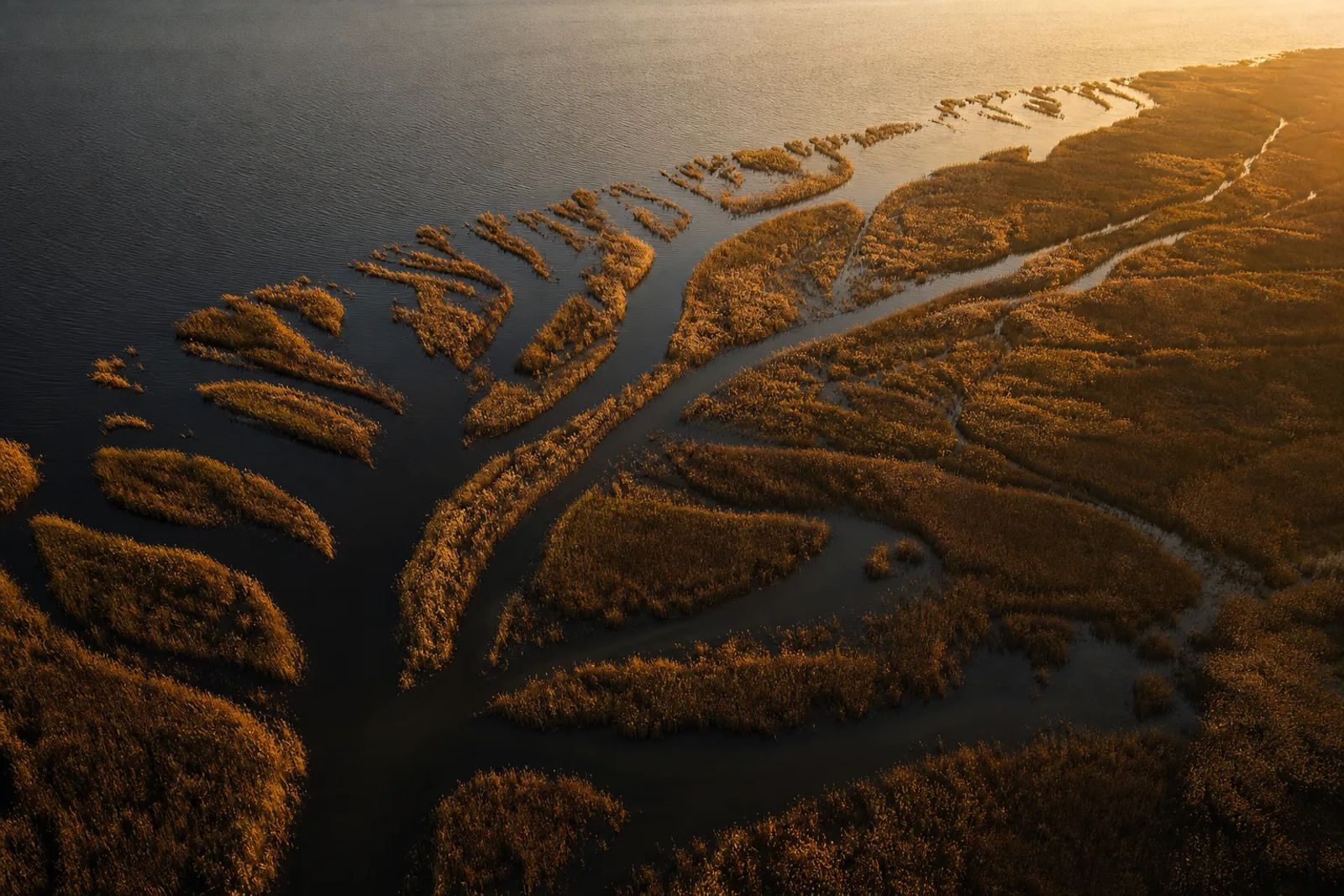
The Volga carried sturgeon to spawning grounds that dams would later cut off. It also supported the Caspian's dominant northern caviar fishery. That dependence on rivers runs through the history of the Caspian, Black Sea, Sea of Azov and Amur: many of these sturgeons feed at sea but must enter freshwater to spawn.
Today, their sturgeons have suffered severe declines, and the Caspian commercial moratorium continues through 2026. Wild caviar is not automatically unlawful worldwide. Legal harvest, permission to export and permission to import are three separate requirements.
Wild caviar regions at a glance
These are the principal documented sturgeon assemblages of each basin. Historical presence does not mean every species still reproduces throughout its former range, or that fishing is permitted today.
| Basin | Main rivers | Coastal or shared-river states | Documented sturgeons | Wild fishing, November 2026 |
|---|---|---|---|---|
| Caspian | Volga, Ural, Kura, Sefidrud | Russia, Kazakhstan, Turkmenistan, Iran, Azerbaijan | Beluga, Russian, Persian, stellate, ship, sterlet | Commercial moratorium extended through 2026 |
| Black Sea | Danube, Dnieper, Dniester, Rioni | Six coastal states listed below | Beluga, Russian, stellate, ship, European sturgeon; river-dwelling sterlet | National protections vary; Romania has an indefinite ban; Bulgaria announced one from January 2026 |
| Azov | Don, Kuban | Russia, Ukraine | Beluga, Russian, stellate; historical ship | Russia and Ukraine prohibit wild sturgeon fishing |
| Amur | Amur (Heilong Jiang), Ussuri, Songhua | Russia, China | Kaluga, Amur sturgeon | Protected species; Russian enforcement confirms an Amur sturgeon catch ban; China reports joint conservation releases with Russia |
Caspian: the Volga and Ural
'Caspian' describes a shared sea, not a single interchangeable stock of fish. Russian and Soviet fisheries in the north and Iranian fisheries in the south exploited sturgeons that shared feeding waters but returned to particular rivers.
Russia, Kazakhstan, Turkmenistan, Iran and Azerbaijan border the Caspian. Its principal historical caviar fisheries drew on beluga (Huso huso), Russian sturgeon (Acipenser gueldenstaedtii), Persian sturgeon (Acipenser persicus) and stellate sturgeon (Acipenser stellatus). Ship sturgeon (Acipenser nudiventris) and the freshwater sterlet (Acipenser ruthenus) complete the basin's native assemblage.
The Volga supported the dominant northern fishery, with the Ural another major spawning route. Farther south, the Kura and Iranian rivers sustained their own stocks and fisheries.
Volga dams cut access to spawning habitat. Excessive fishing, illegal harvest and pollution compounded the damage. When fisheries control broke down after the Soviet Union's dissolution, it accelerated a decline already under way. The poaching crisis and country restrictions have their own detailed accounts.
For 2026, Russia's fisheries agency reports that all five Caspian states agreed to continue the commercial sturgeon fishing and export prohibition. Authorised capture for research and artificial reproduction remains separate from commercial caviar fishing.

Black Sea: the Danube and other rivers
Romanian sturgeon catches fell from near 1,144 tonnes in 1940 to under 8 tonnes in 1995 to 2002, according to a conservation project published by the Convention on Migratory Species. Those figures measure fish, not caviar. They show the scale of the collapse.
The Black Sea coasts belong to Bulgaria, Romania, Ukraine, Russia, Georgia and Turkey. The Danube's main course also involves Germany, Austria, Slovakia, Hungary, Croatia, Serbia and Moldova; other historical spawning rivers include the Dnieper, Dniester and Georgia's Rioni.
Historically, the Danube held six native sturgeons: beluga, Russian, stellate, ship, European sturgeon (Acipenser sturio) and sterlet. The historical list does not establish that six viable populations survive today. River and delta fishing communities in Romania and Bulgaria worked the lower Danube, while fisheries elsewhere followed their own river stocks.
The Iron Gates dams severed migration routes, adding habitat loss to fishing pressure.
Romania's 2021 order prohibits sturgeon fishing indefinitely and restricts the sale of products from nationally caught wild sturgeon. Bulgaria's environment ministry announced an indefinite Danube and Black Sea ban effective from 1 January 2026. For Ukraine, Serbia, Moldova, Turkey, Georgia or Russia, check the relevant national law separately.
Azov: the Don and Kuban
Hatcheries could supply young sturgeon to the Sea of Azov. They could not recreate the lost river. Soviet fisheries and hatcheries became closely connected here as river regulation reduced natural reproduction. The Tsimlyansk dam on the Don and regulation of the Kuban changed both access to breeding grounds and downstream flow conditions.
Bordered by Ukraine and Russia, the Sea of Azov connects to the Black Sea through the Kerch Strait. Its principal caviar fisheries depended on beluga, Russian and stellate sturgeon moving between the shallow sea and the Don and Kuban. Ship sturgeon also appears in the basin's historical fauna, though that record does not reliably describe today's surviving stocks.
Russian fisheries guidance issued in February 2026 reiterates that sturgeon catches are prohibited. Ukraine's Azov fisheries authority states that catching wild sturgeon has been prohibited nationally since 2000.
Amur: a river shared by Russia and China
Kaluga is not beluga. The Amur's two characteristic caviar sturgeons are kaluga (Huso dauricus) and Amur sturgeon (Acipenser schrenckii); the kaluga species account explains the distinction.
Called Heilong Jiang in China, the Amur system includes the Ussuri and Songhua. Fisheries historically operated on both Russian and Chinese sides. Overfishing, illegal capture and pollution depleted their stocks.
Conservation must follow the fish across the border, through estuarine and river habitats, rather than stop at the limits of a national fishery. Russian prosecutors confirmed in June 2026 that Amur sturgeon is prohibited from capture. China reported joint kaluga and Amur sturgeon releases with Russia in July 2025.
What the conservation assessments say
Every sturgeon named here is either Critically Endangered or Endangered in the 2022 IUCN Red List update. Beluga, Russian, stellate, kaluga and Amur sturgeon are Critically Endangered, as are Persian, ship and European sturgeon in the same published update. Sterlet is Endangered. These global categories do not assess every river population separately.
For many of these fish, feeding at sea is only part of the life cycle. They must enter freshwater to spawn. A dam can block access to gravel spawning beds; dredging, altered flows and pollution can damage the habitat that remains within reach. Slow reproduction makes the loss of breeding adults especially consequential.
Restocking programmes operate in these regions, including joint Russian and Chinese releases in the Amur. The decisive measure is whether fish eventually reproduce naturally and sustain a wild population. Broodstock ancestry, genetic diversity and survival all matter, not just the number of juveniles released.
Every sturgeon named here is either Critically Endangered or Endangered in the 2022 IUCN Red List update.
Scientific names here follow CITES usage, including Huso huso and Huso dauricus. Brownstein and Near (2025) widened Huso and proposed Sinosturio dauricus. On 22 October 2025, the SSG and WSCS rejected both competing revisions, proposing Acipenser huso and Acipenser dauricus. This page retains CITES names.
From export quotas to today's restrictions
The history is a sequence of changing restrictions, not one uninterrupted worldwide ban. In June 2001, the CITES Standing Committee agreed emergency measures for Caspian stocks. These included a halt to harvesting in Azerbaijan, Kazakhstan and Russia for the remainder of that year, with measures and conditions differing by country.
Caspian export quotas did exist in 2004. On 8 October 2004, CITES announced quotas that included a combined beluga caviar allocation of 4,425 kg. That figure was an authorised export ceiling, not the weight of fish caught or caviar actually exported.
Later records distinguish an explicit zero quota from the absence of a published quota. UNODC's 2016 account describes the wild Caspian export quota as reaching zero in 2011. TRAFFIC's 2018 review reports no sturgeon export quotas submitted since 2011, apart from an unrelated live-fish allocation. Russia's fisheries agency reports that the Caspian prohibition on commercial fishing and exports of wild sturgeon caviar and meat was extended through 2026.
Keep four legal questions separate:
- May the fish be caught?
- May its products be sold domestically?
- May those products be exported?
- Will the destination admit them?
A zero export quota answers the export question for the specified stock and period. Possession and domestic sale remain subject to their own rules.
Can wild caviar be imported today?
Wild origin alone does not settle whether caviar can enter a country. Check the species, stock, export quota and destination's requirements before considering any import.
In the EU, commercial imports from shared sturgeon stocks require established export quotas and the relevant wildlife-trade permits. UK guidance requires CITES documents, subject to exemptions including 125 g of individually labelled caviar as personal effects. Northern Ireland has distinct arrangements. Food controls and other import restrictions also apply.
The US adds species-specific protections to CITES requirements. Beluga is governed by the Endangered Species Act special rule in 50 CFR 17.44(y). US notices suspended beluga caviar imports from Caspian states on 30 September 2005 and Black Sea states on 28 October 2005. Executive Order 14068 (2022) bars US imports of Russian origin seafood, including caviar. Switzerland, the UAE, China, Japan, Russia and Australia also apply national import requirements.
On a label, CITES source code W means taken from the wild. It records the declared origin; supporting harvest and permit records establish the basis for lawful trade, while the code alone cannot authenticate the contents. Neither a regional name, a processing address nor an appealing account of river fishing can replace those records.
For the wider geography, start with caviar producing countries, which separates modern production from these historical fisheries.
Sources
-
FAO. Chebanov, M. S. and Galich, E. V. Sturgeon Hatchery Manual. Fisheries and Aquaculture Technical Paper 558, reprinted 2013. Species accounts and hatchery conservation context.
Read at fao.org -
Pikitch, E. K. and colleagues. Status, trends and management of sturgeon and paddlefish fisheries. Fish and Fisheries, volume 6, 2005, pages 233 to 265. Regional fisheries, migration barriers and historical declines.
Read at caviaremptor.org -
Convention on Migratory Species. Marking and monitoring system for Danube sturgeons. Project account, undated. Historical catches, native species and conservation pressures.
Read at cms.int -
North American Sturgeon and Paddlefish Society. IUCN Assessment 2022. Published 1 August 2022. Reproduction of the 2022 conservation-category table.
Read at nasps-sturgeon.org -
World Sturgeon Conservation Society. Bronzi, P. IUCN SSG summary report. Published 13 November 2025, reporting the meeting of 22 October 2025.
Read at wscs.info -
Russian Federal Agency for Fisheries. Conservation of valuable fish stocks: Caspian countries agree to extend the commercial sturgeon fishing ban [translated title]. Published 27 November 2025, concerning the 2026 agreement.
Read at fish.gov.ru -
Romanian legislative portal. Order No. 85/662/2021 concerning measures for the restoration and conservation of sturgeon populations in natural fish habitats [translated title]. Published April 2021, particularly Article 3.
Read at legislatie.just.ro -
Bulgarian Ministry of Environment and Water. An indefinite national ban on fishing for sturgeon species has been introduced in the Bulgarian section of the Danube River and the Black Sea. Published 10 December 2025.
Read at moew.government.bg -
Russian Federal Agency for Fisheries, Azov and Black Sea territorial administration. The Tsimlyansk fisheries protection department reminds fishers [translated title]. Published 2 February 2026.
Read at rostov.fish.gov.ru -
Amur Basin Environmental Prosecutor's Office. Criminal proceedings initiated in Khabarovsk Territory following illegal capture of aquatic biological resources [translated title]. Published 1 June 2026.
Read at epp.genproc.gov.ru -
Heilongjiang Provincial Department of Agriculture and Rural Affairs. Provincial aquatic animal conservation centre successfully rescues two kaluga [translated title]. Published May 2025.
Read at nynct.hlj.gov.cn -
Heilongjiang Provincial Department of Agriculture and Rural Affairs. 150,000 kaluga return to the Heilong Jiang [translated title]. Published July 2025, describing joint Russian and Chinese releases.
Read at nynct.hlj.gov.cn -
CITES. Forty-fifth meeting of the Standing Committee: summary report. Paris, 19 to 22 June 2001. Caspian conservation measures and conditions.
Read at cites.org -
CITES. CITES authorizes 2004 export quotas for Caspian Sea caviar. Secretariat press release, 8 October 2004, including the quota table for 2001 to 2004.
Read at cites.org -
United Nations Office on Drugs and Crime. World Wildlife Crime Report 2016, chapter 9, seafood. Historical Caspian quota discussion and Figure 8.
Read at unodc.org -
TRAFFIC. Harris, L. and Shiraishi, H. Understanding the global caviar market. 2018, particularly Table 20 and its accompanying note.
Read at files.worldwildlife.org -
European Commission. EU Wildlife Trade Reference Guide, Annex XIV, online edition, undated. Shared-stock quotas, caviar labels and source code W.
Read at environmental-data.ec.europa.eu -
UK Government, APHA and Defra. Check if you need a CITES permit to import or export endangered species. Guidance on CITES permits and exemptions.
Read at gov.uk -
United States Code of Federal Regulations. 50 CFR 17.44(y): special rule for beluga sturgeon. Online text retrieved November 2026, hosted by Cornell Legal Information Institute.
Read at law.cornell.edu -
United States Code of Federal Regulations. 50 CFR 23.71: How can I trade internationally in sturgeon caviar? Online text retrieved November 2026, hosted by Cornell Legal Information Institute.
Read at law.cornell.edu -
NOAA. 12-month finding and proposed endangered listing of five species of sturgeons under the Endangered Species Act. Federal Register, 31 October 2013, pages 65249 to 65263. Biological and historical background.
Read at govinfo.gov
Last checked: November 2026