
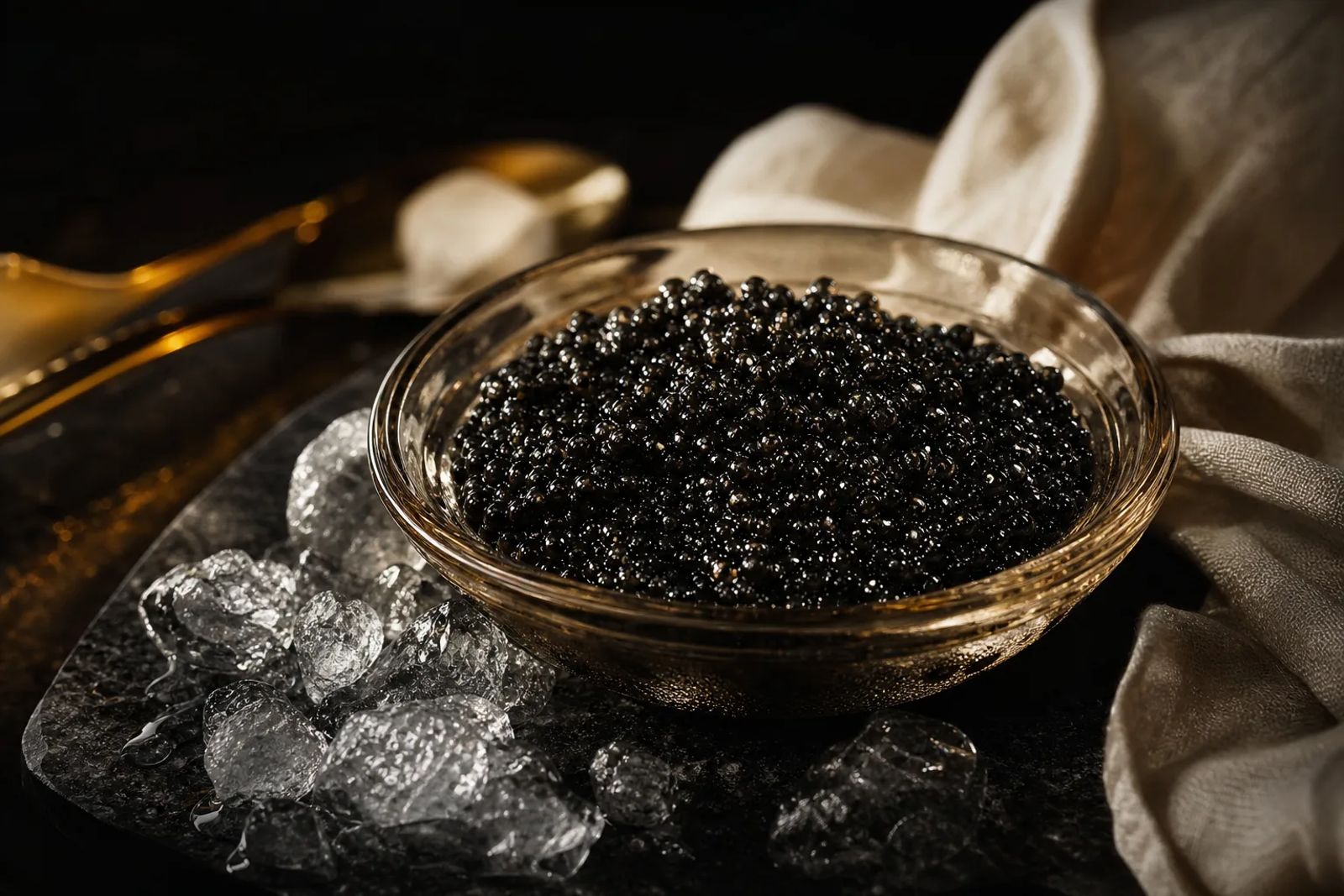
Caviar can look, smell and taste normal while carrying dangerous contamination. Even botulinum toxin gives no reliable sensory warning: the US Department of Agriculture's Food Safety and Inspection Service (FSIS) warns that implicated foods may smell and taste normal. The spoon is no safety test.
Discard caviar kept warm too long, packed in a swollen or leaking container, or showing an objectionable smell or appearance. In the UK, discard it after its use-by date; elsewhere, follow national guidance and the product instructions. Never taste it to decide whether it is safe.
- Opening a container can shorten its usable life. Follow the label's after-opening instructions.
- Check recall notices, the date and the storage history.
- Photograph the packaging and batch details before disposing of a suspect product.
Check the date and storage history
Start with the label, not the spoon. The UK's Food Standards Agency (FSA) says a use-by date concerns safety: do not eat food after it, however appealing it looks or smells. That date also assumes correct storage. A container left warm does not become safe because it is still within date.
A best-before date concerns quality rather than safety, under FSA guidance. With an imported tin, establish what the manufacturer's date means rather than automatically reading it as a British use-by date. Follow the handling instructions; if either the date or the instructions are unclear, ask the seller before serving.
After opening, use whichever comes first: the stated after-opening limit or the original date. Write the opening date on a separate note, where it will survive the removal of the outer packaging. For everyday refrigeration advice, see storing caviar.
Caviar spoilage signs: when to put down the spoon
Sour, rancid or ammonia-like odours mean rejection, not a tentative taste. The US Food and Drug Administration (FDA) identifies these smells as warning signs in spoiled seafood. Codex Alimentarius's Standard for Sturgeon Caviar likewise identifies persistent objectionable odours associated with decomposition or oxidation as defects.
Listeria monocytogenes can grow in chilled conditions, and food contaminated with food-poisoning microorganisms can retain its normal appearance, smell and taste.
Codex lists broken eggs and fluid as quality defects, but no particular number of burst eggs is a validated test for food poisoning. A 2024 study stored Acipenser gueldenstaedtii caviar at minus 4°C for six weeks and reported membrane breakdown and increased viscosity, using microscopy, chemical and molecular analyses and a sensory panel of 15 people.
| Problem | Likely cause | What to do |
|---|---|---|
| Sour, ammoniacal or rancid smell | Decomposition or oxidation; smell cannot identify the organism | Discard. Do not taste. |
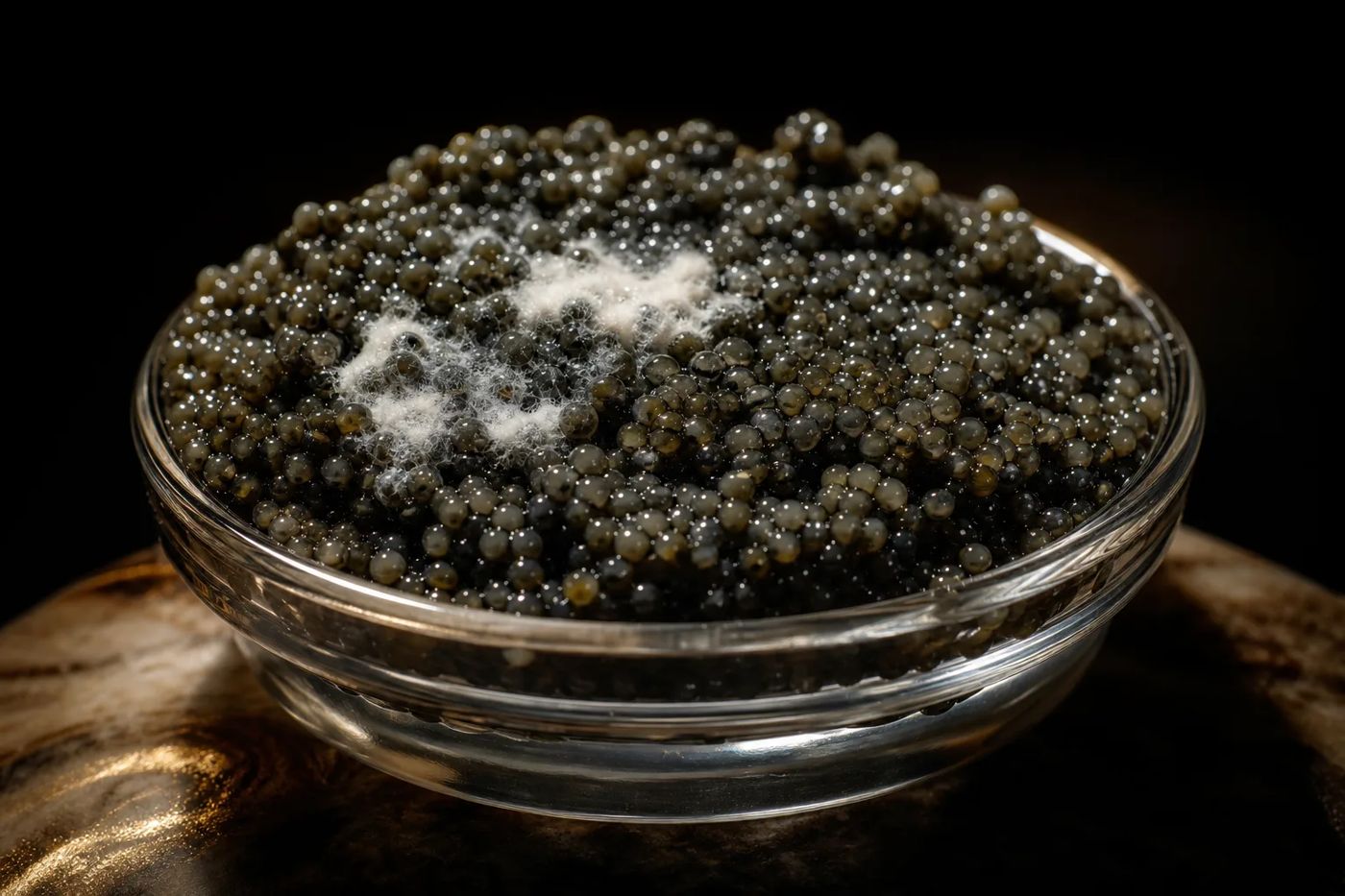
| Visible mould | Fungal growth | Discard everything. Do not skim. |
| New slime or markedly sticky deterioration | Consistent with deterioration, but not a diagnosis | Reject. Do not serve. |
| Many broken eggs with substantial fluid | Quality defect; appearance cannot establish the cause | Stop serving. Contact the seller. |
| Swollen or leaking container | Package failure or gas formation; cause needs investigation | Do not open or taste. Discard or follow authority instructions. |
Excess cloudy liquid is sometimes described as a spoilage sign. Cloudiness alone, however, is not a validated caviar-specific microbial test, and clear liquid does not establish safety either. If the change is conspicuous and unexplained, stop serving and ask the seller.
For packaging faults, see why caviar tins swell or leak. Do not prise open a suspect tin simply to investigate its smell.
What can be normal
Caviar need not be jet black. Codex describes grey, black and yellowish colours, and permits brownish and greenish shades too. A different colour from your previous purchase does not, on its own, signal spoilage. Nor can a website photograph establish how the contents of a particular container should look.
Aroma deserves the same care in interpretation: not every marine note is one of the sour, rancid or ammoniacal smells that warrant rejection. See normal aroma versus quality problems for that distinction, and off-flavours and texture problems for defects affecting eating quality rather than a confirmed safety hazard. Look at what has changed, and set that alongside the documented storage history.
The risks your senses cannot detect
A cold fridge slows many hazards. It does not sterilise caviar. Listeria monocytogenes can grow in chilled conditions, and food contaminated with food-poisoning microorganisms can retain its normal appearance, smell and taste. An intact seal and an agreeable aroma cannot settle the safety question.
Do not try to rescue suspect caviar by rinsing it or folding it into a cooked dish.
Pregnant people, older adults and people with weakened immune systems need particular care over Listeria, according to the European Food Safety Authority (EFSA). Food Standards Australia New Zealand (FSANZ) also identifies young children as especially vulnerable to serious foodborne illness. Read caviar food safety and who should take care for the fuller risk discussion, and ask a doctor or midwife about personal circumstances.
When time and temperature mean discard
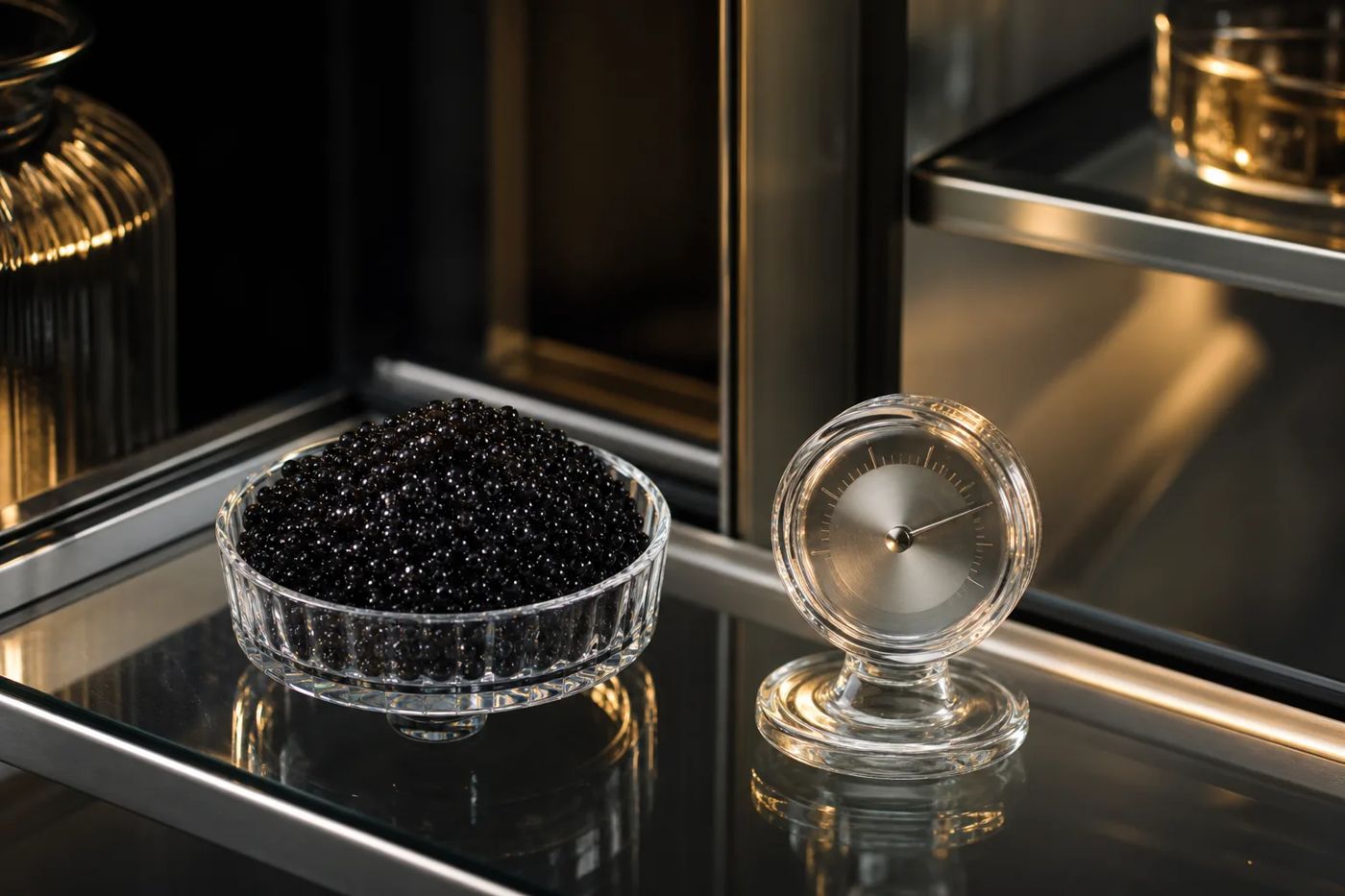
Measure the fridge temperature. Touch is no substitute for a thermometer, and the product's stated storage temperature is the starting point. Codex gives 2 to 4°C (36 to 39°F) for caviar packaging, storage and retail. This is an international reference standard, rather than a universal home-storage law; the national guidance below is general food guidance, not a shelf life established for every caviar.
-
UK: FSA home guidance for England, Wales and Northern Ireland recommends a fridge between 0 and 5°C (32 to 41°F). Keep chilled food out for the shortest possible time, with a maximum of four hours during preparation. That maximum is a limit, not a serving target.
-
US: FDA recommends refrigeration at 4°C (40°F) or below. Discard perishable seafood left unrefrigerated for more than two hours, or more than one hour when the surroundings exceed 32°C (90°F).
-
Australia: FSANZ's guide for food businesses counts cumulative time between 5 and 60°C (41 and 140°F). Under two hours, food may be refrigerated or used. Between two and four hours, it may be used immediately, but must not be refrigerated again. Beyond four hours, discard it. This guidance for potentially hazardous food does not override stricter product instructions.
-
EU: follow the label and your country's food authority guidance. EFSA assesses risks; it does not set a single consumer serving clock to replace national advice.
A warm delivery needs answers before it reaches the table. If you cannot establish that the caviar has remained within its required storage conditions, do not serve it. Contact the seller with the delivery details, and discard the product if safe handling cannot be established. For keeping portions cold at the table, see serving caviar safely.
What to do with a suspect product
Stop serving immediately and keep others from eating it. Before disposal, photograph the container, date, batch or lot code and any visible problem. Do not open swollen packaging to get a better picture.
Keep the receipt and delivery information, including the arrival time and what you know about the product's temperature. Specific details give the seller and investigators more to work with than “it seemed wrong”.
Contact the seller promptly with the problem and packaging details. If you suspect a safety issue, contact the relevant food authority too: an offer of a replacement does not resolve that concern. Ask whether the authority wants the packaging or remaining product retained for investigation, then follow its instructions for safe retention or disposal.
- UK: report concerns to the local council's food safety or environmental health team. The FSA directs complaints about shops, restaurants and online orders to the authority where the business is located. Scotland has Food Standards Scotland alongside local councils.
- US: report packaged caviar concerns through FDA's reporting service. For suspected food poisoning or restaurant food, contact the city or county health department. FSIS handles meat, poultry and processed egg products, not ordinary fish roe.
- EU: contact your country's national or local food enforcement authority. EFSA is not an inspection service. Ireland's Food Safety Authority, for example, provides a consumer complaint route.
- Australia: FSANZ directs complaints to state or territory food authorities or local councils. Supply the product and manufacturer names, package size, codes, dates, and the shop and purchase details.
If anyone becomes ill, seek medical advice and report the suspected food exposure. Problems with swallowing, breathing or vision after eating require urgent medical assessment. Get help immediately rather than waiting for the seller's response or a laboratory result.
Sources
- Food Standards Agency. Best before and use-by dates. Now on GOV.UK, checked November 2026. Source.
- FDA. Selecting and Serving Fresh and Frozen Seafood Safely. Live consumer guidance, retrieved November 2026. Source.
- FAO/WHO Codex Alimentarius Commission. Standard for Sturgeon Caviar, CXS 291-2010, adopted 2010, amended 2013, 2018 and 2024, as stated in the official PDF retrieved. Sections 2.2, 2.3 and 9. Retrieved through FAO's official document service.
- Ocean University of China and collaborating institutions. Multi-omics combined approach to analyze the mechanism of flavor evolution in sturgeon caviar (Acipenser gueldenstaedtii) during refrigeration storage. Research article, 2024. Full text.
- USDA FSIS. Molds on Food: Are They Dangerous? Official live guidance, checked November 2026. Source .
- USDA FSIS. Do foods containing botulism have a bad odor or taste? Updated 18 September 2024. Source.
- USDA FSIS. Is food in damaged cans dangerous? Undated live guidance, retrieved November 2026. Source.
- FSANZ. Microorganisms and foodborne illness. Live consumer guidance, retrieved November 2026. Source.
- EFSA. Listeria: Food Safety Risks and EFSA's Scientific Insights. Live topic page, retrieved November 2026. Source.
- Food Standards Agency. How to chill, freeze and defrost food safely. Published 18 December 2017; live edition retrieved November 2026. Source.
- FSANZ. 2-hour / 4-hour rule. Live guidance, retrieved November 2026. Source.
- Food Standards Agency. Report a problem with food hygiene ratings, section “Report a food safety or hygiene issue”. Now on GOV.UK, checked November 2026. Source.
- GOV.UK. Find your local food safety team. Undated live service, retrieved November 2026. Source.
- FDA. Report a problem to the FDA. Reporting service, updated 14 March 2026 according to the retrieved page. Source.
- FoodSafety.gov. How to Report a Problem with Food. Reviewed 15 November 2024. Source.
- EFSA. External complaint. Undated live guidance explaining EFSA's remit, retrieved November 2026. Source.
- Food Safety Authority of Ireland. Contact Us. Live page identifying the consumer complaint route, retrieved November 2026. Source.
- FSANZ. Food complaints. Live consumer guidance, retrieved November 2026. Source.
- CDC. Symptoms of Botulism. Consumer health guidance, retrieved November 2026. Source.
This piece was researched using official food-safety guidance, the retrieved Codex standard and peer-reviewed caviar deterioration research, keeping sensory quality defects separate from evidence of safety.
Last checked: November 2026