
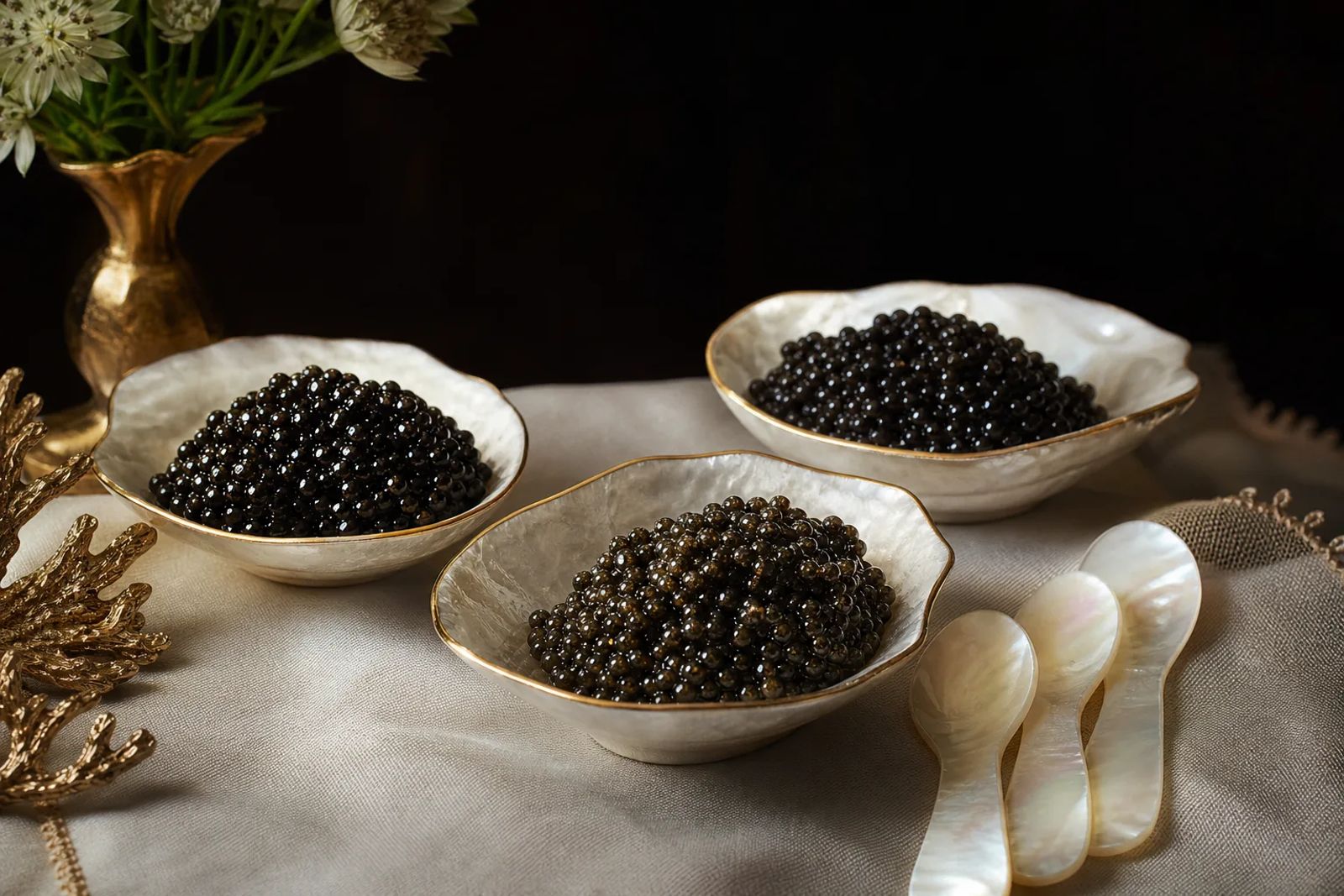
Several small tins put caviar species and styles side by side. A mother-of-pearl spoon or a tasting sheet may join them: sellers list these among possible kit contents 7,8. The pleasure lies in the details, from bead size and firmness to saltiness and aftertaste. Choose a kit for clear sample information, freshness, salt level and chilled handling. The presentation comes second.
What is inside a caviar tasting kit?
The tins are the centrepiece. Caviar tasting kits bring together several small samples to compare species or styles, sometimes with spoons, tasting notes or both.
Descriptions from two sellers 7,8 list wooden or mother-of-pearl spoons alongside the tins. Other contents include a tin opener, printed tasting notes or a tasting sheet, and blinis. Check the contents of the particular set before ordering; these examples describe what sellers offer, rather than recommended selections.
An opener and suitable spoons earn their place. A large collection of accompaniments is unnecessary for the comparison itself. Start with the tins and their information, then use the accessories guide to separate useful tasting equipment from things that merely fill the box.
Check each tin, not just the box
A meaningful comparison needs clear information for every sample. If photographs show only the outer box, ask for pictures of the tins or written specifications.
- Species: find the scientific name for every sample. Ossetra, Royal and Reserve are trade names; on their own, they do not establish that the tins contain different species.
- Origin: ask where each sample's roe was harvested and first processed. The brand's nationality, repacking location or a CITES origin code alone may not establish this.
- Traceability: check the full CITES label on each tin, rather than a general statement on the gift box. Look for the species code, source code, country of origin, relevant year, plant code and lot identification number. For repacked caviar, check the repacking country and plant, plus the lot identification number or, for re-exports, the CITES import document number.
- Dates: request closely matched packing dates, and ask when the roe was harvested and salted. Repacking dates and use-by dates serve different purposes; neither alone establishes equal maturation.
- Ingredients and handling: compare declared salt content, ingredients and any heat treatment. Confirm chilled-delivery arrangements, storage instructions and enough remaining shelf life for your tasting day.
On an original processing label, the CITES year means the harvest year; on a repacker's label, it means the repackaging year. It is not a precise packing date. The label records traceability information rather than independently verifying the contents. The international framework is Resolution Conf. 12.7 (Rev. CoP17), Annex 1. Domestic requirements depend on national implementation, so consult the relevant wildlife authority for local labelling rules.
Salt, freshness and a fair comparison
To discover which species you prefer, keep processing and condition as similar as possible. Saltiness is a sensory characteristic, but a marked difference adds another variable to a species comparison. Compare salt figures on the same basis, ideally grams of salt per 100 g. EU nutrition labels express salt as sodium multiplied by 2.5, rather than the salt added during processing.
The latest date on a lid is only part of the freshness story. Ask about time since salting, maturation and storage history. Published research has examined changes in refrigerated caviar through sensory assessment alongside chemical and physical methods. For a home kit, matching these conditions helps narrow the possible reasons for a difference you notice.
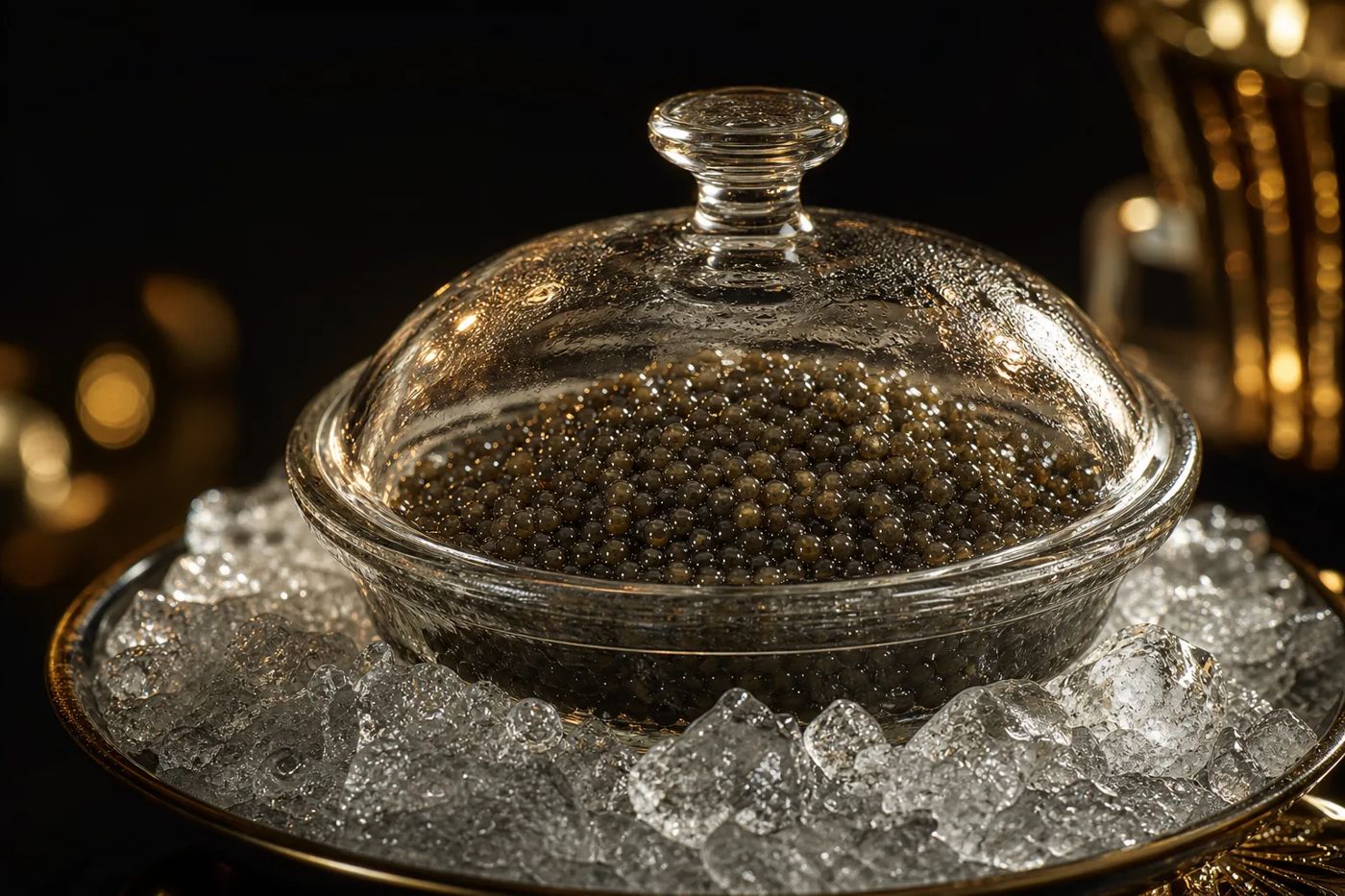
Give the cold chain as much attention as the selection. This means temperature controlled handling from processing through storage and delivery to your refrigerator. Ask about insulated packaging, cooling materials and arrangements for delays, then promptly follow each product's storage instructions on arrival. Never taste questionable food to decide whether it is safe. US FoodSafety.gov guidance warns that harmful contamination need not alter smell, appearance or flavour.
Build your own kit around one question
Different species, or different styles of the same fish? Choose your question, then start with two or three samples. For a species comparison, choose different named species, such as Siberian sturgeon (Acipenser baerii) and Russian sturgeon (Acipenser gueldenstaedtii). Ask the supplier which available batches contrast in bead size or firmness. The species-to-taste guide helps frame the choice; a species name alone cannot guarantee a flavour.
Leave enough for a return taste: fewer varieties and a second impression are more useful than a crowded selection tasted only once.
For a style comparison, choose two styles from the same species. If salting or maturation deliberately differs, make that the subject of the tasting and record it clearly. The result will describe those particular samples, rather than every caviar made from that fish.
Plan quantities by dividing each tin's net weight by the number of tasters. A 30 g tin, about 1 oz, shared by three people gives each person 10 g of that sample. That is useful planning arithmetic, not a required portion. Leave enough for a return taste: fewer varieties and a second impression are more useful than a crowded selection tasted only once.
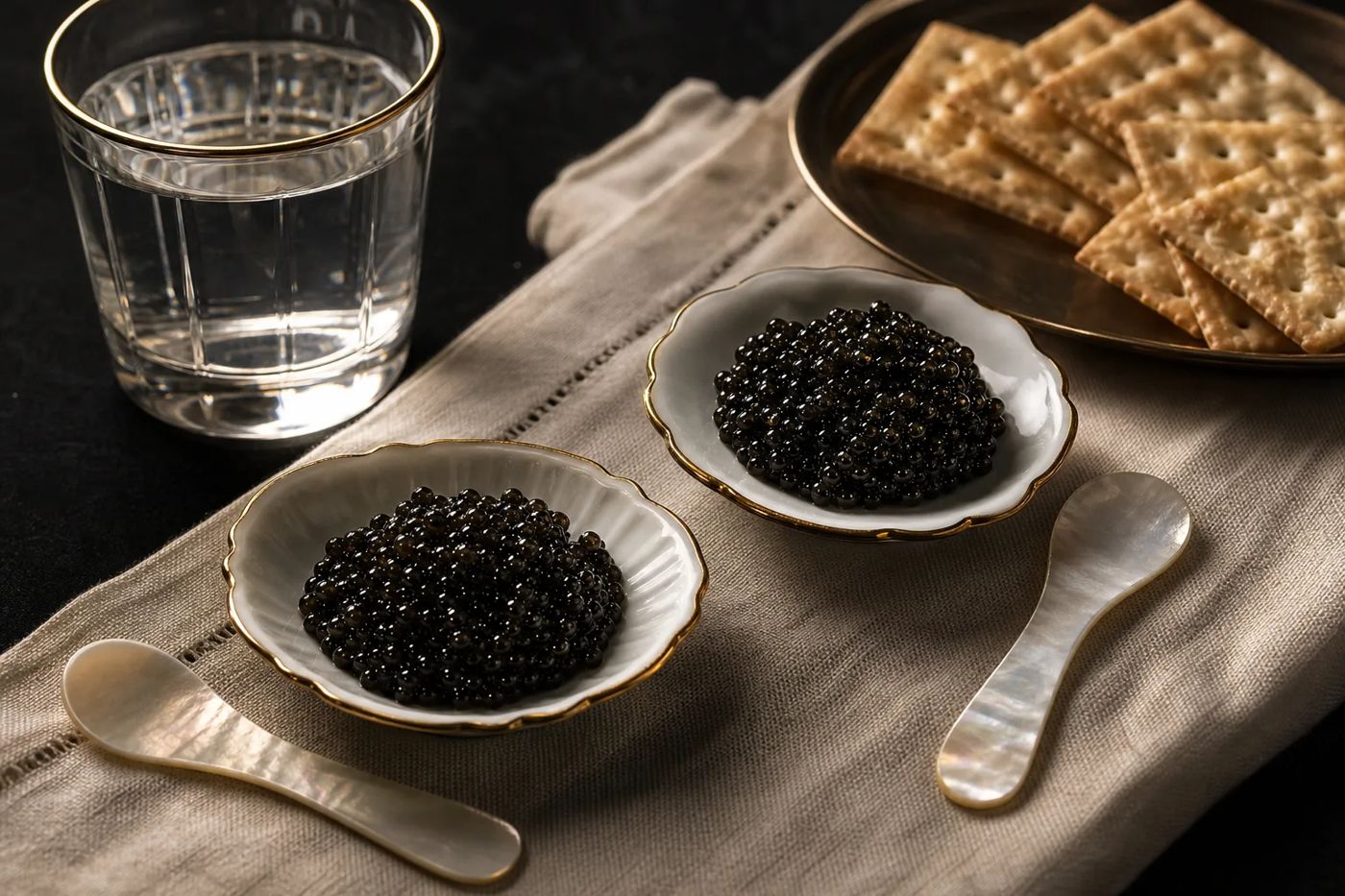
Add clean wooden or mother-of-pearl spoons and separate serving utensils for each sample. Put out plain water and unsalted crackers to cleanse the palate, saving toppings for a later pass. A published caviar panel used water and unsalted crackers between samples, a practical approach that also suits a home tasting.
Make the tasting sheet work for you
Download the printable tasting sheet before opening the tins, with one copy for each taster. Keep sample identities and batch details beside the notes, so every observation can be traced to its tin. Record declared salt levels and relevant dates separately from your sensory impressions.
Use the same categories throughout: appearance, aroma, bead firmness, saltiness and aftertaste. Then add a separate preference note. Write your impressions before reading the supplier's tasting notes; those are the supplier's descriptions, not flavours you are obliged to find. For formal assessment rather than personal preference, see professional tasting and scoring.
On the first pass, taste the samples plain, moving from milder to more assertive according to the supplier's batch descriptions. Use equal portions and rinse between samples. The full method is in hosting a tasting at home. Keep your notes. Use them to give the next kit a sharper question than simply which tin you liked most.
Sources
- CITES. Conservation of and trade in sturgeons and paddlefish, Resolution Conf. 12.7 (Rev. CoP17), 2016, particularly Annex 1, paragraphs a to e, and Annex 2. CITES text retrieved from the US Government's Regulations.gov repository. Resolution text.
- CITES Secretariat. Resolutions of the Conference of the Parties in effect after the 20th meeting, post-CoP20 index, checked November 2026. Confirms that Resolution Conf. 12.7 remains Rev. CoP17. Resolutions index.
- US Fish and Wildlife Service. 50 CFR 23.71: How can I trade internationally in sturgeon caviar?, 2025 annual edition, paragraphs (b)(2) and (b)(3). Used to corroborate processing and repackaging label distinctions, not to present US rules as global requirements. Official CFR publication.
- FoodSafety.gov. Tips for Meal Kit and Food Delivery Safety, live guidance, undated edition retrieved November 2026. US consumer guidance on chilled delivery, receipt and unsafe food. Guidance.
- Liu, L., et al., Ocean University of China and collaborating organisations. Multi-omics combined approach to analyze the mechanism of flavor evolution in sturgeon caviar (Acipenser gueldenstaedtii) during refrigeration storage. Food Chemistry: X, volume 23, article 101688, 2024. Article.
- Han, G., et al., Ocean University of China and industry. Salivary emulsification shapes flavor release and perception in sturgeon caviar during oral processing. Food Chemistry: X, volume 29, article 102841, 2025, particularly section 2.2.1. Article.
- Kaviari. Tasting Trio Gift Set, live product specification, undated edition retrieved November 2026.
- Simon Johnson Providore. Caviar Tasting Hamper, live product specification, undated edition retrieved November 2026.
Last checked: November 2026