
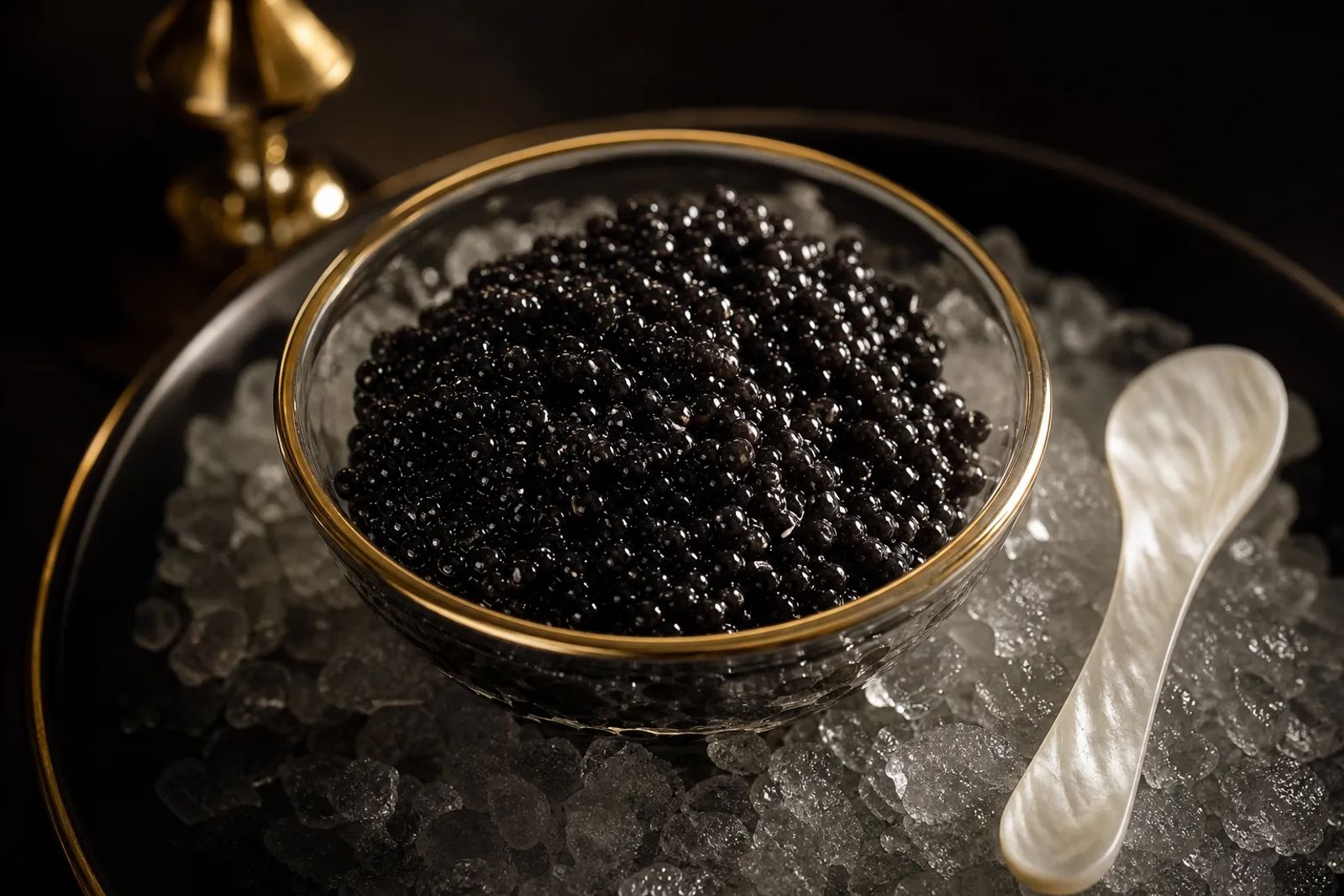
Royal on the front of a tin does not tell you which fish supplied the roe. Buying by name is a common beginner mistake. Others follow in the kitchen: losing track of refrigeration and handling the eggs too heavily once the tin is open. Check the label, keep the caviar properly chilled and start with a small, plain spoonful. For the essentials, begin with the beginner guide, then use this checklist.
Buying mistakes: look beyond the grand name
Choosing a name, not a fish. Royal is a trade name, not a species or a legal grade. Different caviars can carry it. Ask for the fish or hybrid and its scientific identification: those details tell you more about what you are buying than the name on the front.
Mistaking the brand's country for the roe's origin. A familiar address is easy to spot; the production details deserve closer attention. Check the stated country of origin, which is separate from the repacking location on a CITES wildlife-trade label. The label supports traceability rather than independently verifying the contents. Ask the supplier to explain anything unclear.
Buying before planning the meal. A larger tin or an early delivery is little help if you cannot finish the caviar within its instructions. Before ordering, check the use-by date, storage temperature and after-opening limit. Ask how the seller keeps the caviar chilled during storage and delivery. Buy for a particular occasion, be ready to receive it promptly and refrigerate it straight away.
Storage mistakes: keep the cold under control
Caviar is not an ordinary cupboard preserve. Follow the product's validated storage instructions and check the temperature with a fridge thermometer, not just the dial.
A generous heap can empty the tin before everyone has tasted it.
Codex's international reference text gives 2 to 4°C (36 to 39°F) for packaging, storage and retail, and -4 to 0°C (25 to 32°F) for wholesale storage and transport. Codex is not itself national law, and these commercial ranges are not instructions to turn a home fridge below zero.
At home, the relevant refrigerator guidance comes from food safety authorities: FSA guidance for England, Wales and Northern Ireland recommends 0 to 5°C (32 to 41°F); US FDA guidance recommends 4°C (40°F) or below. Follow the caviar label if it requires a narrower range.
| Mistake | Why it happens | Fix |
|---|---|---|
| Using the fridge door | Small tins fit neatly, but the door is warmer. | Use an interior position that meets the label's temperature. Check with a thermometer. |
| Freezing fresh caviar without guidance | It seems a simple way to extend its life, but texture can suffer. | Freeze only with suitable producer instructions for that product. |
| Leaving an opened tin uncovered | The seal is broken, so the lid seems unnecessary. | Cover, refrigerate promptly and follow the after-opening limit. |
Codex makes freezing conditional: it is “not permitted unless the deterioration of quality is avoided”. Petrossian, for example, advises against freezing its caviar because it alters texture. See whether you can freeze caviar.
The after-opening limit is specific to the product. There is no single number of days to apply to every tin. Follow the home storage guide for the full method, rather than trying to stretch an opened tin's date.
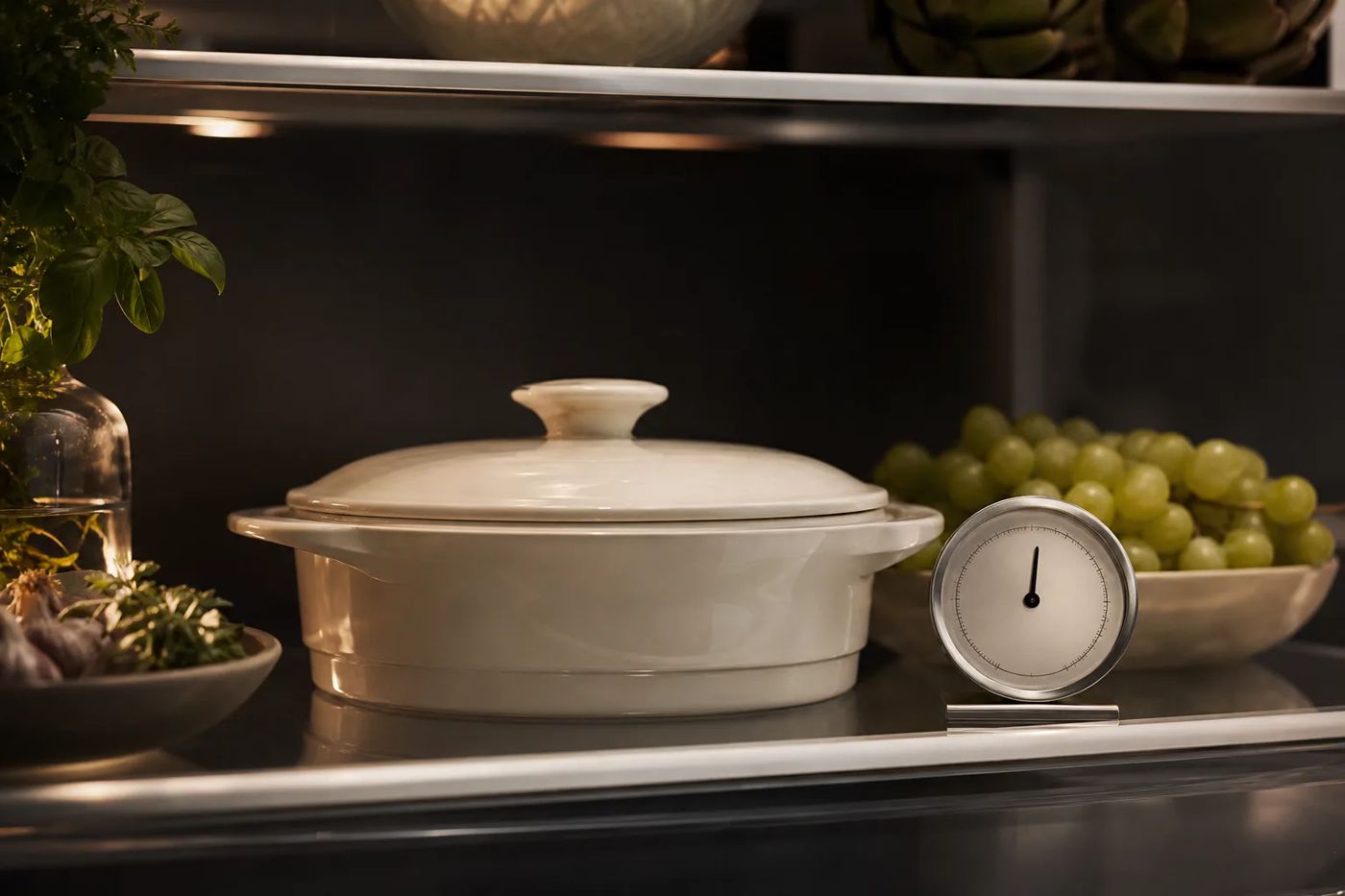
Serving mistakes: cool caviar, gentle hands
Letting the caviar warm with the rest of the meal. Set out the accompaniments early if that helps, but keep the caviar cold until service. Petrossian pages give 4 to 10°C for tasting: warmer than storage, not room temperature. Keep the container over ice during service. Do not leave it unattended on the table to reach that tasting range.
Stirring or pressing the beads. Resist the urge to loosen the roe or smooth its surface. Vigorous handling breaks eggs and changes their texture; supplier Dorasti specifically advises against stirring or compressing them. Lift small spoonfuls gently rather than scraping or spreading the roe.
Adding every garnish before tasting. A pile of accompaniments can overwhelm the caviar's flavour. Prunier recommends neutral foods that will not overpower it. Taste a little plain first, then add modest amounts of bread, blini or cream as you prefer.

Eating mistakes: make the first mouthful count
Chewing hard straight away. Slow down enough to notice the eggs' texture. Prunier's advice is to roll the eggs gently against the palate with your tongue. Take a small mouthful and pause before chewing. The point is to explore the texture, not to perform a perfect ritual.
Overloading the first blini. A generous heap can empty the tin before everyone has tasted it. It also makes comparison with a plain spoonful awkward. Begin with a modest topping, rather than treating the blini as a container to fill. For a beginner tasting, Prunier suggests 10 to 15 g per person, about one-third to half an ounce. That is for the whole tasting, not each blini.
Enjoyment does not require mastery of a ceremony. For a more deliberate comparison of texture and flavour, the tasting guide explains the sequence.
Safety mistake: trusting a good smell
Trusting glossy eggs and a clean smell. Caviar can look inviting without being safe. An intact seal does not guarantee safety either. The FSA's guidance for England, Wales and Northern Ireland is clear: you cannot see, smell or taste the bacteria that cause food poisoning.
Under that guidance, a use-by date concerns safety. Do not eat the food after it, even if it seems normal. Follow the storage and after-opening instructions too, because a date cannot compensate for mishandling. If refrigeration has failed, or you cannot establish how the caviar was kept, do not taste it to test its safety.
For a questionable tin, consult the spoilage guide. It separates signs that mean discard from the handling history you need to assess.
Sources
-
FAO and WHO, Codex Alimentarius Commission. Standard for Sturgeon Caviar, CXS 291-2010, official PDF recording amendments in 2013, 2018 and 2024. Sections 2.3 and 7.2 cover temperatures, freezing and storage instructions.
-
FAO and WHO, Codex Alimentarius Commission. All standards and Find a Codex text, live registers, retrieved November 2026. The two registers display different modification years for CXS 291-2010. Established register and new register.
-
Food Standards Agency. How to chill, freeze and defrost food safely, 2017, live edition retrieved November 2026. Guidance applying to England, Northern Ireland and Wales. Official guidance.
-
US Food and Drug Administration. Refrigerator Thermometers: Cold Facts about Food Safety and Are You Storing Food Safely?, undated live editions retrieved November 2026. Used for refrigerator temperature, covered storage, the warmer door compartment and uncertain refrigeration history, not for US date-label interpretation. Thermometer guidance and storage guidance.
-
Food Standards Agency. Student guide to food safety and hygiene, 2026, live edition retrieved November 2026. Sections on date markings and avoiding food poisoning. Official guidance.
-
European Commission. EU Wildlife Trade Reference Guide, Annex XIV, undated live edition retrieved November 2026. Describes the separate origin and repacking fields and the traceability purpose of caviar labels. Official reference guide.
-
Petrossian. Frequently Asked Questions and Caviar Noir, undated live editions retrieved November 2026. Supplier advice on freezing, opened storage and tasting temperature; the latter page also shows selection names across different caviars. FAQ and
-
Dorasti. Frequently Asked Questions, undated live edition retrieved November 2026. Supplier instructions against stirring or compressing roe and for chilled service. Handling guidance.
-
Prunier. How should you eat caviar?, 13 March 2024, live edition retrieved November 2026. Supplier recommendations on neutral accompaniments, tasting technique, beginner portions and presentation over ice. Tasting guidance.
This piece was researched from official food standards and national safety guidance, with supplier recommendations attributed separately for handling and tasting.
Last checked: November 2026