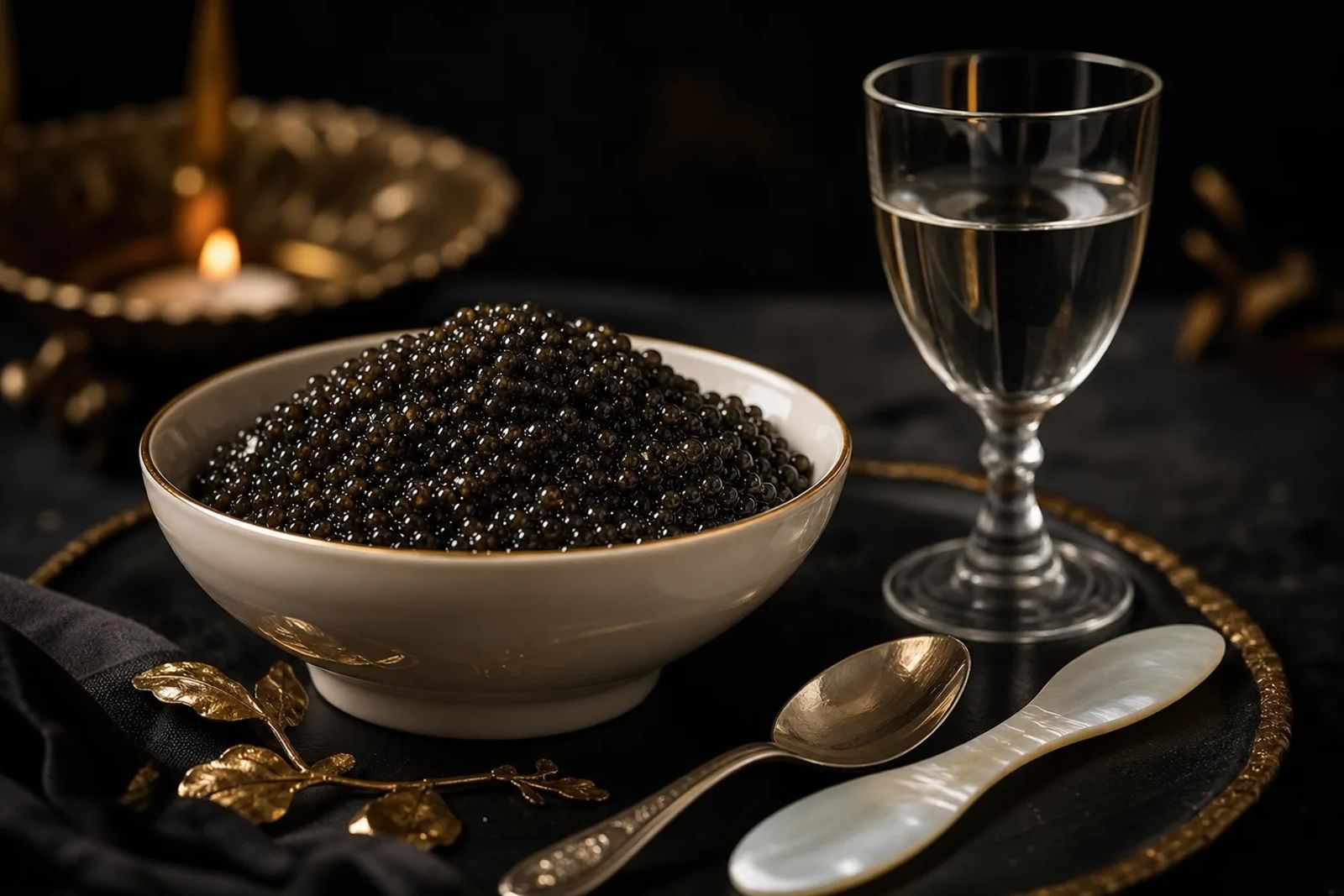
Caviar need not be black. Codex recognises a natural range from light yellow to black, including brownish and greenish shades. Yet colour remains one of the shortcuts used to judge it, alongside egg size, Russian provenance and the reassuring presence of a CITES label.
None tells the whole story. Species, processing and product condition all matter in Codex's description of caviar. The verdicts below separate disproved rules from claims the evidence cannot settle. Partly true means a useful idea has been stretched too far; not established means there is insufficient evidence to treat a claim as fact.
Common caviar myths at a glance
| Myth | Verdict | Short reason | Read more |
|---|---|---|---|
| A label guarantees authenticity | False | A code records a declaration, not a laboratory result. | label evidence |
| Any caviar can be frozen | False | Processing and product instructions matter. | freezing caviar |
| No-kill means no harm | False | Survival and welfare are different outcomes. | no-kill methods |
Names, species and where caviar comes from
All caviar is beluga
Verdict: false. Beluga is one species, not an umbrella name for caviar. CITES lists it as Huso huso: a sturgeon, not the beluga whale. Other sturgeon species and hybrids also produce caviar. The familiar name can obscure that variety, so ask the question that matters: which fish produced the roe, meaning its eggs?
Beluga is the best
Verdict: not established. Reputation cannot decide what tastes best to you. Sensory research assesses appearance, aroma, flavour and texture separately, revealing several dimensions of enjoyment rather than a single league table. Calling beluga universally superior turns a species name into a tasting verdict and assumes every reader values the same qualities.
Kaluga Beluga is beluga
Verdict: false. Kaluga and beluga are different species in CITES terminology. The trade phrase draws them together, but it cannot serve as a scientific species declaration. Ask for the fish's scientific identity. If the caviar comes from a hybrid, both its male and female parent species should be identified rather than concealed behind a familiar name.
Caviar must come from Russia or Iran
Verdict: false. The historical association is real; the geographical restriction is not. EUMOFA's 2021 market report documents production in countries including Italy and France, alongside Chinese supply to Europe. A brand's suggested nationality and the fish's actual origin are separate questions, explored in the origin guide.
Red caviar and lumpfish roe are the same as sturgeon caviar
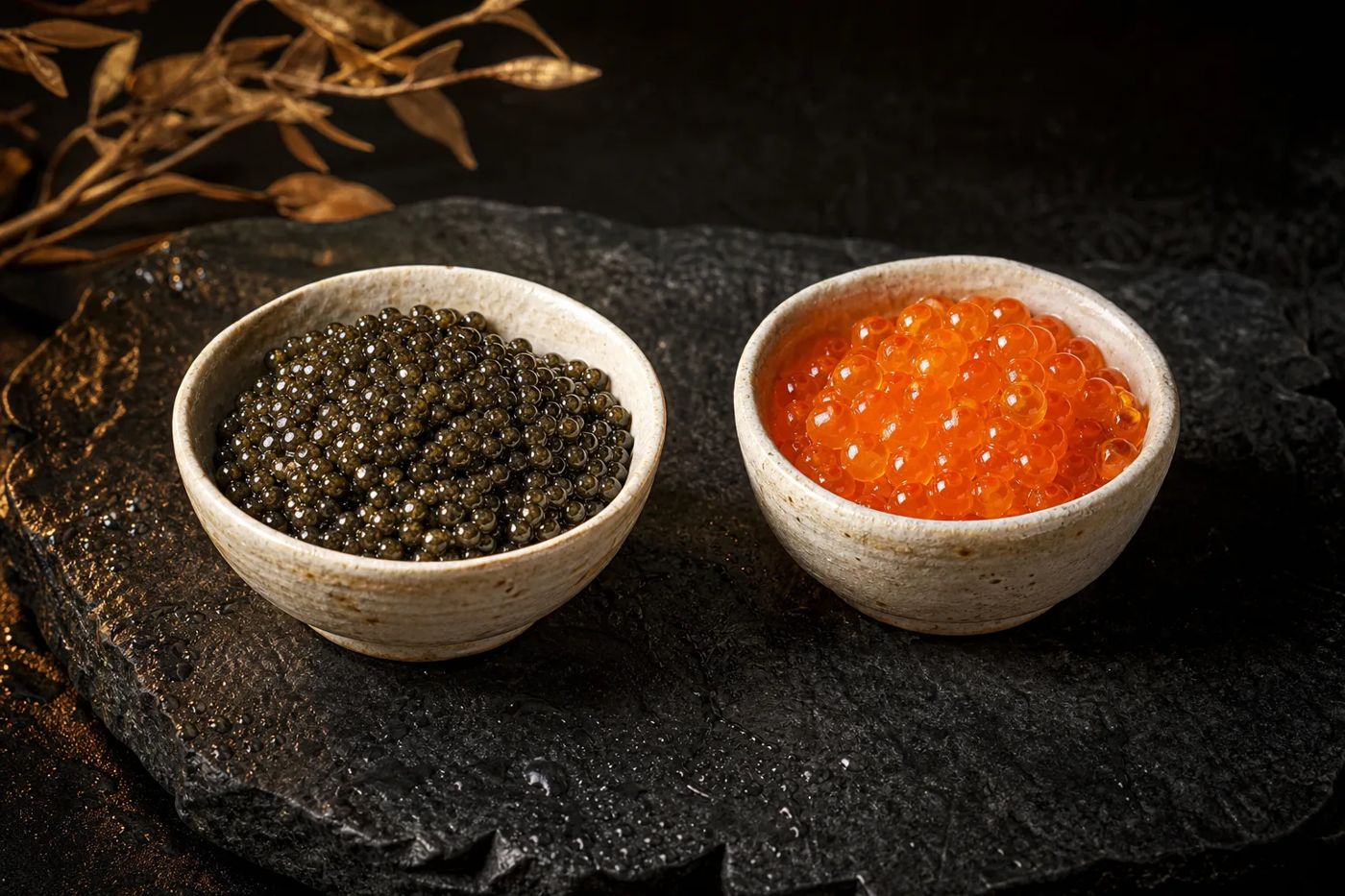
Verdict: false. These can be legitimate foods, but they come from different fish. Codex CXS 291-2010 defines sturgeon caviar as salted roe from the sturgeon family. Nonbinding FDA guidance calls for the fish name in substantially equal type size and prominence, and for artificial colour to be prominently declared. EU and UK customs classification also separates sturgeon caviar from caviar substitutes, although customs categories do not themselves settle retail naming.
What appearance can tell you
Black caviar is better than golden
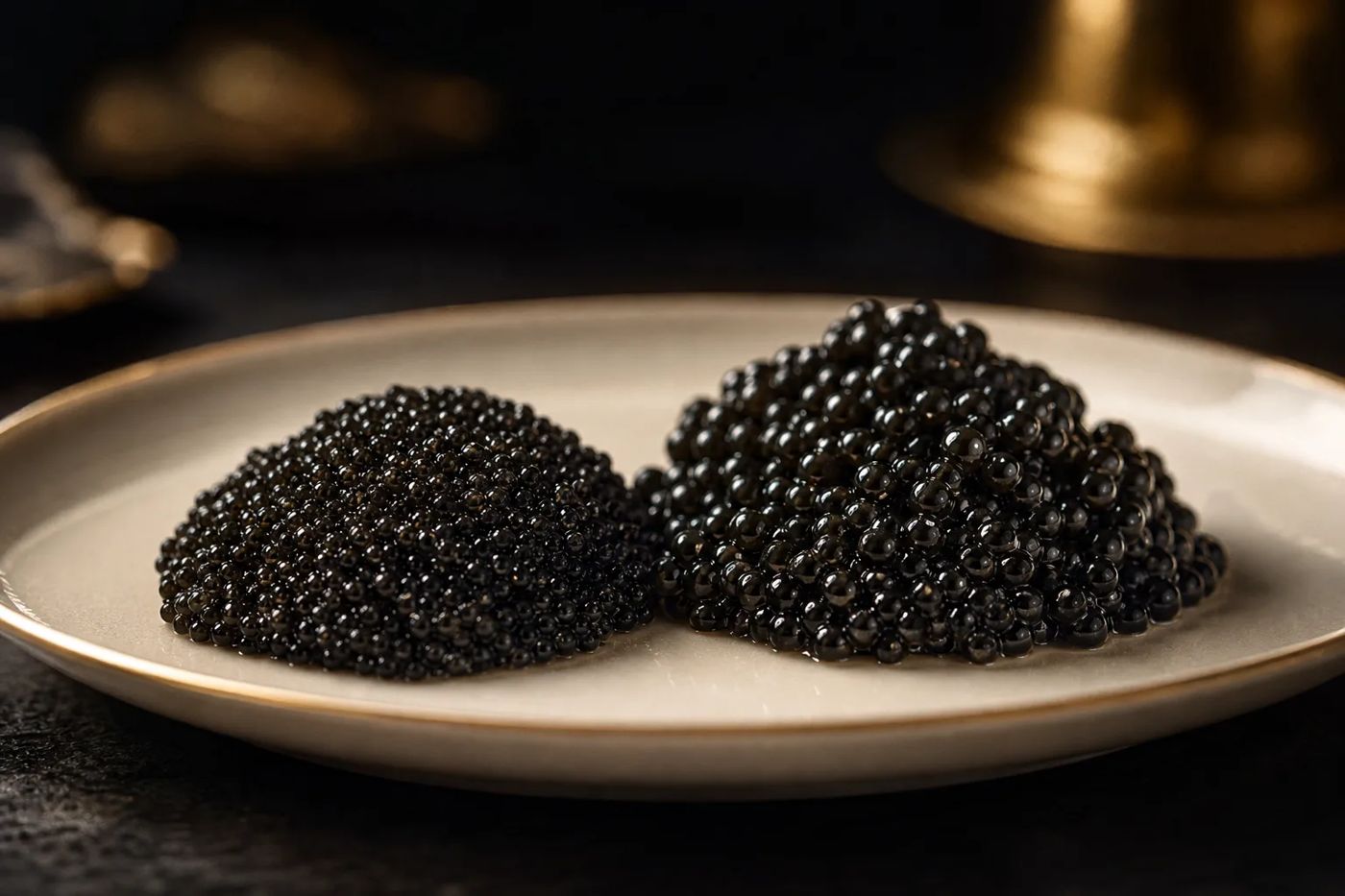
Verdict: false as a general rule. Colour catches the eye; it cannot deliver a complete quality assessment. Sensory studies examine flavour and texture as well as appearance. Enjoying one colour is a preference, not a reason to expect every caviar of that colour to taste better. The visual shortcut leaves too much of the eating experience out.
Bigger eggs are always better
Verdict: false. A large bead can look appealing, but diameter is only one part of the experience. The membrane, the condition of the eggs and their flavour all belong in a quality judgement. Size tells you how large the eggs are. It cannot tell you how satisfying they will be to eat.
Golden caviar proves the fish was albino
Verdict: not established from colour alone. Golden eggs do not establish the pigmentation of the individual fish that produced them. Codex recognises a natural spectrum of sturgeon caviar from light yellow to black, with brownish and greenish shades also permitted. An egg's colour description and a claim about the fish are different things.
Farmed caviar is worse than wild
Verdict: false as a blanket judgement. “Wild” is an evocative word, not a sensory verdict. Cardinal and colleagues' comparison found differences among caviars without establishing farming itself as a universal defect. Species and processing deserve attention too. The guide to farmed versus wild caviar examines those influences separately from conservation and legality.
Taste, spoons and what to drink
Caviar is always very fishy
Verdict: false. Marine and earthy notes are distinct descriptions, not interchangeable versions of “fishy”. Sensory studies use these and other terms to capture caviar's variation. One roe product can shape someone's expectations of all the others, but a single broad word cannot describe every caviar's flavour, still less establish that it is always intense.
A silver spoon instantly ruins caviar
Verdict: not established in that absolute form. Spoon material can affect perceived taste: a 2012 study using cream found that copper and zinc added metallic and bitter notes. That finding does not make every metal unsuitable for caviar. The guide to the silver spoon question examines the materials behind the traditional warning and what the evidence can establish.
Caviar must be served with vodka
Verdict: false. Vodka is a traditional companion, not a necessary ingredient in the enjoyment of caviar. Chef Daniel Boulud's advice published by Williams Sonoma also recommends dry white wine with a meal. Choose an accompaniment rather than obeying a ritual: there is no requirement to drink alcohol at all.
Caviar is an aphrodisiac
Verdict: not established. Romantic reputation and nutritional content do not establish an effect on sexual desire or function. That is what an aphrodisiac must increase. Caviar's association with romance may explain the appeal of the claim, but neither the food's reputation nor its nutrients demonstrate that particular effect.
Labels, cold storage and fish welfare
A CITES label proves authenticity
Verdict: false. A CITES label traces a declaration; laboratory testing checks the contents. In a New York market study, researchers examined mitochondrial DNA from 90 caviar samples bought in 2006 to 2008 and found 10% mislabelled. That finding exposed a verification problem in a historical, local sample. It is not a worldwide fraud rate.
The international system is set out in CITES Resolution Conf. 12.7, implemented through jurisdiction-specific rules including EU Regulation 865/2006 and US 50 CFR 23.71. Check the declared species, origin and processing or repacking details. These are useful traceability information; establishing whether the declaration matches the product is the separate task of laboratory testing.
You can freeze any caviar
Verdict: false. Follow the particular product's instructions, rather than assuming every caviar responds to freezing alike. Codex CXS 291-2010 permits freezing only where quality deterioration is avoided. It is an international reference standard, not automatically domestic law. The guide to freezing caviar explains the practical distinctions; US FDA guidance says freezing stops bacterial growth but does not kill most bacteria.
Keep quality and safety separate. An agreeable aroma and intact eggs cannot establish that chilled roe is safe. UK Food Standards Agency guidance warns that food can look and smell acceptable while still containing bacteria that cause illness. What pleases the senses and what is safe to eat are different judgements.
No-kill caviar means the fish is not harmed
Verdict: false as a guarantee. Keeping a fish alive and protecting its welfare are different outcomes. Depending on the method, collection can involve induced ovulation, handling and stripping, meaning the removal of released eggs. The guide to collection and welfare separates immediate survival from the questions that follow: stress, injury, recovery and subsequent reproduction.
Codex permits ovulated eggs from farmed sturgeon under conditions. Any hormones used must be approved by the competent authority, and the product must carry the name “caviar from ovulated eggs”. These requirements govern the product rather than establish humane treatment. A 2026 interview study found producers divided between avoiding slaughter and concerns about infection and recovery, and called for independent comparative welfare research.
In a New York market study, researchers examined mitochondrial DNA from 90 caviar samples bought in 2006 to 2008 and found 10% mislabelled.
For the individual investigations and related questions, visit caviar myths and facts.
Sources
- Codex Alimentarius, FAO and WHO. Standard for Sturgeon Caviar, CXS 291-2010, adopted 2010, amended 2013, 2018 and 2024.
- CITES. Conservation of and trade in sturgeons and paddlefish, Resolution Conf. 12.7 (Rev. CoP17), 2016, including Annexes 1 and 2.
- US Food and Drug Administration. CPG Sec. 540.150: Caviar, Use of Term, Labeling, October 1989, nonbinding guidance.
- European Commission, EUMOFA. The Caviar Market, 2021 edition, European Commission.
- Cardinal and colleagues, International Review of Hydrobiology. Sensory Characteristics of Caviar from Wild and Farmed Sturgeon, volume 87, issues 5 and 6, 2002.
- OM Caviar. White Sterlet, undated company product description, retrieved November 2026.
- Piqueras-Fiszman, Laughlin, Miodownik and Spence, Food Quality and Preference. Tasting spoons: Assessing how the material of a spoon affects the taste of the food, volume 24, issue 1, 2012; Oxford University Research Archive record.
- Williams Sonoma. What to Drink with Caviar, undated article incorporating recommendations attributed to chef Daniel Boulud.
- Cleveland Clinic. Seduction Secrets: Do Aphrodisiacs Boost Desire?, 10 February 2025.
- PLOS ONE. Testing the effectiveness of an international conservation agreement: marketplace forensics and CITES caviar trade regulation, 2012; PubMed record and abstract.
- European Union, EUR-Lex. Commission Regulation (EC) No 865/2006, consolidated text dated 18 February 2025, particularly Articles 64 to 66.
- United States, Electronic Code of Federal Regulations. 50 CFR 23.71: How can I trade internationally in sturgeon caviar?, electronic regulation.
- US Food and Drug Administration. Are You Storing Food Safely?, consumer guidance.
- UK Food Standards Agency. Food poisoning, public guidance.
- Frontiers in Animal Science. Dying for a canape: the welfare implications associated with both traditional and “ethical” production of caviar from sturgeon, review, 2024.
- Frontiers in Fish Science. Animal welfare in European caviar production: insights from sturgeon producers, original research, 2026.
Last checked: November 2026